
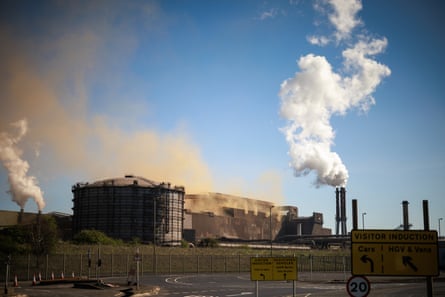
bWhen Ritish Steel announced plans to close its steelworks in Scunthorpe last year its Chinese owner was losing £700,000 a day. After Zinge refused support to buy raw materials, the UK government stepped in Emergency Act for Regulation of the plant.
But the crisis is not over. The cost to the government of propping up British Steel is now more than £1.2m a day. And a £359m bill, the latest Revealed For Parliament last month, that could be just the beginning.
Almost a year on, it remains unclear what will happen to the blast furnaces and rolling mills in the north. Lincolnshire The site and 4,000 workers turned iron ore into long steels needed for buildings, bridges and railways. Meanwhile, the government is covering up losses day by day.
“In the short-term, they will cost, so the £350m figure will be big,” said Joan Carruthers-Green, steel market analyst at MEPS International, a price forecaster. “If you want to keep the blast furnaces, if you want to keep the rail supply going, it’s cost effective.”
The UK steel industry is in a rut. In 1970 the country produced 28 million tonnes of steel. That falls to 4 million tonnes in 2024 and fell to just 2.5 million tonnes last year – the lowest output since Queen Victoria’s reign.
That fall was mostly caused Temporary shutdown of Tata Steel’s Port Talbot Steelworks It is moving from polluting blast furnaces to cleaner and more efficient electric arc furnaces (EAFs). The government’s official receiver is in control of the arc furnaces at Specialty Steel UK (SSUK) in South Yorkshire. Collapse in administration Last year, as well as trying to forge a path for British Steel.
“It’s a matter of taking – they know,” said one person close to the government. “There are no easy answers here.”
Zinge barrier
The first obstacle was Jingye, who bought it British Steel The receivership ended in 2020. The Chinese company is the legal owner, even if it has no actual control.
Jingye is believed to have requested £1bn in damages in return for giving up ownership – an amount most observers believe the loss-making plant is unlikely to receive.
Under Jingye’s ownership, British Steel has already secured significant financial support from the government, including a previously unreported £120m grant in December 2022. Government documents describe the award as “preventing a major economic shock in the Scunthorpe region, protecting jobs and securing major investment for the UK”.
Jingye did not respond to a request for comment.
However, even the authorities are careful not to seize it. The government’s assessment last month of the British Steel takeover bill said “a more interventionist approach by the government … will raise concerns among some investors”. It added: “Foreign investors are likely to be deterred, or diplomatic criticism may arise if the intervention is perceived as market distortion.”
After that there was little progress Keir Starmer’s visit to Beijing last week Even if Jingye could be acquired, several steps are still needed to achieve the government’s ultimate goal: finding another owner to continue production at Scunthorpe.
SSUK’s destiny, however, is part of the past Sanjeev Gupta’s troubled Liberty Steel empiremay be intertwined. Officials are understood to have expressed a preference for a single buyer for both British Steel and SSUK.
One attraction of that set-up is that SSUK – after investing in new casting equipment suitable for longer products – can supply steel to the Scunthorpe rolling mills. At the same time blast furnaces will be shut down and EAFs will be built on the same site. Industry experts say the switch to electric will help British Steel as construction projects look for beams with lower associated carbon emissions.
Several hundred jobs will be kept at British Steel’s rolling mills during the transition, but unions are opposed to “fixing SSUK by doing it in Scunthorpe”, in the words of one official. Job losses in Scunthorpe under a Labor government will be a damaging symbol of Nigel Farage’s reform of the region last year. Won Mayor of Greater Lincolnshire.
“It is essential that we keep steelmaking in Scunthorpe,” said Communita, the steelworkers’ union. Assistant General Secretary Alasdair McDiarmid said. “Almost a year later, we need clarity on ownership and clarity on the long-term future of the works. Our members on site have endured more than enough uncertainty and want to see the right strategy for the business.”
In the long run, the number of workers will inevitably fall. Building an electric arc furnace and connecting it to the electricity grid can take years, and arc furnaces don’t require many workers, so unions pressure the government to invest in jobs in other parts of the business.
British Steel declined to comment.
No more ‘virgin’ steel
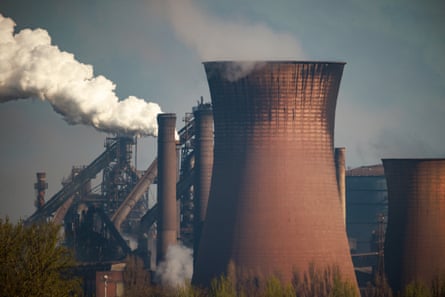
Retaining the ability to produce “virgin” steel from iron ore: Several industry officials said the government would have to back down on one of its promises when it took over Scunthorpe. Blast furnaces use coal to reduce iron ore to iron for steelmaking, while arc furnaces rely on scrap steel or ready-made iron (which requires Additional billions of pounds to do in the UK).
The government seems to be still wedded to the idea of preserving iron manufacturing capacity. The impact assessment puts it in full words: “In times of trade wars or conflicts, reliance on foreign (potentially adversarial) suppliers is a strategic liability.”
“If we had to import everything, we could be held to ransom,” said David Murray, a veteran metals executive. British steel “must be protected and we have to accept the price,” he said.
Cameron Pleydell-Pearce, professor of materials science and engineering at Swansea University, said that going for EAFs could make British production more resilient in some respects because the UK has a bolt full of scrap metal.
However, technology puts the UK in a very strong position on “it’s not a clear yes or no position”, he argued for a “more technology-agnostic view of solutions” for Scunthorpe, including considering new methods of reducing iron ore.
A government spokesman said: “This Government is determined to support British steelmaking and our steel communities now and for generations to come, and last year we saved British Steel from collapse, saving thousands of jobs.
“We are continuing discussions with Zinge to find a practical, realistic solution for the long-term future of the site and will publish a steel strategy this year setting out how we can achieve a sustainable future for the sector.”
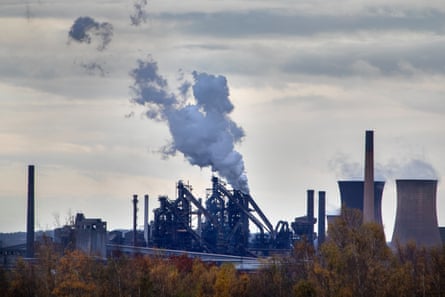
Whichever option is chosen, no one involved expects a quick fix to Jingye’s problem — let alone the longtime owner. Interest declared by a US-based potential buyer Retail investor Michael Flax – could combine Scunthorpe operations with another plant in Italy – surprised the government given his lack of steel experience. Several industry sources said it was unclear what benefits the combination would bring.
However, officials insist privately that there is significant — albeit tentative — interest from others.
“Could be a global steelmaker [buy it]but they want to take the finished article,” said Murray, adding that with big government backing, “they won’t take it now.”
This means that the government may still be in control of British Steel for some time. A person close to the situation said it could take four or five years for the government to come back.