

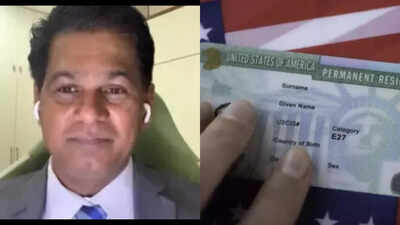
Immigration attorney Rahul Reddy explains what H-1B visa holders applying for a green card must do.
A new green card rule that applicants cannot wait to obtain their green cards in the United States and must return to their country of origin has caused shock, as 1.2 million legal immigrants have been waiting years to become permanent residents.
Experts are awaiting more clarity on this matter regarding how USCIS will implement this order, while many have said that the new rule will be challenged in court, as it conflicts with the law. Indian-origin immigration lawyer Rahul Reddy explained that the rules have not changed and the law has not changed but the way the green card application will be judged has changed.
What USCIS says in the new rule
USCIS said people come to the United States on temporary visas and then apply to change status to become permanent citizens.
While they wait for this to happen, they continue to remain in the United States. USCIS said this must stop. A person who wants to become a permanent resident of the United States must return to his or her home country and then apply for an immigrant visa.
What changes
For decades, visa holders who came to the United States legally and maintained their legal status throughout could apply for a green card through “adjustment of status.” “For decades, the deal was this: If you followed the rules, maintained your status, got your I-140 approved, and waited your turn, your green card through adjustment of status was basically a sure thing once your priority date became effective.
The employee reviewing your file would often ask, “Is this person qualified?” “If yes, it is approved,” Reddy explained. “That deal is now in question. The new memo reminds officers that being approved for a green card from within the United States is a service, not a right. The official word is ‘discretion’ — meaning an officer can say no even when you’re eligible. The memo not only reminds them that they have this authority, but actively encourages them to use it,” Reidy said. “The most troubling part is the way the memo views people on work visas. If you come to the United States on an H-1B, L-1, or O-1 card, the government’s expectation — according to this memo — is that you will eventually return to your home country. Not stay. Remaining in the United States to get a green card, rather than returning to your home country and applying at a U.S. consulate there, is something officials should view as a negative. Yes, the memo admits The H-1B and L-1 are thus allowed to have a “dual intent.”
“But then he says that the allowance alone is not enough to get approval,” Reddy explained.
What should H-1B visa holders who want a green card do?
Those who have already filed a green card application should consult their attorney and strengthen their case before USCIS forces the question, Reidy said. For those thinking about applying, the choice is harder because they may eventually have to return to their country and apply from there, which is a slow and risky path.
I-140 approved? Can you stay in the United States?
There are many unanswered questions about the new memo. Many experts interpreted the memo to mean that this only applies to the “adjustment of status” portion of the green card process which only occurs when your priority date becomes effective and you are ready to file Form I-485. Therefore, one may have to return to their country but those who have just filed Form I-140, which is a petition for a green card, will not have to leave the United States. It takes years for India and China to reach the current priority date, so these two countries will not have any immediate impact, but the USCIS memo does not clarify these details.