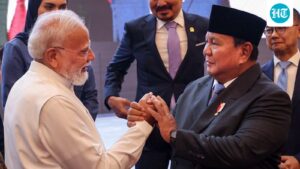
Prime Minister Narendra Modi on Tuesday Former Odisha Chief Minister Biju Patnaik was remembered and praised for his role in the Indonesian freedom struggle while speaking at the archipelago nation’s parliament in Jakarta.

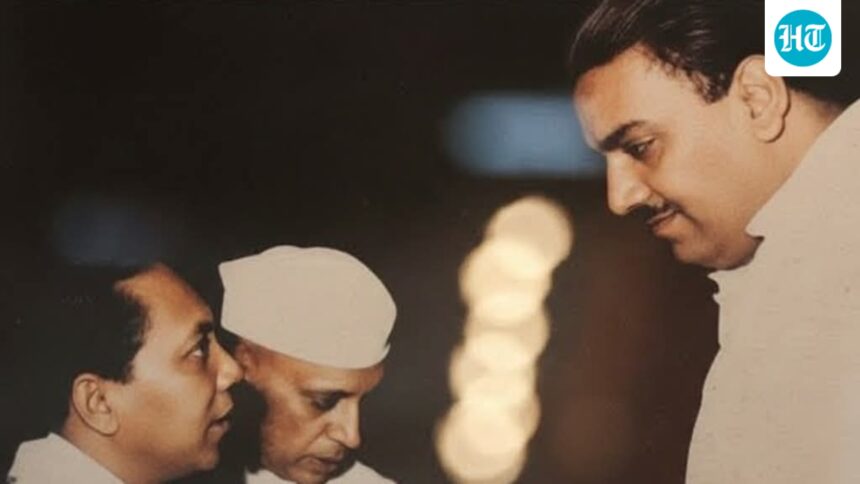
Patnaik played a death-defying role in the Indonesian National Revolution against Dutch colonial rule in 1947. At the request of the Prime Minister. Jawaharlal Nehru, Patnaik broke the strict Dutch blockade, rescued the top leaders of the Indonesian resistance and brought global attention to their freedom struggle.
“Our two countries gained independence at almost the same time: Indonesia in 1945 and India in 1947. When it comes to sovereignty as independent nations, India has become a strong voice in support of Indonesia’s independence movement in the United Nations. The role played by the honorable Biju Patnaik during that period – the way he safely brought Prime Minister Sutan Sgarir and Vice President Mohammad Hatta to India, brought the two countries closer together,” Modi said.
While Modi highlighted Patnaik’s heroics in the rescue operation, he did not mention Nehru’s role.
Biju Patnaik’s bold rescue of the Indonesian Prime Minister
After World War II ended in 1945, the Dutch attempted to recolonize Indonesia, which they had lost during the war to the Japanese in 1942. Indonesian nationalists, led by President Achmad Sukarno (known as Sukarno), declared independence after Japan’s surrender and resisted Dutch attempts to reclaim the territory.
The Dutch launched a large-scale military offensive after Indonesia declared its independence on August 17, 1945, just two days after the Japanese surrendered to end World War II. They placed various resistance leaders, such as Indonesian Prime Minister Sutan Seghar and Vice President Mohamed Hatta, under house arrest in Jakarta to silence the independence movement and closed all exit routes.
In July 1947, Jawahar Nehru, who was still heading India’s provisional government in New Delhi at the time, commissioned the 31-year-old pilot Biju Patnaik launched a secret operation to extract the leaders so that they could rally international opinion against the Dutch. Later that month, Patnaik, his wife and co-pilot Gyanwati Patnaik flew a Douglas C-47 military transport plane, also known as the Dakota, from India into Indonesian airspace.
When the Dutch issued explicit threats that they would shoot down his plane, Patnaik issued a counter-warning that any hostile action would result in Dutch aircraft being targeted over Indian skies in retaliation.
Patnaik landed on a temporary airstrip near Jakarta and succeeded in flying Sharir and Hatta out of the country via Singapore. They arrived safely in New Delhi on 24 July 1947 for crucial secret meetings with Nehru.
The operation helped internationalize the Indonesian issue and increase pressure on the Dutch to recognize Indonesia’s independence, which they finally did on 27 December 1949.
For his contributions, Indonesia granted Biju Patnaik honorary citizenship and awarded him the Bhumi Putra (Son of the Soil) award, one of Indonesia’s highest honors that is rarely given to a foreigner.