

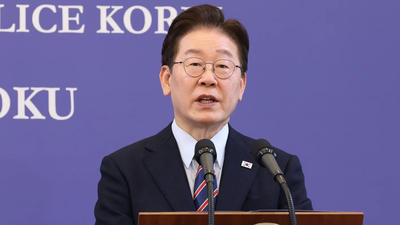
Archive photo: South Korean President Lee Jae-myung
The United States has imposed partial restrictions on sharing satellite intelligence on North Korea with South Korea following comments by Seoul’s Unification Minister about a suspected nuclear facility, media reports said.Unification Minister Chung Dong-yong told parliament last month that he believed North Korea operated a uranium enrichment site in the Goseong region, a claim that Washington said revealed sensitive intelligence without authorization. According to South Korean news agency Yonhap and other local media, the United States has since “limited” some satellite information that was previously routinely shared with Seoul.An unnamed South Korean military official was quoted as saying that the restrictions have been in place “since the beginning of this month” but that they “do not significantly affect military readiness.” According to Agence France-Presse, the official added that the exchange of intelligence information about North Korea’s military activities continues “normally” between the two allies.
Controversy over alleged intelligence leak
This case sparked violent political reactions in South Korea, where opposition parties accused Chung of harming relations with Washington.
However, the minister defended his comments, calling them “deeply regrettable” because they were seen as a leak, and insisting the information was based on publicly available sources.President Lee Jae Myung-chung also supported it, noting that the existence of the Goseong facility was already widely known through academic research and media reports. He added: “Any allegations… that Minister Chung leaked classified information… are false.”
Strategic alliance under the microscope
While neither the South Korean Ministry of Defense nor the Pentagon have officially confirmed these restrictions, officials stressed that broader intelligence cooperation remains in place. The United States maintains about 28,500 troops in South Korea, and routinely shares intelligence collected through satellites and other surveillance systems.North Korea is already known to operate uranium enrichment facilities at Yongbyon and Gangsun, and has continued to expand its nuclear capabilities in defiance of international sanctions.This development comes amid growing concerns about Pyongyang’s nuclear program, as the United Nations’ International Atomic Energy Agency recently warned of a “very dangerous increase” in its ability to produce atomic weapons.