A lot of people are talking about it Drama. Much of that conversation has focused on how it was marketed, how it reached audiences, and whether it went too far — or not far enough — in depicting a young man on the brink of violence.
Those are valid questions. But they are not the most important.
What if we asked instead: What does this story show us about the moments leading up to the violence – and what can we do about it?
Thirteen years ago, my six-year-old son, Dylan, was murdered at Sandy Hook Elementary School. I don’t watch movies like this the same way anymore. My mind doesn’t go first to the plot or the performances. It goes to what came before it. Warning signs. Missed opportunities. Moments where something could have been different.
Violence, whether directed outward or inward, is rarely spontaneous. They are often preceded by signs that seem painfully obvious in hindsight.
in DramaThose signs are there.
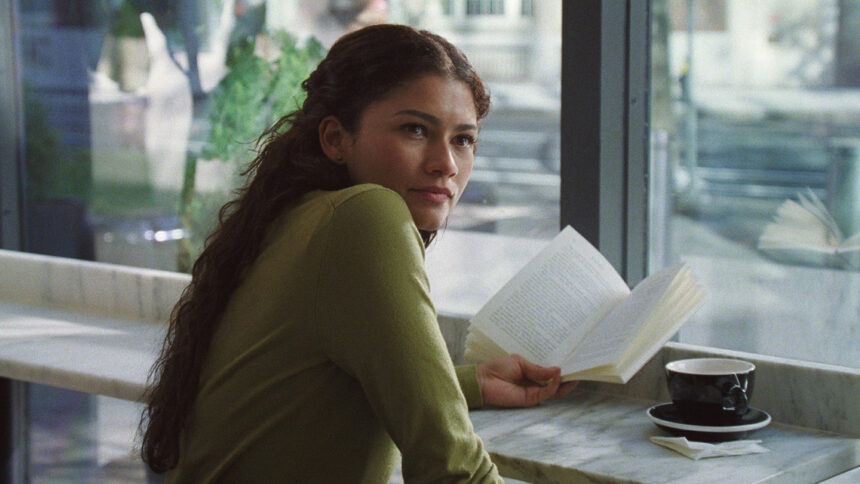
We see Emma, the heroine of the novel, suffering from isolation and separation. We see the impact of bullying and their media consumption steeped in the culture of school shootings. We see a lack of meaningful support from her community and a growing sense of invisibility. There are hints of depression, despair and even suicidal ideation. There is access to and training on her father’s rifle, an item that can turn ideas into action.
None of these tell the whole story. Together they form a pattern that we have seen many times in real life.
At Sandy Hook Promise, our work is grounded in a simple but urgent truth: these patterns can be recognized, and when they are recognized, tragedies can be prevented. Through our Know the Signs programs, we teach students, teachers, and community members how to recognize warning signs — and, just as importantly, when and how to respond to them.
This second part is important. Awareness without action is not prevention.
Drama Provides a glimpse into what intervention looks like. There’s a moment — subtle but pivotal — when Emma connects with a peer, shares an emotional openness, and is welcomed into a community of students working to prevent gun violence. This connection interrupts a path that seems to be heading toward harm. Emma could go ahead with her plans. Instead, she threw them into the pond.
It’s easy to overlook this, but it’s the most important part of the story. When a young person feels seen, supported and connected, results change.
The question is whether we, as viewers, recognize that moment for what it is.
Too often, we assume that intervention requires expertise or authority – and can only be intervened by professionals. In fact, intervention is prevented by ordinary people who decide to act. In the film, a student walks up to Emma after class with a simple greeting and invitation. That’s all.
It can be as simple as reaching out to someone who has withdrawn. Take the annoying comment seriously instead of dismissing it. Connect the young person with a trusted adult. Create a moment of belonging where there was none before.
A lot of this has been lost in Emma’s case. It left me wondering: Would it have taken another mass shooting before someone would intervene? Were her parents talking about her loneliness and her changed appearance? Did they secure the firearm? Did the school see any of the warning signs along the way?
These actions are not dramatic. They don’t make for a cinematic climax. But they save lives.
We also tend to think that we will realize when something is wrong, and that the signs will be obvious. The truth is, recognition is a skill. It can be learned, practiced and enhanced.
Here lies the real opportunity.
If you have seen DramaYou’ve already been exposed to the warning signs we know every day. I have seen how they accumulate, how they are missed, and how they can be used – at a critical moment – to stop violence before it happens.
The next step is to move from observation to thinking, and from thinking to action.
Where did you notice the signs? What moments stood out as opportunities for someone to intervene? What can you do differently now that you see them?
These are not abstract questions. They are the basis of prevention.
We cannot control every outcome. But we can change how willing we are to respond. We can build a culture where people are more attuned to each other, where warning signs are taken seriously, and where intervention is not seen as overreaction, but as caring.
Stories like Drama It will continue to be said. They reflect a reality that has already become part of our lives. The question is whether we treat it as entertainment – or as an opportunity to learn how to change the ending.
Because the most important action doesn’t happen on screen.
It happens in the moments before.
Nicole Hockley is the co-founder and CEO of Sandy Hook Promise and the mother of Dylan, who was killed at Sandy Hook Elementary.