A blog written by a Class XII student from Jharkhand has become the focal point of a nationwide political debate over the Central Board of Secondary Education (CBSE)’s on-screen marking (OSM) system. It has drawn reactions from the Leader of the Opposition, the Aam Aadmi Party chief, and other senior leaders, activists and citizens, prompting the CBSE to defend its procurement process.

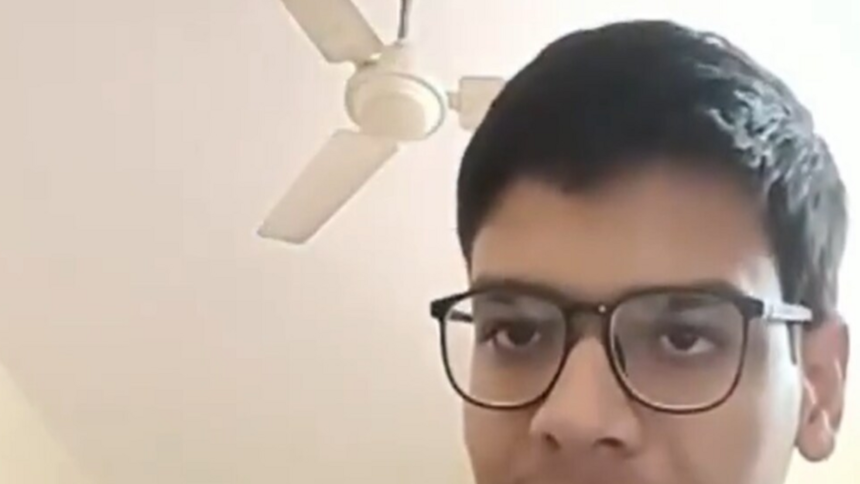
Sarthak Siddhant, 17, posted his findings on his website, sarthaksidhant.com/coempt, after spending several days reviewing tender documents on the central public procurement portal. This came after the low pass percentage in CBSE led to questions being raised about the OSM system, and some students reported errors and mix-ups.
Sidhant’s blog, titled “How CBSE rewrote the rules in favor of Coempt EduTeck”, alleges that the board systematically tweaked eligibility and technical requirements across three successive rounds of tendering in a way that benefited the eventual winning vendor, Hyderabad-based Coempt EduTeck Private Limited.
“It is a story of how a massive public institution deliberately manipulated students’ futures by rewriting its own rule book,” Siddhant wrote in his blog op-ed.
The company denied any wrongdoing, as did the CBSE.
The student behind the blog
Siddhant simply describes himself as “one of the 17,000 students affected by the screen marking system.” He said that because he was unhappy with his results, he received an unclear and incomplete scan of his answer sheets.
He spent the days that followed referring to CBSE’s official bidding documents on the public procurement portal, tracking changes across three versions of the tender. Speaking to news agency ANI from Ranchi, he said: “I wrote a blog comparing the tender documents of CBSE. I uploaded it and posted it. There were at least 15 discrepancies, according to my blog.”
What the blog claims
Sidhant’s central claim is that the technical requirement and eligibility bar for the OSM contract were gradually lowered across three tendering rounds in the RFP, so that Coempt EduTeck could qualify. He said that many of the specific modifications appear to have been calibrated to the company’s profile.
“The first discrepancy is that there are three ‘underperforming’ items that have been completely erased from the new RFP. In the previous RFP, there was a line called ‘previously blacklisted’ while in the new RFP, it has been changed to ‘currently blacklisted’. Why would the board want a service provider that was previously blacklisted?” He said.
Regarding the company’s turnover threshold, he said: “The… $A limit of Rs 50 crore, which is what you needed to qualify – Quibit qualified for that at 1.7%.
He also claimed that “the time frame for corrupt practices was cut in half” and that project parameters were changed in ways that disadvantaged major vendors. “It shows a pattern that industry giant TCS was not favoured, but Coempt was, which operates as a very fragmented group of institutions,” he told ANI.
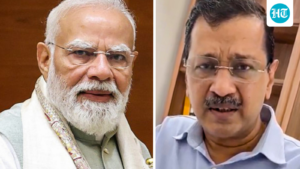
Opposition leader and Congress member Rahul Gandhi shared this blog on X.
“Generation Z is amazing and fearless.”
“[Sidhant] He has exposed the hollowness of (Education Minister) Dharmendra Pradhan Ji’s denial. The Prime Minister remains silent as usual. The question is simple: Who are they protecting, and why? He wrote that an independent judicial investigation is now necessary to uncover the full extent of this fraud.
“Sarthak’s work shows that Generation Z in India is cool and fearless. Sooner or later, they will find out the whole truth,” he added.
Earlier, Gandhi had shared an investigation by Hindustan Times that separately documented technical changes between bidding rounds. The mandatory certification of the Capability Maturity Model – an internationally recognized measure of software process maturity – has been lowered from Level 5, the highest level, to Level 3.
The minimum scanning resolution has been lowered from “300 dpi and above” to “at least 200 dpi with clearly readable content.” TCS, during pre-bid consultations, urged the NSE to lower the threshold to 150, arguing that it would provide “sufficient visibility”. CBSE did not take any action on the proposal in May 2025, but adopted a relaxed 200 DPI norm by August.
What CBSE said
CBSE officials said the board followed procurement protocols “meticulously” and that the contract was awarded to the lowest qualified bidder under the quality-cost-based selection framework.
A senior board official told HT that the amendments “should not be seen as a hasty exercise, but as a process to correct shortcomings from previous rounds to achieve better results.” Another CBSE official said the company “has not been blacklisted by any government agency and no one has raised any concern about it.”
Compte and its history
Coempt EduTeck won the contract as the lowest financial bidder.
The company was previously known as Globarena Technologies, the software company linked to the 2019 Telangana Intermediate board exam controversy. “We have changed our name, all our customers know it, and I am still the CEO. We are not hiding,” said VSN Raju, CEO of Coempt EduTeck. He said the courts acquitted the company of lawsuits related to the Telangana class.
On CBSE’s OSM rollout, Raju said it was “completely wrong” to say that the system has widespread faults, and termed the complaints as “unique”. He clearly attributed the case of Delhi student Vedant Shrivastava – who received an answer sheet belonging to a different student – to human error during the survey and not to any technological failure.
CBSE’s own figures showed that of the 9,866,622 answer books (98.6 lakh) assessed, 68,018 required re-scanning due to poor image quality and 13,583 were manually scanned after repeated scanning failed to produce legible copies.
Political response
Siddhant’s blog has been greatly amplified by prominent political figures across party lines. Rahul Gandhi posted the blog and wrote: “The future of 18.5 lakh children has been handed over to a company that can qualify only after making its own rules.”
He called for a judicial investigation. He claimed that Prime Minister Narendra Modi had “destroyed” the country’s education system; He questioned his silence.
However, BJP spokesperson Gaurav Bhatia accused Gandhi of trying to paint Coimbat as controversial while ignoring that government universities in the Congress and non-NDA-ruled states had also hired the same company.
In fact, the CBSE OSM controversy has arrived at a perilous moment for the government-run examination system, barely three days after the NEET-UG medical entrance exam was canceled due to a paper leak. The National Testing Agency faced more heat on Saturday after a technical glitch led to a delay in CUET-UG 2026 at several examination centres.
AAP national coordinator Arvind Kejriwal also asked his followers on TMC MP and journalist Sagarika Ghose described the blog as “brilliant, detailed and evidence-based”.
So far, Education Minister Dharmendra Pradhan has said that he takes “full responsibility”. CBSE is now opening its re-evaluation portal from June 1, after some delay.
The government has acknowledged the exam-related friction, and officials said no payments have been made to Coempt EduTeck so far. The penalties “will be reviewed after the completion of the process of re-evaluation and supplementary examinations,” a CBSE official said. TCS has not issued any public statement on the matter.