New Delhi:

A week after the Supreme Court pushed AR Rahman to consider officially recognizing Dagarwani’s lineage behind the song Veera Raja Veera, the Oscar-winning music composer on Friday agreed to acknowledge Junior Dagar Brothers’ rendition in the credits of the song from the film Ponniyin Selvan II.
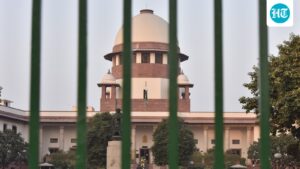
Registering the lien, a bench comprising Chief Justice of India Surya Kant and Justices Joymalia Bagchi and Vipul M Pancholi directed that the revised credit limit be reflected across all social media and OTT platforms within five weeks.
Additional credit will be as follows: “A piece inspired by the Dagarwani tradition of Dhrupad, first recorded as ‘Shiv Stuti’ by the late Ustad Nasir Faizuddin Dagar and Ustad Nasir Zahiruddin Dagar, known as the Junior Dagar Brothers.”
The statement was made by senior advocate Abhishek Singhvi, on behalf of Rahman, without prejudice to the copyright infringement suit pending before the Delhi High Court, filed by Dhrupad singer Faiz Wasifuddin Dagar, who is the successor of Junior Dagar Brothers.
The development comes on the heels of sharp remarks by the Supreme Court during the previous hearing on February 13, when it urged Rahman to consider recognizing Dagar’s contribution to the “larger interest of music”. At that hearing, the bench noted that the dispute was not only about the legal aspects of authorship and authenticity, but also about respect and recognition of classical lineage.
“Look, there has to be some recognition. They are traditional worshipers of classical music. It is not in the competitive field. They want respect and appreciation,” the court had told senior advocate Singhvi, who appeared before Rahman.
The bench went further, citing the contribution of gharanas to Hindustani classical music. “If these gharanas had not contributed to Shastriya Sangeet, do you think these contemporary singers would have succeeded?” He asked.
Noting that Rahman had already acknowledged the Dagarwani tradition, the court suggested that the credits could specifically state that the authorship was first carried out by the petitioner’s ancestors. Singhvi sought time to receive instructions.
He told the court on Friday that Rahman had agreed to the proposed admission with the assurance that the concession would not affect his defense in the main copyright suit.
Singhvi also expressed concern over media reports that Rahman had suffered a “setback” in court the previous week. The bench responded that it could not regulate how proceedings were reported, but made clear that the civil case would proceed independently and would not be affected by any remarks made during the High Court hearing.
With the credit issue resolved at this stage, the court disposed of Dagar’s appeal challenging the district court order of the Delhi High Court which had mitigated the earlier interim relief granted in his favour.
Dagar claimed that Veera Raja Veera was copied from Shiva Stuti, a piece that he says was composed by his father Nasir Faizuddin Dagar and his uncle Zahiruddin Dagar. According to him, although the words were different, the taal, rhythm and musical structure were identical.
Rahman denied this claim, holding that Shiva Stuti is part of the traditional Dhrupad repertoire in the public domain and that Veera Raja Veera is an original work composed of Western musical elements and layered orchestration.
The court was hearing an appeal filed by Dagar against the September 2025 ruling of a division bench of the Delhi High Court, which set aside an earlier interim order by a single judge recognizing a prima facie case of copyright infringement.
The single judge had directed that the song credit be shared with Junior Dagar Brothers and ordered Rahman and the production entities to make the deposit. $2 Crore with the Registrar General of the Supreme Court. The Division Bench later reversed this trend, holding that no prima facie case of exclusive authorship had been made out at the interim stage.