The prolific Los Angeles high school for the performing arts that helped launch the careers of Josh Groban, Zoey Deutch, Haim, and Phoebe Bridgers, among many others, is celebrating 40 years of promoting the arts in the way only a program of its stature can: a Greek-style concert, presented by Anthony Anderson and headlined by the likes of Ozomatli, Fitz, and the Tantrums.
LACHSAPalooza, as the show is called, is scheduled to premiere on May 30, honoring the Los Angeles County High School for the Arts. The event is part anniversary, part fundraiser, as LACHSA — a tuition-free public school — looks to not only honor its past but secure its future, seeking an ambitious $2.5 million as public arts education continues to face increasing challenges across the country.
“This school is special,” says Anderson, part of the school’s inaugural class of 1985. THR. “LACHSA has helped me in my transition to becoming an artist in a way I always envisioned since I was little.”
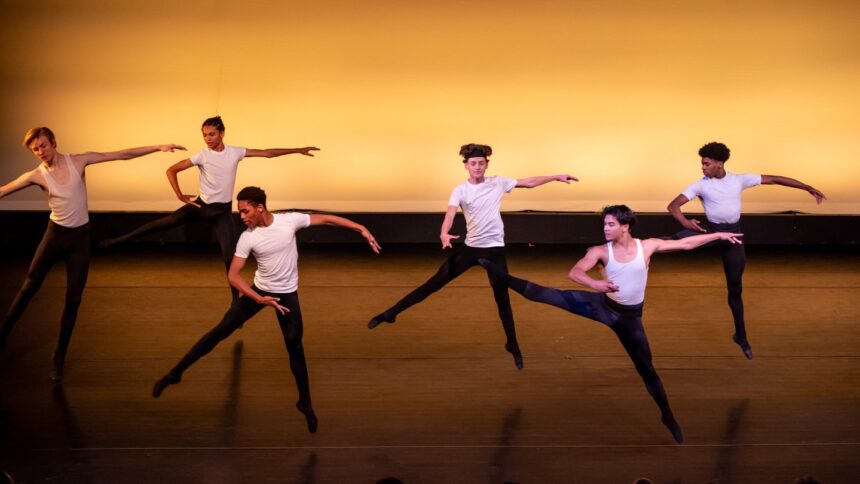
LACHSA is one of the most respected performing arts programs in the United States – on par with the likes of LaGuardia High in New York or the famous Interlochen Arts Camp in Michigan – with a unique, entertainment-focused structure. Along with more traditional liberal arts courses, LACHSA students study in dance, cinematic arts, music, theater, visual arts and other programs. Thanks to its proximity to Hollywood, LACHSA has access to more up-and-coming talent than almost any other city on the planet.
former Saturday Night Live Cast member Taran Killam, who graduated from LACHSA in 2000, remembers taking his first class at the school, as well as an optional comedy routine from his teacher Norman Cohen, who he calls his “favorite teacher ever.”
“It was a huge escalation of information at such a young and sensitive age,” Killam says. “This kind of training and exposure demystifies the idea of doing this as a career. If I had to sum up any part of my process as a comedian with one slogan, this is it. It all came from LACHSA.”
All the former students they talked to THR Paying tribute to the school staff, Anderson mentioned Jerry Friedman, who was there as a student in the 1980s and is still a teacher at LACHSA now. He will be honored during LACHSAPalooza later this month.
However, the number one factor that makes LACHSA so effective, alumni stress, is that it brings artists together, fostering the environment they need to hone their craft.
“It wasn’t just a school, it was a space where being an artist was taken seriously,” says Deutsch, who did not graduate from the school but enrolled in the 2000s. “That kind of validation at this age can change someone’s life.”
LACHSA “gave us a place to live, to be accepted, to thrive and develop our talents,” Anderson says.
“If all these graduates took the traditional high school route, we would be one of very few people out there aspiring to become artists,” he says. “This was a high school that was created for us to come together and become a tribe. So we nurtured each other, encouraged each other to go after what we wanted.”
In addition to its arts-rich curriculum, the school’s structure is also unique. LACHSA gets half of its funding from the state of California, although it still relies on donations through its foundation to cover the other 50% of its operating costs.
“Public education overall in California has not been fully funded in 50 years,” says Trina Pitchford, executive director of the LACHSA Foundation. “It is now incumbent on us to take responsibility for LACHSA and move it to a place of abundance over the next 40 years.”
And with its list of famous alumni, one might assume that the school would have no level of difficulty finding the additional dollars needed for its fundraising efforts. But as Pitchford says, the last few years between disasters like the pandemic and last year’s devastating wildfires have raised additional challenges, and the school is seeing some donor fatigue.
“In public education today, the struggles are real,” she says. “Taken together with everything that has happened in the last few years, it is clear that philanthropy has, understandably, turned to areas of Los Angeles County that have been completely devastated. Donors are fed up and pressures are mounting. The generosity of the public and some of our foundation partners is truly important.”
The school is more fortunate than many other arts programs, and is able to expand its reach thanks to some of its more famous alumni who can spread the word. But LACHSA is one of many arts programs across the country feeling the pressure as arts education continues to take a backseat in the country, and its record of producing stars is not what should determine whether these programs can survive, Pitchford points out.
“That’s what we’re trying to achieve by doing all this,” Pitchford says. “This is a small education that impacts the culture of Los Angeles and creates better people in the world.”
As for what would happen if such programs didn’t exist, Anderson says the idea would be a “huge setback for the arts.”
“Everyone I know in this world uses the arts to escape, whether it’s through music, plays, films, theater or poetry,” he says. “Schools like LACHSA are important not only for young artists, but for our community.”