
India Tariff on Steel Products Tightens as Import Pressure Mounts
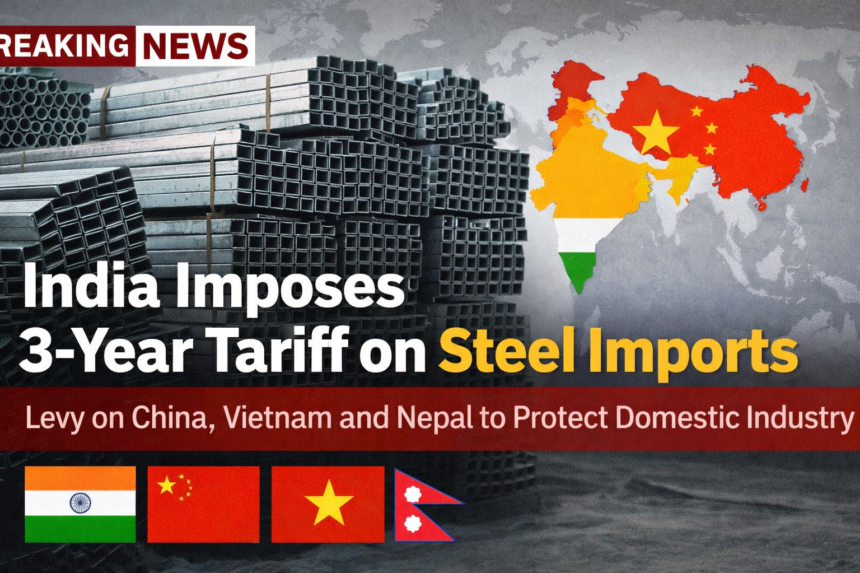
India has imposed a three-year safeguard tariff on select steel products, aiming to protect domestic manufacturers from a sharp rise in low-priced imports, particularly from China. The decision follows a detailed investigation by trade authorities that found imports had increased suddenly and were threatening serious injury to the local steel industry.
According to an order issued by the Finance Ministry on December 30, 2025, the tariff will be imposed in a phased manner, starting at 12% in the first year, reducing to 11.5% in the second year, and 11% in the third year.
The move signals the government’s intent to shield Indian steelmakers at a time when global trade tensions and surplus production, especially from China, continue to distort prices.
Steel Imports from China, Vietnam and Nepal Under Safeguard Duty
Under the notification published in the official government gazette, imports originating from China, Vietnam and Nepal will fall under the safeguard duty. The levy will apply only to specific categories of steel products and will not cover specialty steel, including stainless steel.
The government clarified that certain developing countries have been excluded from the measure, in line with international trade norms. However, China — India’s largest source of steel imports — remains a key focus of the tariff action.
This development comes months after the government imposed a temporary 200-day tariff of 12% in April, which was introduced as an interim measure while a longer investigation was underway.
Why India’s Steel Industry Pushed for Protection
Officials from the Steel Ministry have repeatedly flagged concerns about the growing inflow of cheap and sub-standard steel products, warning that unchecked imports could harm domestic production capacity, employment, and long-term investments.
Trade data reviewed by authorities showed a “recent, sudden, sharp and significant increase” in steel imports. The findings prompted the Directorate General of Trade Remedies (DGTR) to recommend a longer safeguard duty, concluding that the surge was causing and threatening to cause serious injury to Indian producers.
Industry executives have argued that price undercutting by foreign suppliers, especially Chinese mills facing excess capacity, has distorted the Indian market and reduced margins for local companies.
Global Trade Tensions Add to Steel Market Pressure
India’s decision comes amid heightened global trade friction in the steel sector. US President Donald Trump’s steel import tariffs have reshaped global trade flows, leading to excess steel being diverted to Asian markets, including India.
In response, several countries such as South Korea and Vietnam have already introduced anti-dumping or safeguard measures earlier this year to protect their domestic industries from Chinese steel.
Trade experts say India’s move aligns with a broader international trend of countries using trade remedies to counter market disruptions caused by global overcapacity.
What the New Steel Tariff Means for India’s Economy
The safeguard duty is expected to provide short-term relief to Indian steelmakers, helping them stabilise prices and production levels. Analysts believe the measure could encourage domestic investment and support employment in steel-dependent regions.
However, downstream industries that rely on imported steel may see moderate cost pressures, especially during the first year when the tariff is highest. Government officials maintain that the phased reduction in duty rates is designed to balance industry protection with market stability.
The government has also indicated that the tariff will be reviewed periodically to ensure it remains consistent with domestic demand and international trade obligations.
With the three-year tariff now in effect, industry stakeholders will closely watch import volumes and pricing trends. Any significant change in global steel supply dynamics could influence future policy decisions.
For now, the safeguard duty marks one of India’s strongest trade actions in recent years to protect its steel sector amid intensifying global competition.
- World Trade Organization – Trade Remedies Overview: https://www.wto.org
- India Ministry of Commerce & Industry (DGTR): https://www.dgtr.gov.in
Stay tuned to Global India Broadcast News for Entertainment News , Top Stories, Breaking News, Live Updates, and Latest Global Headlines.