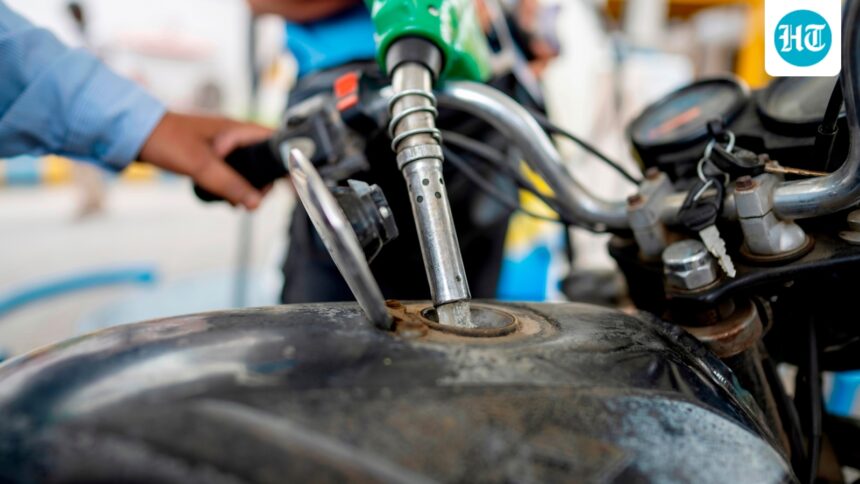
Petrol pump dealers are demanding standard operating procedure (SOP) and equipment to ensure the quality of ethanol blended petrol (EBP) sold at over 100,000 pumps across the country after the government directed states to take action against dealers for selling non-compliant EBP.
At least a dozen traders from across the country told HT that the stringent Marketing Discipline Guidelines (MDG) currently in place require them to check the quality of fuel coming from depots before stocking petroleum products like petrol and diesel for retail sale.
Read also | The government says only E25 is being tested at the moment: All your questions about ethanol-blended fuels answered
“But we only have the resources to check the density,” said Monty Sehgal, spokesman for Punjab Petrol Pump Dealers Association. “We have no idea what the exact percentage of doping is in the fuel.”
“The order issued by the government on July 8 may lead to harassment of traders. Why are private players exempted from this order? We, as traders, sell what we supply from (state-owned) OMCs (oil marketing companies or refineries)… We do not have any equipment to check the quantity and quality of ethanol being blended at the supply sites,” he added.
He was referring to the Petroleum Ministry’s July 8 order to the chief secretaries of all states which directed the state governments to “ensure close coordination between concerned departments, law enforcement agencies, oil marketing companies (OMCs) and testing laboratories to facilitate timely detection and prevention of adulteration” of petroleum products. HT has reviewed a copy of the official letter.
The move comes amid complaints of damage to EBP engines. The government has made it clear that this is not the case, but the reality is that only vehicles manufactured after 2023 are compatible with the 20% ethanol-blended petrol currently sold. The government also clarified that it is not possible to sell a mixture of 5% and 10%, citing logistical challenges.
Hemant Sirohi, a Uttar Pradesh-based trader who is a member of the Petroleum Traders Empowerment Foundation (EPDF), said traders are being subjected to “unnecessary harassment and rent-seeking by unscrupulous officers without proper standard operating procedures, equipment and scientific guidelines.”
Read also | Blending ethanol into fuel: what is Brazil doing, and where do other countries stand?
HT’s email query on the matter was sent to the Petroleum Ministry and the three state-run oil management companies, Indian Oil Corporation (IOC), Bharat Petroleum Corporation Limited (BPCL) and Hindustan Petroleum Corporation Limited (HPCL), without any response.
In a July 8 letter, the Ministry of Petroleum directed chief secretaries to direct district magistrates, waste collectors and enforcement agencies such as civil supplies departments, police and legal metres, to conduct coordinated inspections, sampling and spot checks.
Several individual traders from Delhi, Haryana, Karnataka, Andhra Pradesh and Tamil Nadu also expressed concerns, but most of them requested anonymity due to retaliation by their market management companies.
Read also | The real signs of success for ethanol blending: what it entails, why, and how much it costs
GS Rao, a Vijayawada-based trader, who is also president of Andhra Pradesh Indian Petroleum Traders Association, said there are no SOPs or directives from OMCs for petrol pumps when checking ethanol content in EBP. The Bank for International Settlements has not yet published any guide or criteria for this.
Executives at the OMCs, on condition of anonymity, said they have intensified quality control efforts.