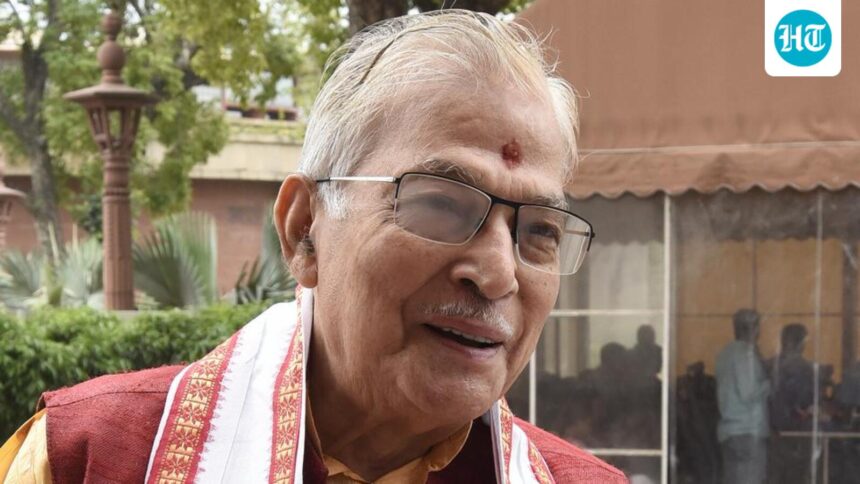
Veteran BJP leader and former union education minister Murli Manohar Joshi on Thursday slammed the use of “brutal force” against protesting women and girls at Jantar Mantar, asserting that the concerns that brought them to Delhi were “real” and should not be seen as a mere law and order problem that should be dealt with forcefully.
In a post on website fixit spices (Developed India). Joshi headed the Ministry of Education between 1998 and 2004 and at that time faced criticism for changing the curriculum and history textbooks.
“It is extremely painful to see young students from across the country congregating on the streets of New Delhi for days. Their concerns and issues are real. They must be addressed with compassion and a vision for long-term solutions. I sincerely hope this is not seen as just a law and order problem that must be dealt with forcefully,” he said in a post on X.
“I am deeply pained when I see the use of brutal force against women and young girls. Such use of force would alienate large sections of Indian society from the national goal of fixit spices,He said.
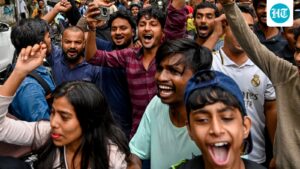
Joshi’s outreach comes amid rising tensions in Jantar Mantar, where thousands of students and youth representatives staged a sit-in following widespread anger over NEET medical entrance exam paper leaks and systematic screening irregularities.
On July 20, Delhi Police used force to stop a march of thousands of demonstrators towards Parliament.
Videos that appeared on social media showed several protesters, many of whom appeared unarmed, being beaten by police wearing riot gear, with some suffering head injuries. But police confirmed that the crowd turned violent, necessitating the use of force.
The agitation, led by the Sarwar Janta Party and arising out of a controversial statement made by Chief Justice of India Surya Kant earlier this year, first began a sit-in protest on June 6 to demand the resignation of Education Minister Dharmendra Pradhan over repeated paper leaks.
After days of listless crowds, the movement was galvanized by a hunger strike and the forced deportation of activist Sonam Wangchuk last week.
The crowds swelled over the weekend, and by Monday morning, queues of people — many of them students, first-time agitators and young professionals — braved persistent monsoon rains and heavy police barricades to join what has become the largest street protests in Prime Minister Narendra Modi’s third term.