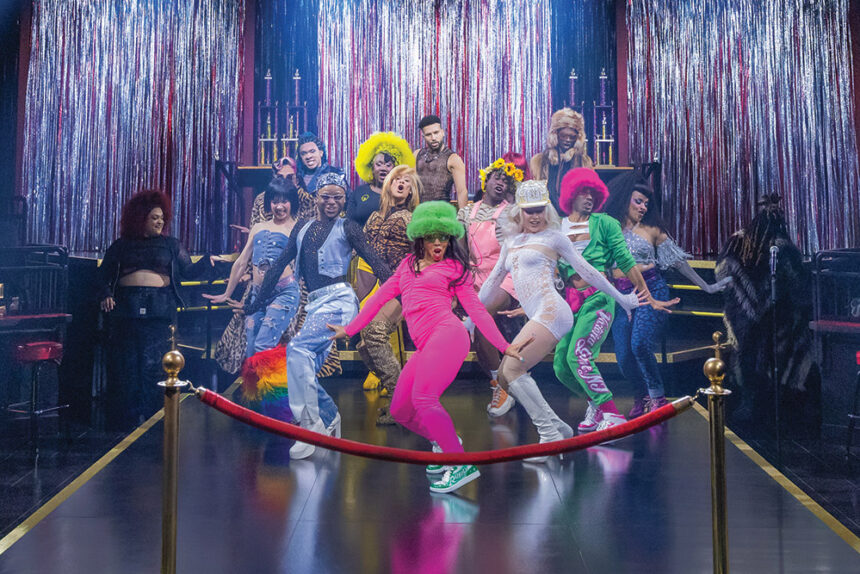
Final announcement August 8th Cats: Jellicle Ball On Broadway, it sent shockwaves through the industry, not just because of the shutdown itself but because of what it says about the future of the genre. The revival, which reimagined the 1980s classic as a dancehall competition, was critically acclaimed and highly attended, grossing nearly $1 million a week before the Tonys appeared. Revenues dipped slightly after the Tony Awards, where the show won three awards but missed out on the main award for best revival. However, on paper, these numbers do not appear to indicate the imminent closure of the show.
However, staff and company members were gathered for a meeting on July 13, and told that the show had not been able to generate enough revenue to cover expenses. Hollywood Reporter she learned, leading to the decision to close after about five months on Broadway rather than continue to operate at a loss. It was not a question of bringing in audience members per se, but also of raising the average ticket price and bringing in theatergoers willing to pay the higher prices needed to cover the now high production costs on Broadway.
“We’re in this environment where I’m watching a lot of shows, and we’re not finding the audience that can support them at the level they need to sustain because the costs have gone up so much,” says Mara Isaacs, the lead producer of the Broadway musical. Hadestown. “There have always been more shows that fail than succeed. I think the ratio right now seems skewed, and that’s the thing that looks so bad.”
This issue emerged after the pandemic with rising costs due to supply chain issues and rising material prices. Weekly operating expenses remain high with rising facility fees and theater rent, along with increased rates for actors, musicians and stagehands as well as members of creative teams, to cover the increased costs of living. The problem is even more acute for musicals, given larger cast sizes, the need for an orchestra, and the fact that many plays now feature celebrities who are able to attract large crowds at higher ticket prices. “Without movement, Broadway risks competing with the empty theaters of Hollywood: the increasingly dark theaters where bold new works once lived.” Cats Composer Andrew Lloyd Webber wrote on X on July 14.
The issue of rising production costs is an ongoing conversation in the industry, but no collective solution has been found yet, prompting Lloyd Webber to call on theater owners, producers and union leaders to work together to find an answer. The state tax credit helped attract shows to investors and work toward recovery, but few musicals recovered after the pandemic, many closed early, and in this uncertain environment, only five new musicals have been announced for next year.

“A lot of my bandmates had never played a show that lasted more than a year,” says Clayton Craddock, the band’s current drummer. Cats: Jellicle Ball And Broadway veteran.
For now, producers are trying to meet the challenge on an individual level, as new shows try to cut their budgets by using fewer set pieces, reducing automation and reconsidering the number of cast members necessary before coming to Broadway. “We try to look at every piece of production and what we spend money on and what we don’t spend money on. What is necessary to tell the story? What are ways we can reduce costs by using theatricality or magical realism?” says Ben Holtzman, lead producer of the new musical requiredabout two white trans sisters who become outlaws, which opens on Broadway in the fall.
Hadestowna folk-jazz musical inspired by two Greek myths, is one of the rare modern musicals with staying power, with the show running for seven years on Broadway after winning the 2019 Tony Award for Best Musical and recouping its $11.5 million budget. (In comparison,Cats It was capitalized at $18 million, which is still relatively low in this era, while… Paddingtona major art show coming in the spring, has a capitalization of up to $31 million.) However, Isaacs says Hadestown It had to stay nimble and responded to rising operating expenses with several creative casting choices, including bringing on names like… The summer she turned beautifulLola Tung, by making cuts to their budget, significantly reduced their marketing spend about two years ago.
The challenge of high operating costs also meant that shows had to attract audiences early, including during the preview process, which served as a grace period for the production to find its audience and resolve any remaining issues. Holtzman is working to combat this by trying to raise awareness about this required Over the past year, we have built a long marketing runway and offered discounted ticket prices during the preview process to help build word-of-mouth marketing. But he points out that most ticket prices have to rise in order to cover costs: “The amount of time you have to complete your show has been shortened.”
There is still optimism, given that audience numbers have increased since the early days after the pandemic, and some musicals have achieved sustained run, e.g. Maybe a happy ending, The 2024 Musical of the Year winner, who received a boost from superstar Darren Criss, and Buena Vista Social ClubWhich opened in 2025 and follows a group of Cuban musicians. But audience behaviors have also changed post-pandemic, with many returning to old favorites such as… evil and The lion king Celebrity-driven shows.
“We’ve trained audiences that the shows that have value are the ones with stars and recognizable intellectual property, so now we have to try to pull ourselves out of that pattern of behavior because that’s not sustainable either,” Isaacs said. “We have to figure out how to welcome audiences to shows that are as much about community and experience as they are about celebrities.”
while Cats Given its well-known intellectual property (for better or worse), this revival’s bold departure from the source material focused on the dance floor, with competitors appearing on the runway. This placed it more in the category of a new musical, which also meant a need to educate Broadway audiences about the subculture. This is another reason why there is a feeling of closure, loss of creative risk and focus for trans and queer performers, in the industry.
For his part, Craddock, the drummer CatsHe says the industry and his job security felt increasingly unstable after the pandemic. For this reason, he started a business to educate other musicians about Broadway’s financial model, encourage them to participate in more gigs outside the industry, to learn how to play more styles of music and find other sources of income in order to hedge against instability. He wasn’t as shocked as others about the announcement, even when he said it didn’t fit with the current atmosphere at the show.
“I didn’t know how long it could last because it’s a new show,” Craddock says. “Even though the people who came to see it love it, the energy inside the stage is electric, the band is great, and the atmosphere in the pit is great, there just weren’t enough people to keep this afloat.”
This story appeared in the July 22 issue of The Hollywood Reporter magazine. Click here to subscribe.