

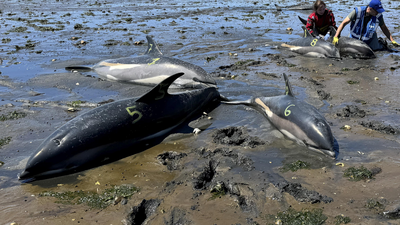
A dramatic two-day rescue operation took place along the Massachusetts coast after 53 bottlenose dolphins became stranded on the tidal flats of Cape Cod, sending marine wildlife teams into a race against time to save the animals.
The latest rescue saw 19 dolphins successfully return to sea after becoming stranded between Brewster and Wellfleet, just one day after another 34 dolphins were found beached in the same area. Cape Cod’s unique coastline, with its shallow mudflats and rapidly receding tides, makes it one of the world’s hotspots for mass dolphin strandings, wildlife experts say. Successive incidents have once again highlighted the importance of rapid rescue efforts and long-term conservation.
Why do dolphins keep stranding on Cape Cod?
Cape Cod is known as one of the world’s leading hotspots for mass dolphin strandings due to its distinctive geography. The area is characterized by vast tidal flats, gently sloping beaches and winding channels that become exposed when the tide goes out quickly. Dolphins often enter these shallow waters while fishing during high tide, but can become trapped when the water drains quickly, leaving them stranded far from deeper ocean waters.
Scientists also believe that dolphins’ strong social behavior contributes to these events. Bottlenose dolphins travel in closely-knit groups, meaning that if one animal strands, others often follow, resulting in widespread strandings involving dozens of individuals.
How were the nineteen dolphins saved?
The recent rescue involved 19 bottlenose dolphins found in three locations along a nine-mile stretch of coast between Brewster and Wellfleet.
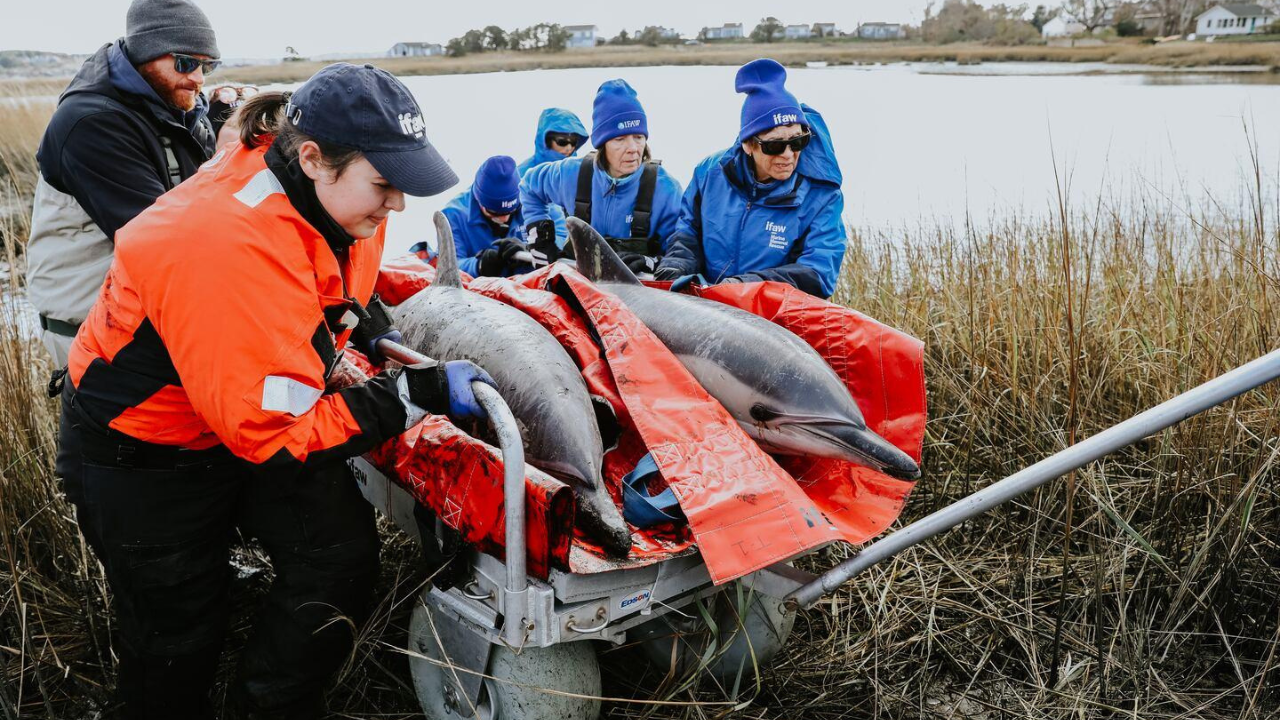
Responders from the International Fund for Animal Welfare (IFAW) assessed each animal, kept them cool and hydrated, and waited for the tide to rise before carefully refloating them into deeper water.According to the International Fund for Animal Welfare, the dolphins were in good condition, which increased their chances of survival after being released. The rescue followed a larger operation the day before, when 34 dolphins became stranded along Brewster Beach, bringing the total number of dolphins stranded over two days to 53.
Why are stranded dolphins in danger?
Although dolphins breathe air, they are not adapted to survive on land. Without the support of water, the body’s weight puts enormous pressure on the internal organs, making breathing increasingly difficult. They are also vulnerable to dehydration, overheating, and extreme physiological stress, especially during warm weather.This is why rescue teams work quickly to stabilize stranded animals instead of returning them to the sea immediately.
Each dolphin is assessed for injuries or illness before being released into the appropriate location and tide.
Why timing is critical during rescue operations
Successful dolphin rescues depend largely on tidal conditions. Responders often wait for the incoming tide to provide enough water depth for the dolphins to swim away safely without becoming stranded again.Special stretchers are used to transport large animals, while rescuers keep their skin constantly wet and ensure the blowhole remains free of sand and water.
Whenever possible, dolphins are released together because they naturally travel and communicate in groups, which increases their chances of staying together after returning to the ocean.Bottlenose dolphins play an important role in maintaining healthy coastal ecosystems by helping to regulate fish populations and supporting balanced marine food webs. Their presence is also an indicator of overall ocean health, making stranding events valuable opportunities for scientists to investigate environmental conditions, disease outbreaks, and changes in marine habitats.Each rescue also provides researchers with important data that can improve future conservation efforts and deepen understanding of why mass strandings occur.
What should you do if you find a stranded dolphin?
Wildlife experts advise members of the public to maintain a safe distance and immediately report stranded dolphins to local marine mammal rescue organizations or authorities. People should avoid touching animals, feeding them, or trying to push them back into the water, as this may aggravate injuries or increase stress.By allowing trained responders to safely assess and rescue stranded dolphins, the public can play an important role in protecting one of the most intelligent and socially complex marine mammals in the ocean.