The Indus Waters Treaty, especially the provisions on sharing transboundary rivers, will not function again in its current form, and there is no evidence of Pakistan’s renunciation of terrorism, which is the main reason for suspending the treaty in the wake of the Pahalgam terror attack, people familiar with the matter said on Monday.
India suspended the Indus Waters Treaty as part of a package of punitive diplomatic and economic measures shortly after the Resistance Front, a proxy for the Pakistan-based Lashkar-e-Taiba, killed 26 civilians in Pahalgam in April 2025. India launched Operation Sindoor in May last year to target terrorist infrastructure in Pakistan in response to the attack.
The people, who spoke on condition of anonymity, stressed that the treaty, in its current form, “will never work again,” and provisions on sharing transboundary rivers must be renegotiated in light of factors such as climate change, changes in demographics and advances in hydrological technology since the 1950s, when the agreement was negotiated.
Read also: Pakistan’s misuse of the Indus Treaty
The newspaper also linked any review of India’s decision to retain the treaty – signed in September 1960 by then Prime Minister Jawaharlal Nehru and then Pakistani President Muhammad Ayub Khan – to a suspension of Islamabad abandoning its support for cross-border terrorism. They stressed that there is currently no evidence that Pakistan has taken any steps to end its support for terrorism.
“On the contrary, we continue to receive reports that proscribed groups and individuals imposed by the UN Security Council Resolution 1267 Sanctions Committee are still appearing at public events in Pakistan, and still have platforms to spread their messages,” one of the people said.
Read also: Inside the Indus Water Network
“We have proof of that [security] “The agencies, with regard to their activities across the Line of Control, indicate that no credible steps have been taken so far to control their activities,” he added.
The sources said that before suspending the treaty, the Indian side had officially contacted Pakistan four times since 2023 to renegotiate the agreement. The latest official message from India indicated that the Indian side is ready to meet Pakistan in any place it chooses. Pakistan, in its final response on May 8, 2025, said it was ready to listen to India’s view at the Indus Water Commissioners level, but New Delhi said discussions should be between the two governments, they said.
The people noted that Pakistan’s actions, including efforts to block all water management projects on transboundary rivers proposed by India, had eroded the “spirit of goodwill and friendship” that formed the bedrock of the treaty’s preamble. They said the lopsided arrangement agreed to by New Delhi – where India agreed to give 81% of the river’s water to Pakistan – was intended to facilitate resolution of issues between the two sides, but this never happened.
People rejected Pakistan’s efforts to create a “victim narrative” based on the false premise that India intended to cut off water supplies, and pointed out that Islamabad had failed to manage or use its share of the river’s waters effectively. Of the 140 million acre-feet of water available annually in transboundary rivers, Pakistan wastes nearly 35 million acre-feet — more than India’s share — by letting it flow into the sea, the people said.
The Indus Waters Treaty, brokered by the World Bank, allocated the western rivers – the Indus, Jhelum, and Chenab – to Pakistan, and the eastern rivers – the Ravi, Beas, and Sutlej – to India. Each country permitted certain uses on the rivers designated for the other.
Pakistan has also opposed the Treaty’s tiered dispute resolution mechanism, which stipulates that disputes are first handled by the Indus Water Commissioners or governments, before the matter is referred to a neutral expert, and then to an arbitration tribunal. While Pakistan sought to appoint a neutral expert to handle objections to the Kishenganga and Ratel projects in 2015, it unilaterally backed down in 2016 and sought recourse to an arbitration tribunal.
In 2016, the World Bank appointed a neutral expert and arbitration tribunal. India attended the meetings held by the neutral expert until the treaty was suspended last year. It completely moved away from the procedures of the arbitration court, which it never recognized. The Pakistani approach could lead to conclusions that would “destroy” the very basis of the treaty, the sources said.
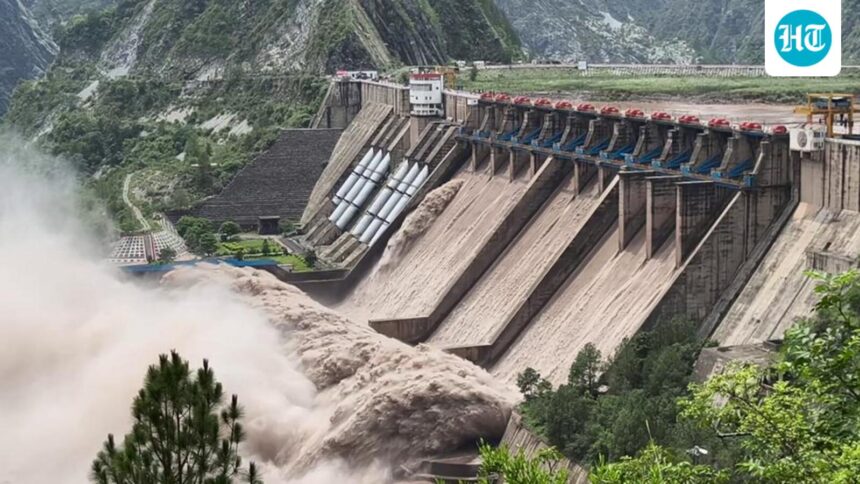
Since the suspension of the treaty, the Indian side has accelerated work on several water management and power generation projects in Jammu and Kashmir, including some that had been stalled for decades due to Pakistan’s actions, the sources said. While 3,300 MW of hydropower has been generated in Jammu and Kashmir over six decades, another 3,500 MW will be added in the next few years.
The Kero and Pakal Dul hydropower projects will be commissioned this year, while two other projects – Kuar and Ratel – are expected to be commissioned by 2028, the sources said.