At the heart of Sanjay Raut’s post was a courtroom remark made by Surya Kant in mid-May; After that the Cockroach Janta Party appeared as a satire initially

A remark made by India’s Supreme Court Chief Justice Surya Kant in May that he used the phrase “cockroaches” and “parasites” for certain sections of unemployed youth came back into focus on Monday after Sanjay Raut, the Rajya Sabha MP from the Shiv Sena (UBT), expressed his thanks to the CJI for the protest movement led by the Cockroach Janta Party, a satirical group formed in reaction to his comment.
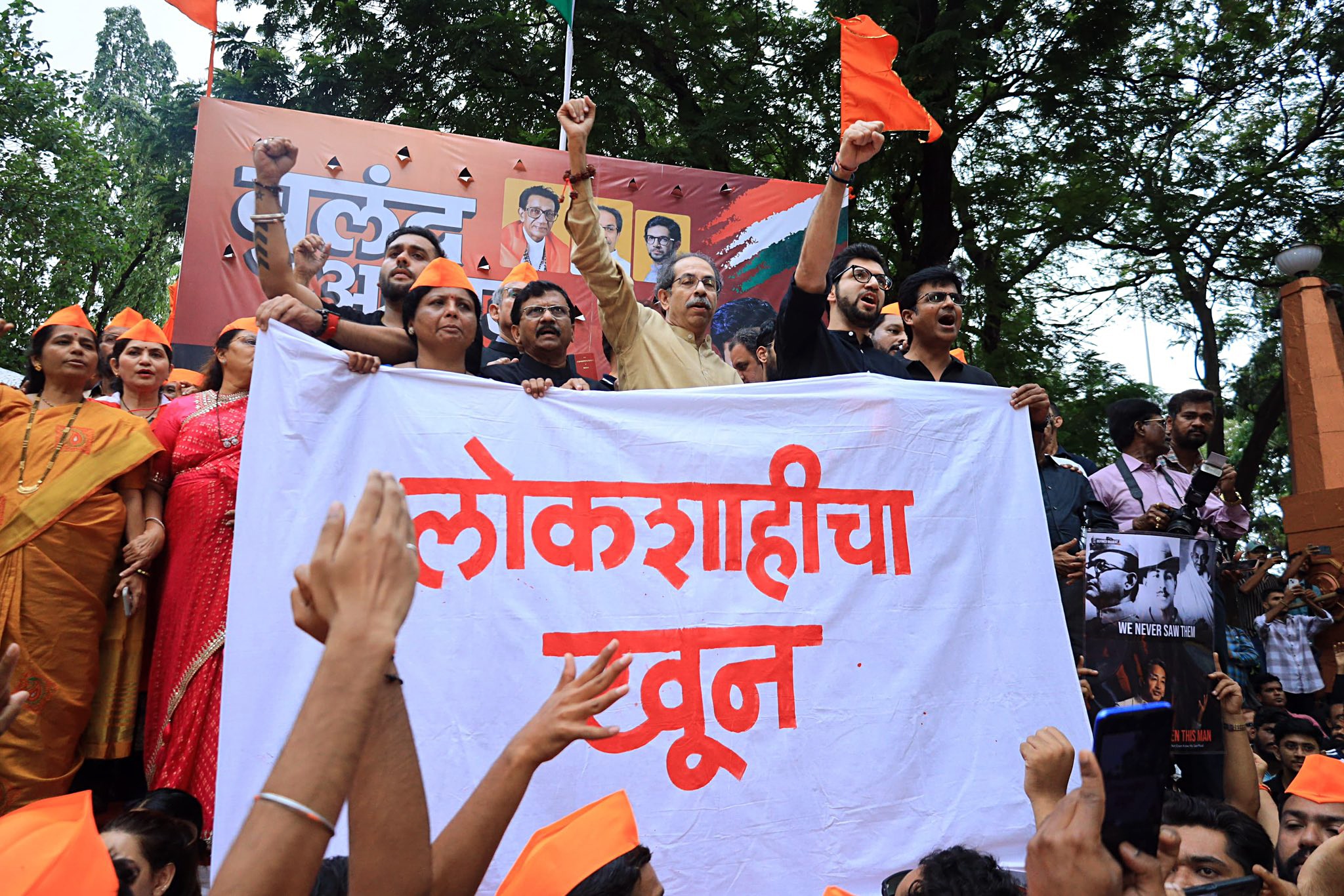
“Chief Justice of the Supreme Court, Sir Suryakant Ji. The credit for today’s great movement goes only to this one person! Because he brought the country’s dead back to life,” Raut posted on X.
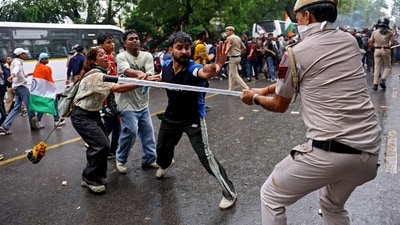
Security forces stopped thousands of AKP supporters as they attempted to march towards Parliament on the opening day of the monsoon session. The government later spoke to CJP leaders, though the stalemate continued over the demand for sacking of Education Minister Dharmendra Pradhan over NEET-UG paper leak and other issues.
What Raut said
Raut also said that, ahead of the Sansad Chalo march, the government had initially ignored voices like activist Sonam Wangchuk and CJP founder Abhijit Debki as minor distractions, “believing it could crush the ‘cockroaches’, but the movement instead proved resilient and attracted support nationwide”.
He then went on to post the letter on
Date of observation
At the heart of Raut’s post was a courtroom remark the CJI made in mid-May, during a hearing before a bench including him and Justice Joymalia Bagchi.
The bench was hearing a petition filed by advocate Sanjay Dubey seeking contempt proceedings over alleged delay in the Delhi High Court in implementing the Supreme Court’s guidelines on appointment of senior advocates. CJI Kant strongly criticized what he described as growing and unnecessary attacks on the judiciary and the legal system.
“There are young people who are like cockroaches, who are not getting any job or any place in the profession. Some of them become media persons, some of them become social media, RTI activists and other activists and start attacking everyone,” the CJI observed during the hearing.
He also called these people “parasites of society.” He also said he wants the CBI to check the law degrees which he believes may be fraudulent in large numbers.
The remark went viral, and a day later, communications strategist Abhijit Debke launched the satirical Janta Sarsour Party — a play on the name of the ruling Bharatiya Janata Party — whose Instagram followers surpassed those of the BJP within days and has since grown into a broader youth protest movement.
The CJI said he was misquoted
Two days after the statement came to light, the CJI issued a clarification, saying it had been “misreported by sections of the media” and that its criticism was directed only at those who entered professions like law “with the help of fictitious and fictitious degrees”.
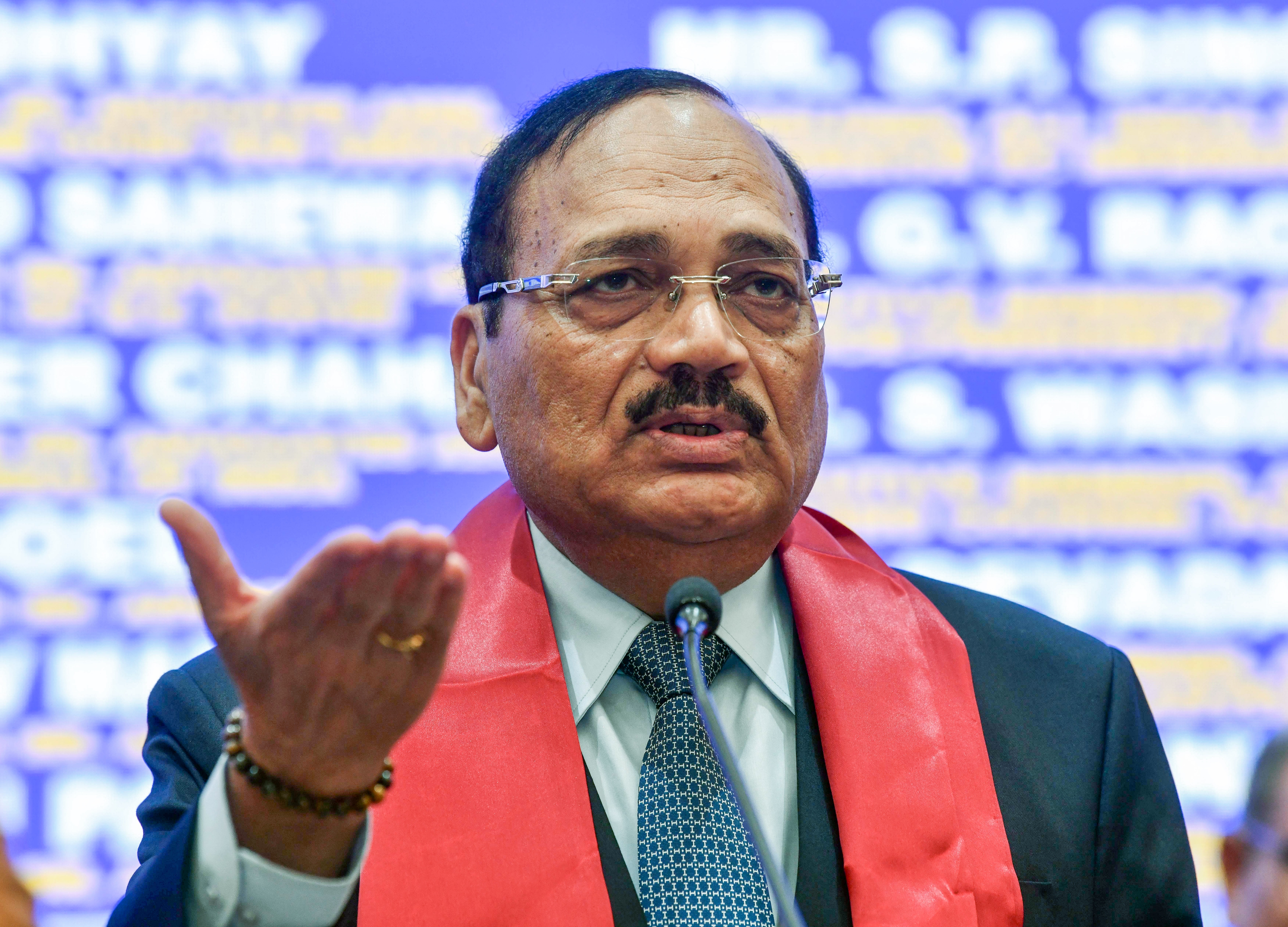
Petitions were later filed in the Supreme Court seeking action on the alleged “commercial exploitation” of the CJI’s courtroom statements by the CJP on social media. When the matter was mentioned for an urgent hearing on May 25, the ICJ, which chaired a bench that also included Justices Joymalia Bagchi and Vipul Pancholi, refused to fast-track the hearing, asking lawyers not to treat the case “too emotionally” and noting that there was “no extreme urgency.”
Since then, the CJP has grown on the ground as well. On Monday, thousands of RJD supporters attempted to march to Parliament, prompting security forces to use tear gas and batons near Parliament Street, Shastri Bhawan and Constitution Club after protesters allegedly breached barricades in the high-security area.
Solidarity demonstrations were also held elsewhere, including Nagpur, Lucknow and Mumbai, while Lok Sabha proceedings were postponed several times amid opposition protests inside the House.

Arish Chhabra is an associate editor on the Hindustan Times online team, where he writes news reports and explanatory features, as well as overseeing the site’s coverage. His career spans nearly two decades across India’s most respected newsrooms in print, digital and broadcast. He has reported, written, and edited across formats—from breaking news and live election coverage, to analytical long-reads and cultural commentary—building a body of work that reflects editorial rigor and a deep curiosity about the community for which he writes. Areesh studied English Literature, Sociology and History along with Journalism at Punjab University in Chandigarh, and began his career in that city, eventually moving to Delhi. He is also the author of Little Big City: What Life is Like from Chandigarh, a collection of critical essays originally published as a weekly column in the Hindustan Times, which examines the culture and politics of a city that is much more than just its famous architecture – and in doing so, holds up a mirror to modern India. During his stints at BBC, The Indian Express, NDTV and Jagran New Media, he has worked across formats and languages; Mainly English, as well as Hindi and Punjabi. He was part of the crack team for the BBC Explainer project which was replicated around the world by the broadcaster. At Jagran, he developed editorial guides and trained journalists on integrity and quality content. He has also worked at the intersection of journalism and education. At the Indian School of Business (ISB) in Hyderabad, he developed a website to streamline academic research in management. At Bennett University’s Times School of Media in Noida, he taught students the craft of digital journalism: from newsgathering and writing to social media strategy and video storytelling. After moving from a small town to a larger town to a huge city for education and work , his intellectual passions lie at the intersection of society, politics, and popular culture—a perspective that guides his writing and worldview. When he’s not working, he’s constantly reading long-form journalism or watching cerebral content, sometimes both at the same time.Read more