The center said on Monday that it had not received any widespread or proven complaints linking E20 gasoline (blended with 20% ethanol) to engine malfunctions, fuel pump problems, corrosion, water pollution, or other problems in vehicle performance, stressing that extensive scientific studies found that the fuel is safe for use under specified standards.
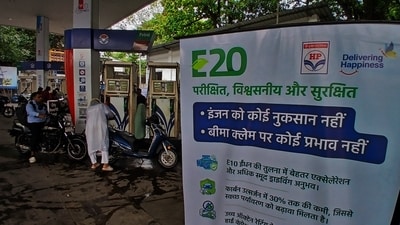
In a written reply to the Rajya Sabha, Suresh Gopi, Minister of State for Petroleum and Natural Gas, said the Ethanol Blended Petrol (EBP) program has been implemented through a scientifically validated phased process involving NITI Aayog, automakers, Oil Marketing Companies (OMCs), Automotive Research Association of India (ARAI), Society of Indian Automobile Manufacturers (SIAM), Indian Institute of Petroleum (IIP) and other technical institutions.
The statement came in response to a question asked by Rajya Sabha MP Dr John Prithas, who sought details on whether the government had received complaints from automakers, automobile associations or consumer organizations about engine failure, low fuel efficiency, corrosion, water pollution or other issues allegedly linked to E20 petrol.
The government says there are no widespread complaints
The government said it “has not received any widespread or substantiated complaints from auto manufacturers, auto associations, or consumer organizations regarding engine failure, fuel pump problems, corrosion, water contamination, or other performance issues attributable to E20 fuel.”
She added that she “took note of some of the concerns raised in the media and social media, which have been scientifically examined.”
The response further stated that “details regarding these complaints at the state and state levels are lacking.”
Read also: Ethanol blending will not lower fuel prices: Former HPCL CEO debunks the ‘myth’
Studies have found that E20 is safe for vehicles
“Extensive laboratory studies and field trials conducted by ARAI, SIAM, IOCL, IIP and automobile manufacturers covering parameters such as engine durability, driveability, operability, corrosion resistance, material compatibility, emissions and fuel efficiency have confirmed that E20 is safe to use under the specified standards,” the government said.
She also said: “These studies have also proven that older vehicles do not show any significant difference in performance or abnormal wear due to E20.” The response added, “These extensive laboratory studies, field verification, and real-world operating experience have not demonstrated any widespread negative impact on vehicle performance due to E20 fuel.”
The ministry also noted that “E15+ blended gasoline has been widely used across the country for more than three and a half years and E19-E20 fuel for more than two and a half years.” “More than 20 lakh two-wheelers and over 3 lakh petrol vehicles run on these mixtures without any confirmed evidence of widespread engine failure or abnormal wear attributable to E20 fuel,” it added.
Also Read: Don’t want E20, go for pure petrol, says Gadkari: What drivers in India can actually buy at the pump
There is no advisory on water pollution
In response to another part of the question, the ministry said that oil marketing companies did not issue any advisory warning to motorists regarding water pollution specifically due to gasoline mixed with ethanol.
Ethanol-blended petrol supplied by OMCs complies with Bureau of Indian Standards (BIS) specifications, while the fuel quality is monitored through standard operating procedures covering procurement, blending, storage, transportation and retail distribution, it said.
The ministry added that the quality of fuel is being tested in distilleries, warehouses and retail outlets. Based on complaints received, OMCs have also conducted over 30,000 quality checks at petrol pumps in the last 10 to 20 days to detect adulteration and ensure that only fuel complying with specifications reaches consumers.
She further said that state governments have been asked to adopt a zero-tolerance approach towards fuel adulteration.
The E20 target was achieved ahead of schedule
Highlighting the progress of the ethanol blended petrol programme, the government said India achieved 20% ethanol blend five years ahead of its original target after more than two decades of phased policy implementation, stakeholder consultations and capacity building.
Since the Ethanol Supply Year (ESY) 2014-15, the Ethanol Blended Gasoline (EBP) Program has helped India save over $1.97 lakh crore of foreign exchange, replaced approximately 316 thousand metric tons of crude oil, avoided approximately 952 thousand metric tons of carbon dioxide emissions, and generated more than $1.66 lakh crore as additional income to Indian farmers, the government said.
The Department said the conclusion in the Press Information Office’s June 23, 2026 statement that there are “no widespread issues” related to ethanol blending is based on cumulative technical verification, scientific testing, manufacturer data, extensive real-world operating experience, and ongoing government monitoring.