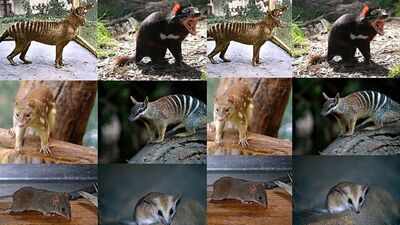
Previously known members of the Australian carnivorous marsupials (Dasyuromorphs)/Image credit: Wikipedia
A remarkable fossil discovery in Queensland has filled one of the biggest gaps in Australia’s evolutionary history. According to a new study published in the journal Australian zoologistresearchers have identified the oldest known member of the dasyurid family — a group of carnivorous marsupials that today includes the Tasmanian devil, dasyurids, dunnies, and antipodes.
The discovery pushes the group’s fossil record back to about 23 million years ago, revealing that the ancestors of these predators once thrived in lush rainforests rather than the dry Australian landscape they are often associated with today.
Small jaw fossils reveal the oldest known dasiorids
The newly discovered species bears the name Mayumba krisdikmaniIt was a small carnivorous marsupial, weighing only about 30 grams, about the size of a modern mouse. Scientists identified this species through six fossilized lower jaws that were discovered in the Riversleigh World Heritage Area in northwest Queensland, which is one of the richest fossil sites in the world.Although the fossils are small, they answer a question that has puzzled researchers for decades: When did carnivorous marsupials first appear in Australia?For many years, molecular studies have suggested that dasiorids arose much earlier than their sparse fossil record indicated, leaving a large gap between genetic estimates and fossil evidence. Most confirmed fossils of this family have been younger than 5 million years, leaving a large gap in their evolutionary history.
Another fossil species, Barinya wangala, was once thought to be an early dassaurid, but later research showed it belonged to a different, completely extinct marsupial family.discovery Mayumba krisdikmani It changes that picture. Dating back about 23 million years, the fossil record spans more than 5 million years and provides the first confirmed evidence of the dassiurid family. Researchers identified this species through a distinctive dental feature; A third mandibular premolar is smaller than the first and second premolars, a feature shared with modern dassaurids but absent in more primitive marsupials.
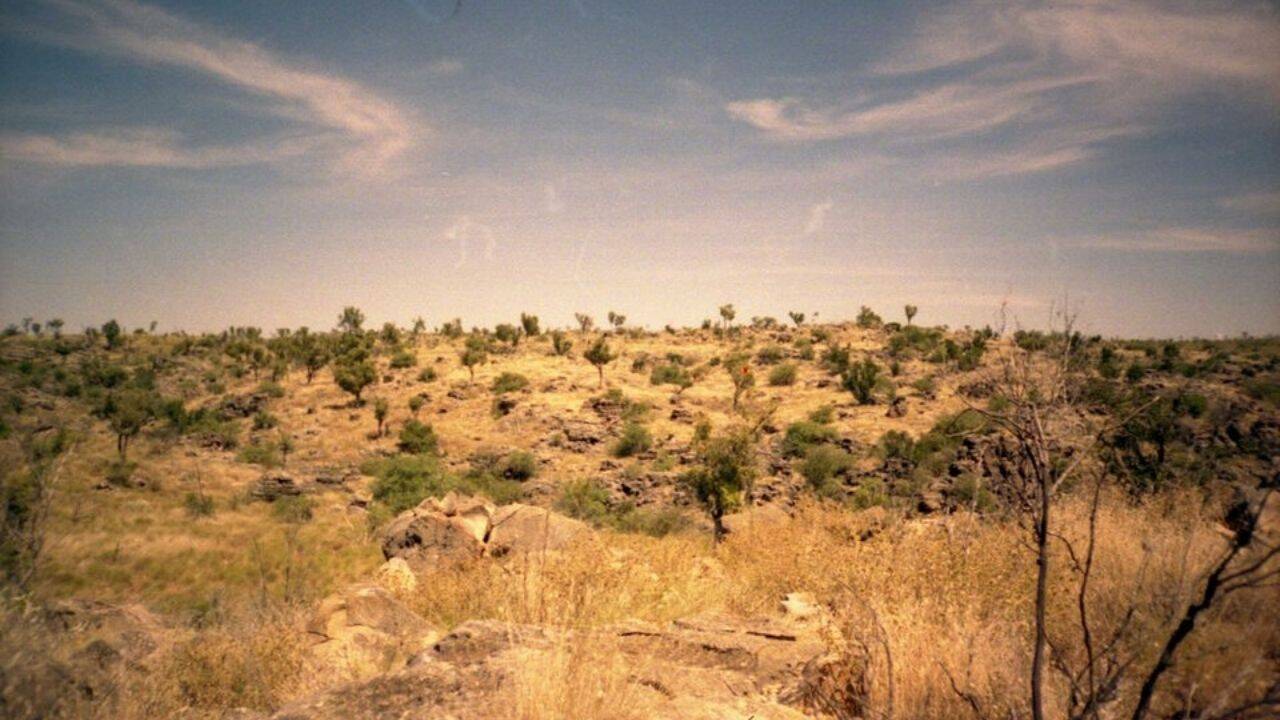
Riversleigh World Heritage Area (Image credit: Wikipedia)
Australia’s major marsupial predators likely started out in the rainforest
The study also paints a very different picture of the ancient environment in Australia.Today, many dasiorids are found in deserts, forests and grasslands throughout Australia. But when Miomba lived about 23 million years ago; The Riversleigh area was covered in dense tropical rainforest filled with diverse wildlife. Its teeth suggest that it may have fed on insects and other small vertebrates or invertebrates found under the rainforest canopy.
Phylogenetic analysis also indicates that Myumba was closely related to modern rainforest-dwelling dasaurids found in New Guinea, suggesting that the group’s early ancestors had adapted to moist forest habitats.As Australia’s climate gradually became drier over millions of years, many members of the family spread out into open forests, grasslands and deserts. It is likely that some rainforest lineages survived in New Guinea where tropical forests remained.These findings challenge the long-held assumption that Australia’s carnivorous marsupials evolved primarily in dry environments, and instead suggest that their evolutionary roots lie in ancient rainforests.
Discovery reshapes Australia’s evolutionary history
In addition to identifying a new species, the research helps solve one of the biggest mysteries in Australian mammalian evolution.The timing of Myumba’s appearance closely coincides with the decline of another ancient group of carnivorous marsupials known as caeonamorphians.
Scientists suggest that as these earliest predators disappeared, early diosaurids may have expanded into newly available ecological niches and gradually diversified into the nearly 80 living species seen today, including the sundew, the dunosaur, and the Tasmanian devil.While more fossil discoveries will be needed to fully understand this transformation; Queensland fossils provide the strongest evidence yet that modern carnivorous marsupials in Australia have a much older history than previously confirmed.By uncovering just six small fossil jaws, researchers have not only expanded the fossil record of the dassiurid family, but also revealed that the ancestors of some of Australia’s most famous predators first evolved in thriving tropical rainforests millions of years before adapting to the continent’s increasingly arid landscapes.