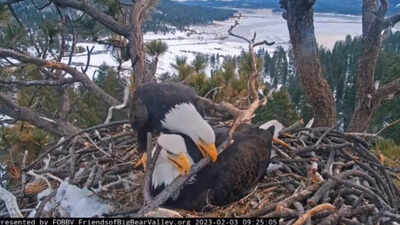
Thousands of people around the world watch bald eagles Jackie and Shadow raise their eagles.
Thousands of people around the world are once again following the lives of bald eagles Jackie and Shadow through a live nest cam in California’s Big Bear Valley. This year, attention is focused on the couple’s two young eagles, which hatched over the Easter weekend and are now growing rapidly under their parents’ care.The moving scenes inside the nest attracted viewers from all over the world. The camera gives people a closer look at the birds’ daily lives, from feeding and caring for the chicks to watching them grow stronger every day. But while the nest appears peaceful, conservationists say there is a bigger challenge lurking behind it.Friends of Big Bear Valley (FOBBV), the non-profit organization that operates the live cam, hopes the increased interest in Jackie and Shadow will also bring attention to key conservation efforts.
The organization is trying to raise $10 million to protect the forest habitat surrounding the famous nest before it is developed.The live camera has been in operation since 2015 and has allowed people to watch bald eagles during every stage of nesting, including egg laying, incubation and hatching of chicks. Over the years, Jackie and Shadow have become well known among wildlife enthusiasts, with many viewers tuning in to the live broadcast every day during the nesting season.
July deadline
Earlier this year, Jackie and Shadow lost two cubs after being attacked by crows, Newsweek reported. The loss saddened many viewers who closely followed the nest.The couple got another chance when Jackie laid two more eggs at the end of February. The eggs successfully hatched over the Easter weekend, bringing new hope to the eagle family and excitement for viewers online.At the same time, conservationists are working to protect the area surrounding the nest. Friends of Big Bear Valley has partnered with the San Bernardino Mountains Land Trust to purchase a nearby area known as Moon Camp.
According to KESQ, organizations have until July 31 to complete the purchase. If the deal doesn’t go through, a developer plans to build housing and a marina across the 63-acre site.Habitat protection is important because wildlife depends on more than just one nest. Bald eagles need large, natural areas around their nesting sites where they can hunt, rest, and raise their young safely. Changes in nearby forests or lakes can affect their reproduction and survival even if the nest itself remains unchanged.FOBBV hopes that the popularity of Jackie and Shadow’s live stream will encourage more people to support the fundraiser and help protect the surrounding landscape.
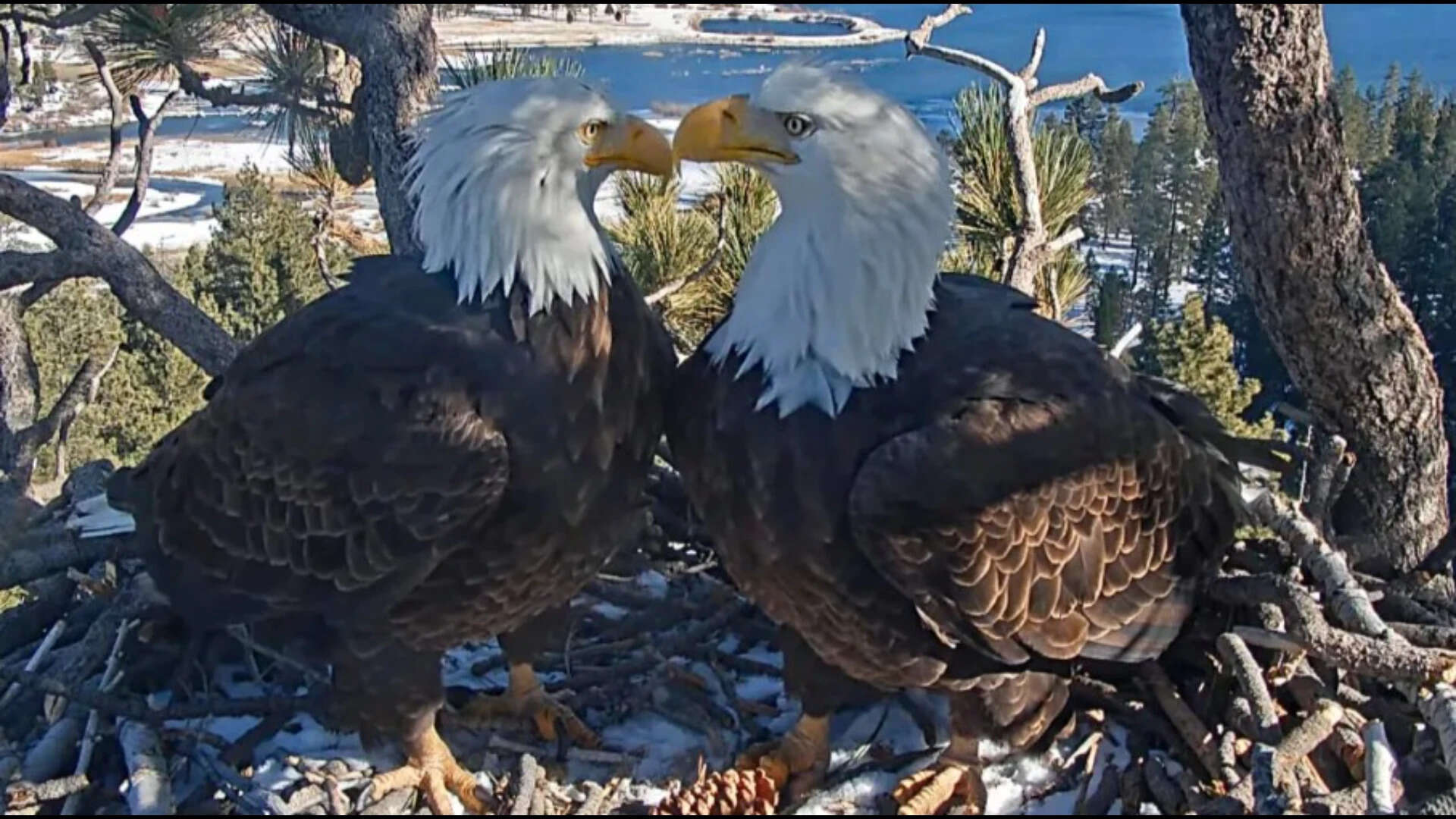
The live camera has been running since 2015 and allows people to view bald eagles.
Growing every day
Eagles are still very young and remain much smaller than their parents. They are only about 4 to 5 inches long. By comparison, Jackie and Shadow’s claws alone measure about 1 to 2 inches.Parents carefully feed the chicks by tearing the food into very small pieces with their beaks before serving it to them.
According to the description of an April 7 video shared by Friends of Big Bear Valley, the eagles were fed 17 times during the day.“Eagles have 10 to 14 weeks to grow and figure out how to fly out of the nest, so we don’t have a lot of time with them,” Jenny Voisard, of Friends of Big Bear Valley, told Newsweek. “They will change every day,” she added.Like many small birds of prey, chicks occasionally peck at each other.
Some viewers found this behavior difficult to watch, but the organization says it is completely normal.This behaviour, known by viewers as ‘bonking’, helps the chicks establish a temporary pecking order, meaning the eagles decide which ones will be fed first. Conservationists say this is a natural part of their evolution and helps build survival instincts. “Jackie and Shadow are amazing parents and will keep them fed and safe,” Voisard said.Over the coming weeks, the eagles will continue to grow rapidly before they eventually learn to fly and leave the nest.
How did you start?
The story of Jackie and Shadow is connected to the history of bald eagles in the Big Bear Valley. More than 30 years ago, the U.S. Forest Service began counting the bald eagles that visit the valley during the winter. At the time, officials typically recorded between 25 and 30 birds each season.According to the Friends of Big Bear Valley, those numbers have declined in recent years, with six to eight bald eagles typically visiting the valley during the winter.An important change occurred around 2009, when a young bald eagle from Catalina Island stayed in Big Bear Valley throughout the summer instead of leaving after the winter. Conservationists saw this as an early sign that bald eagles were beginning to return as year-round residents.This change became even more significant during the 2011-2012 nesting season, when the first documented bald eagle chick hatched in the valley.That chick was Jackie. As she grew older, Jackie eventually paired with Shadow, and together they built a nest that became one of the most famous live wildlife displays in the world.