Police on Sunday broke up a 17-day protest against Ken-Betwa Link and other development projects in Madhya Pradesh’s Chhatarpur district by dispersing the protesters and shifting the movement’s leader Amit Bhatnagar, who had been fasting for 11 days, to hospital after his “health condition deteriorated”.
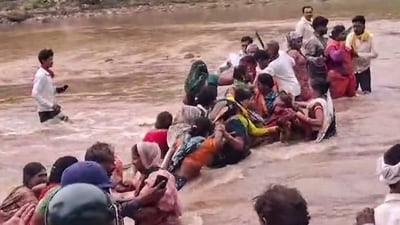
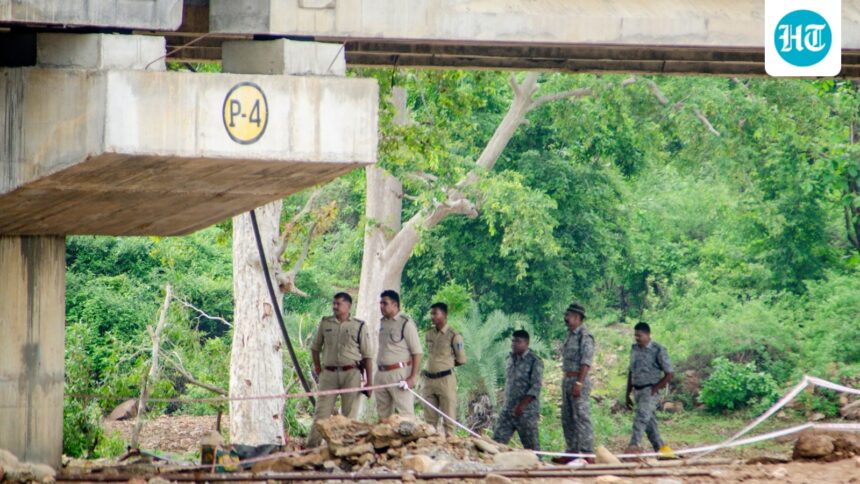
The police justified this action early in the morning, noting that there was a serious risk to the safety of the demonstrators from the rising level of the Paraná River, as the protest was organized under a bridge under construction and part of it was in the river.
Follow to get live news updates of Sonam Wangchuk here.
The protesters claimed that Bhatnagar and others were arrested during police actions, an allegation denied by the administration.
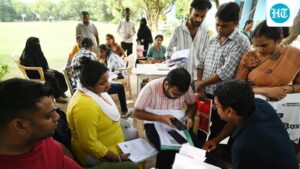
The protest, mainly organized by tribal women, has been ongoing since July 3 on the banks of the Parana River near Kopi village. The protesters also organized Jal Satyagraha, Chitta (funeral pyre) Satyagraha and symbolic Fancy Satyagraha.
The Ken-Betwa Link Project, the country’s first river linking project under the National Perspective Plan, aims to transfer surplus water from the Ken River to the Betwa River to provide irrigation and drinking water in the drought-prone Bundelkhand region of Madhya Pradesh and Uttar Pradesh.
The project has faced opposition from sections of project-affected households and environmental groups over issues related to displacement, rehabilitation and its impact on forests and wildlife, including parts of the Panna Tiger Reserve.
One of the protesters, Divya Ahirwar, alleged that police personnel arrived at the site in large numbers around 5 a.m. and arrested Bhatnagar and others before he could address the media regarding the alleged corruption in $400 crores in the project.
She said that the demonstrators were demanding adherence to legal and constitutional provisions in implementing the project. “The administration will be responsible if any harm comes to Bhatnagar or any of the protesters,” Ahirwar added.
Additional Superintendent of Police Aditya Patel told PTI that the protesters were taken in buses to their native villages.
“Those from Panna district were sent there, while those from Chhatarpur and neighboring areas were dropped at their villages,” he added.
Patel denied arresting or detaining any protesters.
He said that Bhatnagar’s health had deteriorated due to his long hunger strike, and he was taken to hospital to receive medical treatment.
The protest site was under a bridge under construction and partly located in the Paraná River, where rising water levels pose a serious safety risk, the officer said.
He said the protesters, most of whom are from the neighboring Panna district, should have organized their protests there if their grievances were related to that area.
Meanwhile, Leader of the Opposition in Madhya Pradesh Assembly, Umang Sengar, criticized the police actions and expressed concern over Bhatnagar’s hospitalization.
Sengar alleged that the BJP government had embraced repression as a “model of governance” and described the action against Bhatnagar and other protesters as “completely undemocratic”.
He demanded the immediate release of all “detained” protesters and urged the government to stop what he described as repression, listen to the concerns of people affected by the project and order an impartial investigation.
“Dialogue, not repression, is the essence of democracy,” Sinjar said in a statement. “Every citizen has a constitutional right to raise questions and express opposition.”
The administration emphasized that the Ken-Betwa Link project is of national importance and will enhance irrigation, drinking water supply and overall development in the Bundelkhand region.
But protesters claimed that guarantees given by the administration in April had not been fulfilled.
Read also | “The future is at stake”: Students protest the demolition order of Johor University
Bhatnagar had claimed that people affected by the Ken-Betwa Link project, as well as the Majhgaon and Runjeh irrigation projects, have been denied justice.
He claimed that displaced families lost their lands, forests, water resources, livelihoods and cultural identity, while some faced false criminal cases, illegal evictions, cuts in electricity supplies, and demolition of schools.
Read also | PDP and AIP skip Jantar Mantar protest in NC for statehood
He demanded that the administration stop intimidating villagers and publicly display the list of project-affected families in each affected village.