


CHENNAI: With a host of crucial free trade agreements (FTAs) in force, the textile industry is optimistic about export opportunities. The UK deal, which took effect on Wednesday, eliminates tariffs of up to 12% and achieves parity with major competitors such as Bangladesh and Vietnam.
While companies of all sizes are actively negotiating orders, concerns remain that India may not fully exploit this potential due to supply chain fragmentation, longer lead times, and lack of manufacturing scale.Prabhu Damodharan, convener of the Confederation of Indian Businessmen, said the FTA is already generating demand traction. “Unlike some previous deals, Indian exporters have long-standing relationships with UK buyers, including brands and supermarkets such as Primark, Next, Tesco, M&S and smaller brands and can increase exports immediately.
We are already seeing a lot of inbound orders and execution orders as growing concern over supply concentration and political stability creates a favorable environment.
Indian units can exploit the opportunities immediately, and exports are expected to double to 12% in the next four to five years.
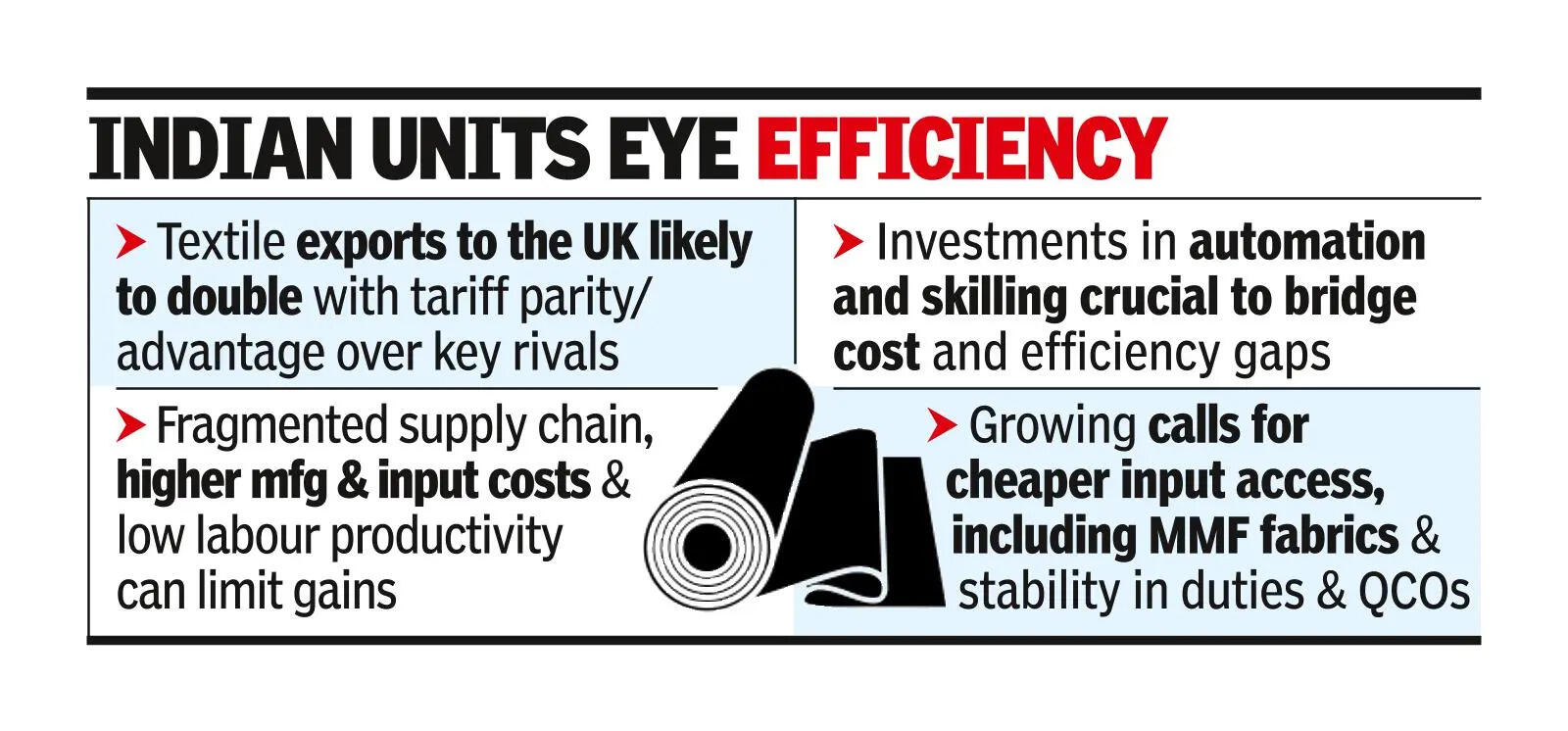
“Medium and small sized companies are evaluating additional automation technologies and can start investing in adding capabilities, modernization and integration once they have a clear view of orders and recovery time,” Damodharan added.
India currently has a 6% share of UK apparel imports. Beyond tariff differences, the industry struggles to compete on cost due to fragmented supply chains, high input costs, which include synthetic fiber and cotton fabric costs, and relatively low labor productivity.Several industry experts who spoke to TOI said the challenges lie in both value-added and high-volume sectors, including cotton textiles, where India has a stronger domestic ecosystem.
A medium-sized exporter, on condition of anonymity, told TOI that the difference could range between 20% to 30%, mainly due to higher costs of handmade fabrics. Exporters believe the government should stimulate the MMF textile ecosystem and boost the domestic cotton supply chain.Hitesh Jain, strategist at Yes Securities, noted that the sector may not benefit from free trade agreements as effectively as the automobile or pharmaceutical industries. “Trade agreements may improve market access, but the sector is unlikely to convert preferential market access into sustainable export growth. Our models show structural challenges such as declining competitiveness and changing global demand patterns. Vietnam and other countries that have benefited from a China plus one in this sector also limit the additional benefits from tariff liberalization alone.”
“Pointing out that the weaker currency had not helped exporters in recent months, he said: “Due to heavy reliance on imports, our landing costs were higher, which negated our export competitiveness even during rupee depreciation.”