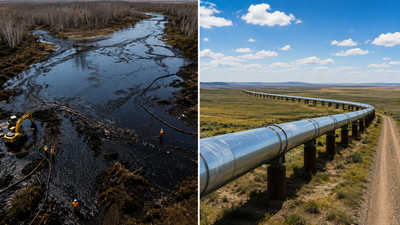
Just over three years since the largest onshore pipeline spill in the United States in nearly a decade, the company that operates the Keystone pipeline system has reached an agreement with the U.S.
The government in a proposed settlement requires it to pay a civil penalty of $26.9 million. This settlement comes after a December 2022 pipeline explosion in Washington County, Kansas, which spilled nearly 13,000 barrels of heavy crude oil into a local creek. In addition to paying the civil penalty, the company has also pledged to invest in safety measures, as well as restoration in Kansas.
Why would South Bow pay a $26.9 million fine?
As the Associated Press (AP) reported, the proposed settlement resolves allegations by the U.S. Environmental Protection Agency (EPA) and the state of Kansas that South Bow, a Canadian company that now operates the Keystone pipeline system, violated federal and state clean water laws.Under the agreement, South Bow will pay a $26.9 million civil penalty, spend about $40 million on measures designed to prevent similar incidents and contribute more than $3 million to the state of Kansas for environmental restoration projects. The company said it had already completed environmental remediation by February 2024, and has since conducted more than 12,000 miles (19,000 km) of pipeline inspections along with hundreds of excavations to evaluate and repair portions of the pipeline.
What happened in the 2022 Keystone Pipeline oil spill?
On December 7, 2022, the Keystone Pipeline exploded near Mill Creek in Washington County, Kansas, releasing an estimated 12,937 barrels (about 543,000 gallons) of crude oil into the surrounding environment. According to the U.S. Environmental Protection Agency (EPA), the spill affected about 3 miles (6 km) of Mill Creek and the floodplain before emergency response teams were able to contain the leak. This incident remains the largest spill in the history of the Keystone Pipeline and one of the most significant inland crude oil spills in modern US history.
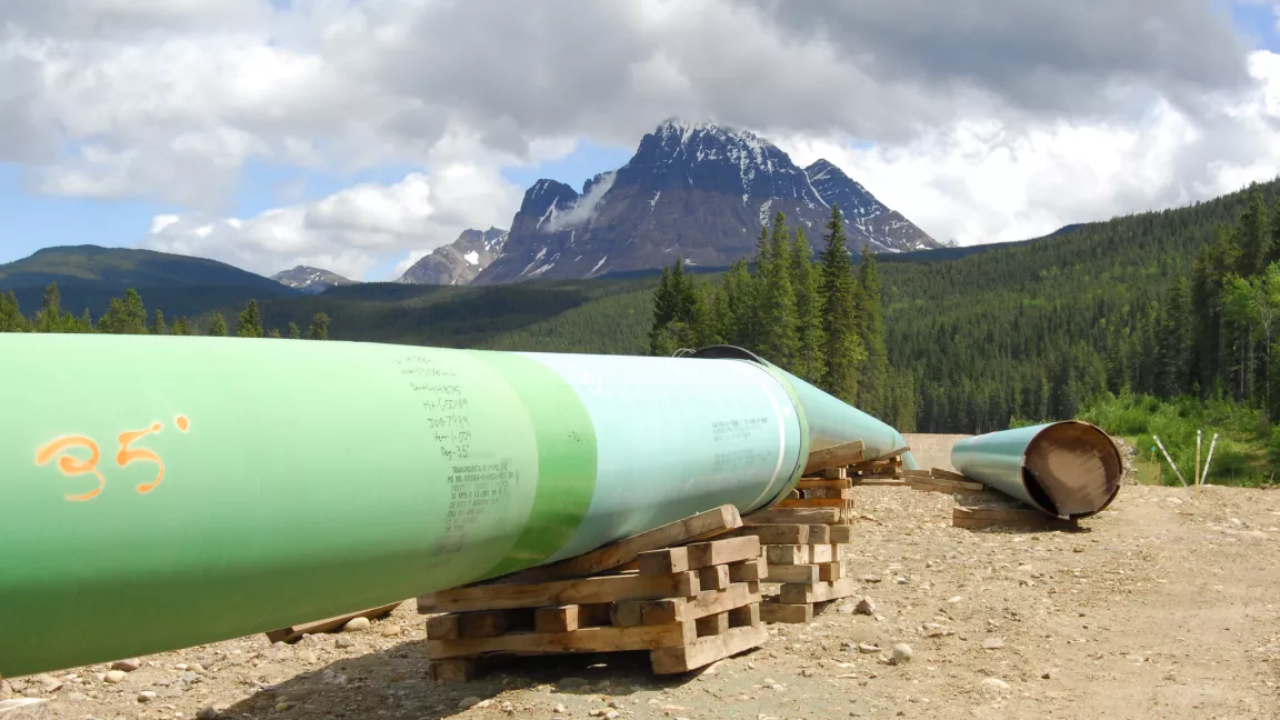
Photo: Natural Resources Defense Council
As detailed by EPA, a large-scale response involving federal, state, local, and tribal agencies, along with the pipeline operator, was launched immediately after the rupture. More than 2,100 individuals participated in the cleanup effort, which included extracting oil from the creek, removing contaminated soil and plants, restoring damaged habitat and ongoing water quality monitoring. Although no injuries or impacts to public drinking water supplies were reported, the spill caused significant environmental damage to aquatic ecosystems and wildlife.
Cleanup operations continued for several months, with long-term environmental monitoring and restoration underway under EPA supervision.
What caused the Keystone Pipeline rupture?
Experts have discovered that the failure of this pipeline was not due to some external forces applied to it, but rather due to some internal problems associated with the construction. According to research conducted by the U.S. Pipeline and Hazardous Materials Safety Administration (PHMSA), the failure was caused by external loading below the weld perimeter that caused excessive bending stress that was present throughout its operation due to the 2010 installation.
During the installation of the curved section of the pipeline, the ground underneath was not sufficiently compacted, resulting in uneven sinking and constant mechanical stress of the pipe.According to court papers published by the Associated Press, although excavation occurred in 2013, when the problems became known, no repairs were ever made to that damaged portion of the pipeline. After several years of pressure on this weak pipe, a stress crack developed in it, leading to the explosion on December 7, 2022.The proposed settlement aims to ensure that the possibility of similar incidents occurring in the future is reduced. Along with the $26.9 million civil fine, South Bow agreed to invest nearly $40 million in additional pipeline safety measures, including enhanced integrity management and inspection and maintenance programs. The company also said it completed more than 12,000 miles (19,000 kilometers) of inline inspections and performed hundreds of excavations to assess the condition of pipelines after the spill in Kansas.The accident also intensified debate over the safety of aging oil pipeline infrastructure across North America. Environmental groups say the spill highlights the need for stricter oversight, more frequent inspections, and stronger accountability for pipeline operators, especially as major pipelines continue to transport millions of barrels of crude oil through environmentally sensitive areas.
For regulators, the settlement aims not only to address the environmental damage caused by the spill in Kansas, but also to strengthen compliance with federal standards for pipeline safety and environmental protection, reducing the likelihood of a similar failure in the future.