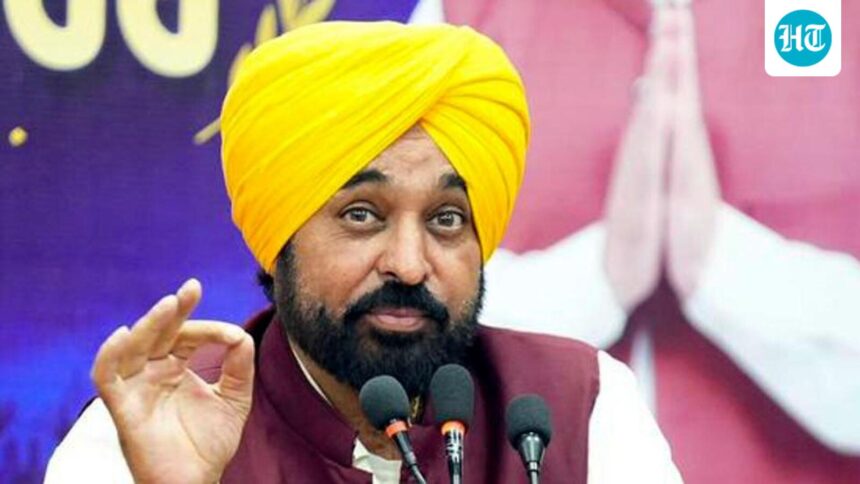
The Supreme Court on Thursday expressed its unwillingness to revive a criminal case against Punjab Chief Minister Bhagwant Mann for being part of a violent protest outside the then chief minister’s office in 2020, stating that now that he is holding a responsible position, he will act responsibly.
“Now that he is holding a responsible position, we are sure that he will act responsibly as well,” a bench headed by Chief Justice of India Surya Kant said as it postponed the hearing on an appeal filed by the Chandigarh administration challenging the Punjab and Haryana High Court’s order quashing the First Information Report against him.
Additional Solicitor General (ASG) SV Raju, who appeared in Chandigarh, sought the adjournment as the Union Territory administration was in the process of filing separate appeals against a series of orders passed by the Supreme Court against Mann and other accused.
“The Supreme Court conducted a mini-trial and we have a strong case on the merits,” Raju said. Approving the application, the bench, also comprising Justices Joymalia Bagchi and V Mohana, said: “Everyone is doing it.” Nari bazi (Slogans)… We make it clear to you that we are not inclined to interfere.” The court agreed to consider the case on July 20.
The SC order was passed in November 2025 quashing the criminal case registered against Mann and others in January 2020 for protesting outside the then Prime Minister’s residence against the power tariff hike and in the process, pushing and injuring police personnel who blocked the protesters, most of whom belonged to the Aam Aadmi Party (AAP). Others accused besides Mann include state ministers Aman Arora and Harpal Singh Cheema among other AAP leaders.
The Supreme Court accepted the petition filed by Mann and other defendants on the grounds that the charges were not serious and that the injuries sustained by the police were not of a serious nature. Nearly 750-800 party workers had gathered on the date of the incident to organize their protest in support of the same cause.
The Supreme Court failed to find any material proving the commission of offenses under Sections 332 and 353 of the IPC, regarding voluntarily causing hurt and using criminal force against public servants in the performance of their official duties.
“There was no reason for the police to prevent the protesters from proceeding towards the Prime Minister’s residence. Admittedly, no prohibitory order was issued under Section 144 of the Code of Criminal Procedure,” she said. Furthermore, the Supreme Court found that no person had been specifically named for pelting stones at the police.
“It is not the case that the petitioners asked them to do so. The nature of the alleged incitement by the petitioners is also not stated; no specific words or gestures of any kind are attributed to them,” the apex court order said.
The Supreme Court concluded that the immediate motive that caused the mob to turn violent was the firing of water cannons at them. She added that the injuries sustained by the police officers were due to a stampede and stampede by the mob, which cannot be specifically attributed to the accused.