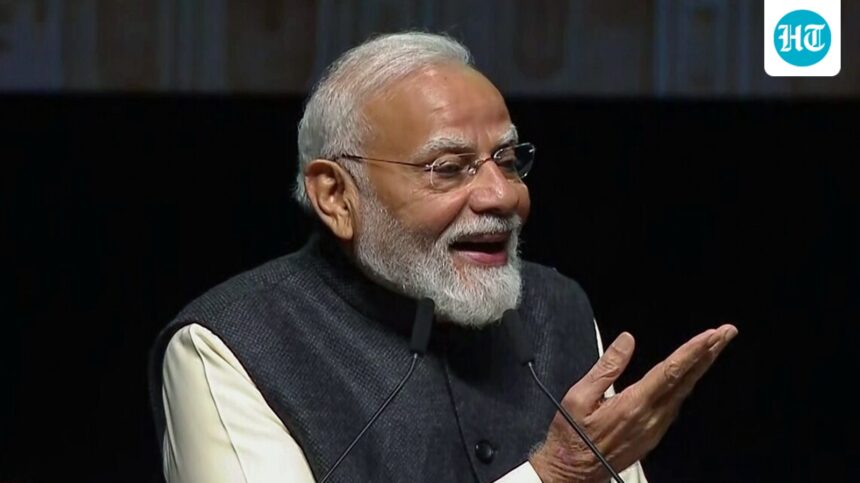
Prime Minister Narendra Modi on Wednesday described the activation of the India-UK Free Trade Agreement and the parallel Social Security Agreement as a reflection of the “trust” between the two democracies and their “determination to build a forward-looking partnership” driven by trade, technology, investment and innovation.
“This is an important moment in the India-UK partnership! With the Comprehensive Economic and Trade Agreement and the Social Security Agreement coming into force, our economic ties will deepen. Together, these agreements translate our shared ambition into tangible opportunities for our people,” Modi said in a post on X.
He said CETA would give new impetus to farmers, entrepreneurs and micro, small and medium enterprises (MSMEs). “Many vibrant sectors will have stronger access to the UK market. This will also deepen collaboration in technology, professional services and innovation, while supporting greater mobility of skilled Indian talent.”
Modi said the SSA would provide “invaluable support” to Indian professionals working temporarily in the UK while enhancing the competitiveness of Indian companies. “India and the UK will continue to work together for shared prosperity,” he added.
Goyal describes the CEFTA as a milestone in bilateral relations
Commerce and Industry Minister Piyush Goyal, who is currently on a visit to three EU member states, described the activation of the Comprehensive Trade and Investment Agreement as a “milestone” in India-UK relations. His visit comes as India and the European Union are close to finalizing the legal text of the proposed trade agreement, which is often described as the “mother of all free trade agreements.”
“Under the dynamic leadership of Hon’ble Prime Minister @NarendraModi ji, the India-UK Comprehensive Economic and Trade Agreement (CETA) and the Social Security Agreement have come into effect, providing duty-free market access to nearly 99% of India’s exports, covering nearly 100% of the trade value,” Goyal said in a post on X.
The India-UK Free Trade Agreement, formally known as CETA, provides duty-free access to almost all Indian goods in the UK market, enhancing the competitiveness of exporters in labour-intensive sectors such as textiles, leather, footwear, engineering goods, pharmaceuticals, gems and jewellery.
Alongside the CETA, the Double Contribution Agreement (DCC) also entered into force. The Supplementary Agreement exempts professionals on temporary assignments from mandatory social security contributions in the host country on a reciprocal basis, providing a significant boost to bilateral services trade.
Exporters welcome the agreement
The agreements received an enthusiastic response from exporters. Commerce Minister Rajesh Agrawal and British High Commissioner to India Lindy Cameron announced an inaugural consignment worth $10 million worth of jewelery exported by more than 30 Indian exporters from six cities.
“It is the first jewelery consignment to benefit from the preferential market access created under the CETA agreement between India and the UK,” said Kirit Bhansali, Chairman, Gems and Jewelery Export Promotion Council (GJEPC). The CETA agreement eliminates import tariffs of up to 4% in Britain, giving Indian exporters a significant competitive advantage in the UK’s $4 billion jewelery market, he added.
India’s engineering exports to the UK are expected to cross $7.5 billion by 2029-30, driven by the elimination of tariffs and expanding opportunities under the agreement, said Pankaj Chadha, president, EEPC India. The UK is already among India’s top five engineering export markets, with exports rising to $4.7 billion in 2025-26.
Goyal said CETA creates “unprecedented opportunities” for textiles, leather, gemstones, jewellery, engineering goods, marine products, chemicals, processed foods, SMEs, farmers and manufacturers.