Versant wants to compete with Tubi, Pluto and Roku channels in a bid to gain free streaming bandwidth.
The media company is overhauling its free streaming service, dropping the “Fandango At Home” branding in favor of a simplified “Fandango” name, and adding a slew of new content and features as it seeks to grow its meaningful streaming business.
Fandango, of course, may be best known as a movie ticket service, selling tickets to new movies across the country. It also has a strong PVOD offering, renting movies that have recently left theaters to users at home. The free streaming service is more recent, but Versant executives say that simply by quietly ramping up content in recent weeks, engagement for the service is quietly on the rise.
This week, the company will launch a full “We Love Freedom” marketing effort to try to drive users to the rebooted show, which Versant Entertainment President Val Boreland says will bring a 20 percent increase in the number of titles and hours available to stream, including 3,500 hours of Versant-owned content.
“We have hours of content, but now we’re focusing on increasing the quality of the content we have,” Borland said in an interview. Hollywood Reporter. “So we’re really focused on growing our premium content library. We’re curating hit movies, fan-favorite franchises and popular TV series. We’ll also have sports programming.”
Those sports programs will include the German soccer league, the German Football League, which signed a deal with USA Sports on Tuesday. It’s safe to assume other sports will eventually follow suit. Boreland says the service will eventually also have original entertainment as well, though Versant will take its time doing so. “We will build a menu rooted in our intellectual property and complemented by programming that aligns with what we know our audience will be looking for,” she says.
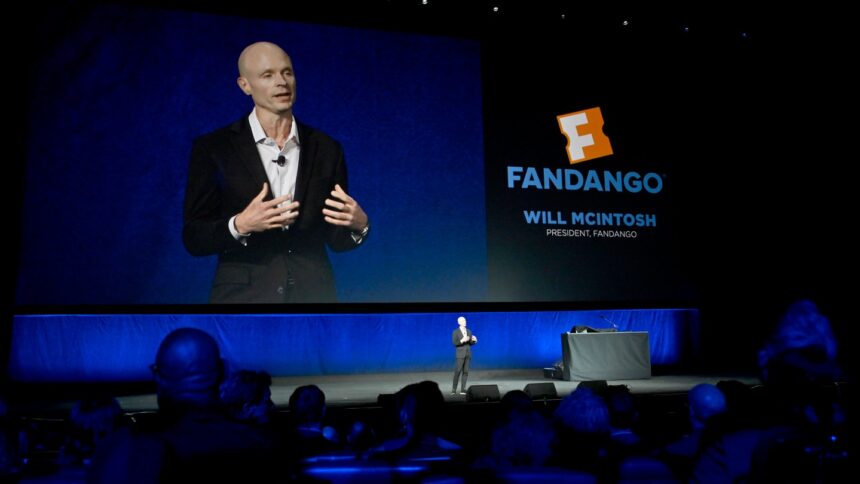
According to Will McIntosh, head of digital platforms at Versant, the explosive growth of other free streaming platforms was a big part of the reason the company chose to invest in this space.
“Clearly the market has been validated by some of the biggest players, and Tubi is probably the most notable for that,” he says, also pointing to the success of Pluto Channel and Roku, among others.
But Versant plans to lean on Fandango’s brand identity for new, fresh theatrical films to help stand out, as well as the millions of consumers who have accounts to purchase movie tickets or movies at home.
“What we think sets us apart from all these different players is that we have this theater-adjacent brand that no one else has,” McIntosh says. “In any given month, we have 50 million consumers visiting Fandango or Rotten Tomatoes to find out what they want to watch, whether it’s at the movies or at home, and they’ll rely on them as a megaphone.”
“The unique advantage that Fandango has is that we can engage audiences with recent theatrical releases,” Borland adds. “That’s something that other people can’t take advantage of in our film library, that exposure that we have.”
Suffice it to say that visitors to those sites or apps will be encouraged to check out the revamped streaming service.
The company is also pouring resources into an improved product offering, from content recommendations to ad technology.
“From an advertising perspective, our goal is to have a better experience than people have today, with reduced ad loads, ad units and experiences that don’t detract from consumption,” McIntosh says.
“We will invest in a very strong recommendations strategy that will help people find the next thing they love and keep them engaged in the Fandango ecosystem,” Borland adds. “So, in some ways, it’s similar to what platforms like Pluto or Tubi have done, but what Fandango has is the relationship we already have with millions of transactional customers.”
Longer term, the goal is to turn Fandango into the heart of Versant’s streaming strategy, at least for entertainment and sports, a strategy that will ultimately impact the company’s larger entertainment output.
“We certainly have commitments to our pay-TV ecosystem, but I also think windows will really be where we use our strategy best,” Borland says. “Not everything has to be on Fandango right away, but it has to be there at some point. And we’re not interested in living on a third-party platform either. If our biggest interest is increasing awareness of our content and getting it in front of as many eyeballs as possible where it needs to be, then the priority for us is building that Fandango AVOD service, so you’ll see all of our content eventually ending up on that platform in some window strategy.”