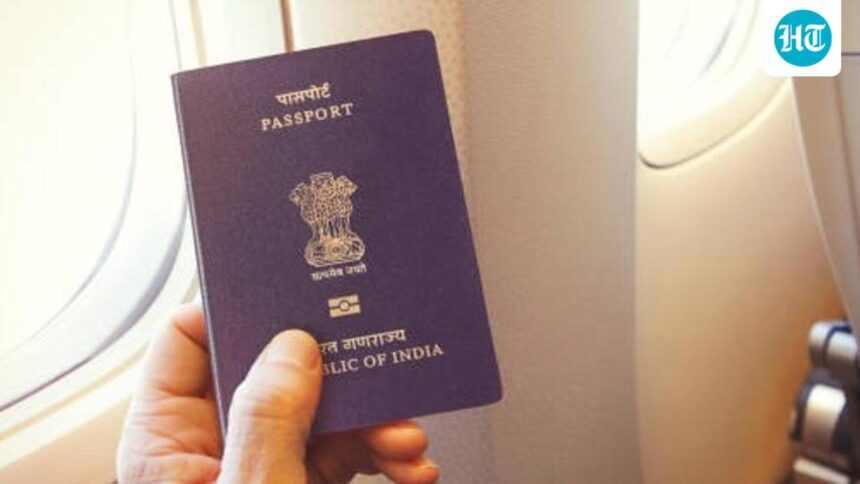
A passport is a document issued by the government to “regulate the departure” of Indian citizens from the country and is issued after due verification, the Ministry of External Affairs said on Tuesday, against the backdrop of a controversy over whether passports can be used to verify citizenship.

Senior officials of the Ministry of External Affairs had described the passport as a travel document, and not a citizenship document, at a press conference on the occasion of Passport Seva Divas on June 24. Officials responded to a question on whether the passport can be used as proof of citizenship in the Special Intensive Review (SIR) of electoral rolls underway in several states, saying the document is only for Indians to transit and travel through foreign ports and territories.
When External Affairs Ministry spokesperson Randhir Jaiswal was asked for clarification on the matter at a regular press conference, he replied: “An Indian passport is a document, in accordance with the Passports Act, 1967, issued by the Government of India to regulate the departure of Indian citizens from India.
“It is issued after due verification laid down in an established process. Issuance of passports to Indian citizens or any other individual is governed by the Passport Act, 1967 and Passport Rules, 1980.”
Jaiswal noted that less than 8% of Indian citizens currently hold a passport.
Read also:India summons Iran’s top diplomat after the killing of an Indian sailor in the Strait of Hormuz
Previous statements by Ministry of Foreign Affairs officials that a passport is not a nationality document had sparked intense controversy, including on social media, and the government was criticized in this regard by the opposition Congress Party.
At the time, government officials also pointed to a 2013 Bombay High Court ruling that made it clear that a passport is not proof of citizenship. They further pointed out that a provision of the Passport Act allows the central government to issue a passport to “a person who is not a citizen of India” if it is necessary in the public interest.