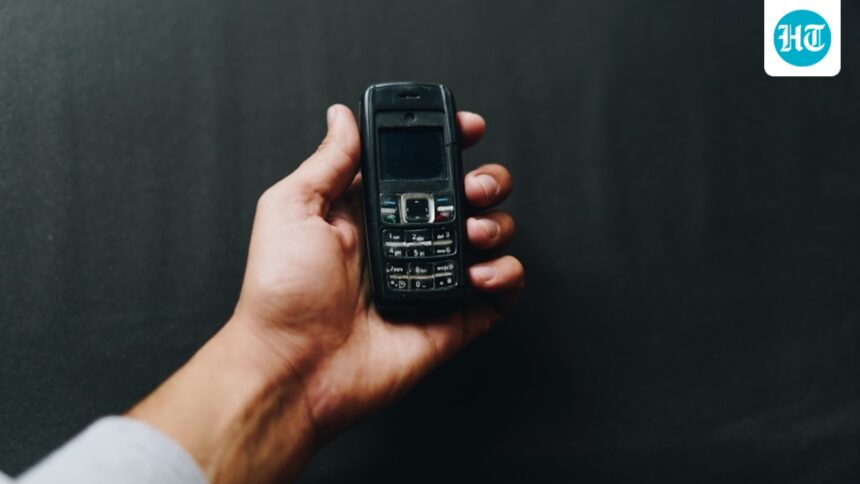
Bharat Sanchar Nigam Limited (BSNL) on Thursday announced the launch of a satellite phone for $1.34 thousand. He stated that the device was designed to suit difficult environments, as it provides voice calls in remote areas not covered by traditional mobile phone networks.

In a post on X (formerly Twitter), state-run BSNL reported on the satellite phone and stated that its price is $1,34,166 pieces including all taxes.
“When traditional mobile networks are not accessible, the BSNL satellite phone keeps you connected. Designed for challenging environments, making it an ideal solution for defence, maritime, disaster response, mining, remote operations and adventure travel,” a BSNL social media post said.
What does BSNL Satellite Phone offer?
According to BSNL’s social media post, here are the features that the satellite phone offers:
– Satellite communication
– Voice calls anywhere
– Emergency support
– Long battery life
Users can contact the nearest BSNL office for more details, BSNL said while sharing the mobile number in the post.
How can BSNL satellite phone make calls without mobile network
Satellite phones can work in remote places where traditional networks are not available.
Unlike regular cell phones, satellite cell phones do not depend on nearby cell towers. Instead, the device connects directly to satellites.
Satellite phones use either low Earth orbit (LEO) or geosynchronous orbit (GEO) satellites, according to International Satellite Services in Florida, US.
She added that when a call is made via a satellite phone, the signal is transmitted from the device to the satellite, which transmits it to a ground station that connects to the public telephone network or the Internet.
Their ability to provide connectivity in difficult environments makes them useful in areas with limited coverage, during emergencies and natural disasters such as floods or earthquakes.
Who can buy the phone?
The use of satellite phones in India is severely restricted due to national security concerns.
Under the Telecommunications Act 2023, use of the device in the country requires a license or No Objection Certificate (NOC) from the Department of Telecommunications (DoT). Security protocols were tightened after the 2008 Mumbai terror attacks, when terrorists used Thuraya satellite phones to communicate with their handlers in Pakistan, as mentioned in an earlier HT report.
It is worth noting that foreign nationals carrying satellite phones into India must declare them at customs.
Read also | An American citizen was arrested after a satellite phone was found in his luggage at Srinagar airport in Jammu and Kashmir.
An official statement said, in February, that BSNL had been providing voice calling and SMS services through the Global Satellite Phone Service (GSPS) to the general public and private institutions since January 1, 2018, news agency PTI reported.
Read also | Dark mode vs. light mode: An eye doctor explains when you should switch mode on your phone to reduce vision strain
As per the official statement dated February 11, the Department of Telecommunications (DoT) had issued instructions on June 12, 2017, with regard to the provision of satellite-based services, which, inter alia, stated that BSNL is required to complete the customer acquisition process prescribed for mobile communications, as amended from time to time.