India, Pakistan, Nigeria and Ghana together host the highest number of cities at risk of extreme heat, with major tourist destinations including Jaipur and international business centers in the top 50 cities, according to an analysis that ranked 205 of the world’s largest cities.

More than 95 percent of the cities most at risk are in South and Southeast Asia and sub-Saharan Africa.
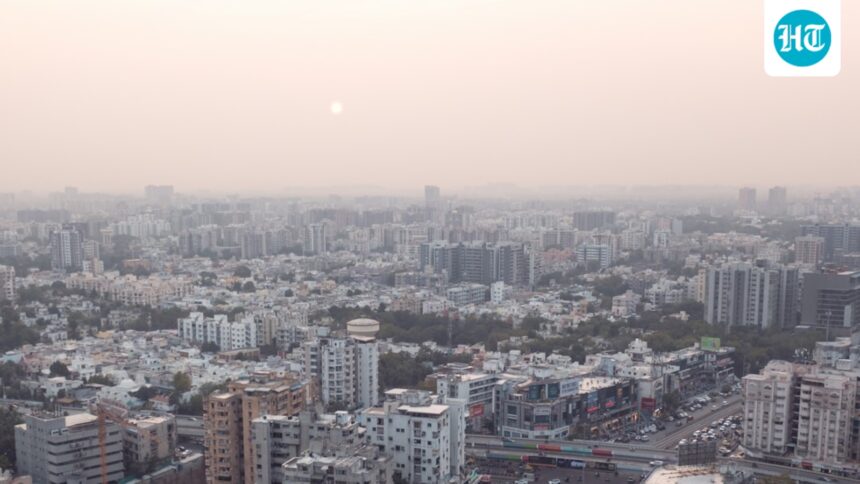
The study, published in the journal Sustainable Cities and Communities, says that the Iraqi city of Basra is the most vulnerable in the world, followed by Ahmedabad in Gujarat, identifying places where people are most vulnerable as the planet continues to warm.
Fourteen Indian cities that appeared in the list of top 50 vulnerable locations included Nagpur and Pune in Maharashtra, Madurai and Chennai in Tamil Nadu, Bengaluru in Karnataka, and Kanpur and Lucknow in Uttar Pradesh.
“It’s not just exposure to hot temperatures that matters in terms of risk,” said lead author Nithmi Jayaratne Kariyawasam, a researcher at the University of Oxford, UK. “Our study highlights the importance of multi-faceted global heat risk assessments, which reveal the diverse pathways through which heat risks emerge in urban areas.”
“In many major cities, especially across Asia and Africa, extreme heat coincides with extreme vulnerability and limited adaptive capacity,” Kariyawasam said. “This combination can significantly increase heat risks and, in some cases, have life-threatening consequences.”
The study analyzed cities with a population of more than one million. Factors considered include demographic and socioeconomic conditions that increase vulnerability to heat-related illness and mortality, such as age and financial means, as well as access to cooling infrastructure such as air conditioning, and environmental barriers such as tree cover.
“India, Pakistan, Nigeria, and Ghana host the largest number of cities,” the authors wrote.
“Major tourist destinations and international business hubs, including Cairo (Egypt), Bangkok (Thailand), Hanoi (Vietnam) and Jaipur (India) were also ranked among the top 50 destinations,” they said.
The researchers said that the analytical framework allows for a direct comparison between cities where risks are higher and the processes through which they arise.
They said exposure alone does not predict overall risk, with highly exposed cities such as Bangkok and Jeddah in Saudi Arabia ranking lower due to their strong adaptive capacity.
Vulnerability and inability to adapt have also greatly exacerbated the risks from extreme heat, which is why cities with moderate exposure remain among the most vulnerable when socio-economic and infrastructural constraints coincide, as seen in Karachi and Faisalabad in Pakistan and Kaduna in Nigeria.
“Demand for air conditioning is growing around the world, but many cannot afford it,” said author Radhika Khosla, an associate professor at the University of Oxford, who co-led the research. “If we over-rely on this type of energy-intensive cooling, we risk further global warming in a vicious cycle.”
“In order to expand adaptation and thermal comfort to all, we must consider a careful approach to keeping people safe, and cascade solutions with passive cooling and low-energy technologies such as fans and coolers are the first step,” Khosla said.
“Overall, this approach provides a scalable basis for comparative heat risk assessment in cities,” the authors wrote.