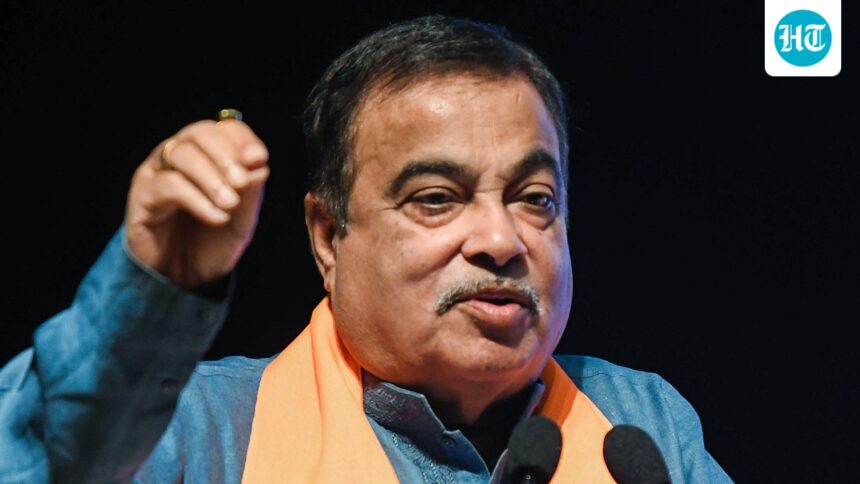
Amid criticism over the introduction of E20 petrol (fuel blended with 20 per cent ethanol) and complaints that it reduces the fuel efficiency of vehicles, Union Minister for Road Transport and Highways Nitin Gadkari on Tuesday challenged critics to point out one vehicle that suffered problems due to fuel.

Addressing the Vixit Bharat meeting, Gadkari said India’s dependence on fossil fuels represents an economic burden and an environmental challenge, noting that the country spends nearly… $22 million crores annually on fuel imports.
Read also | “Car manufacturers say there is no difficulty in using E20 fuel”: Hardeep Puri
‘Name one car’: Gadkari’s challenge at E20
“There is no case where any car faced problems due to E20 petrol. Was there any car in the country which faced problems due to use of E20 petrol? He said, according to a PTI report.”
He said, “…false narratives are being spread about the introduction of gasoline blended with a higher percentage of ethanol. These are paid campaigns.”
India has already achieved 20 percent blending of ethanol with gasoline, using ethanol produced from biomass such as sugarcane, corn and rice to limit crude oil imports and cut carbon emissions.
However, unlike Brazil, where motorists can choose between fuels containing different blends of ethanol at different price points, Indian consumers do not have this choice. Under Brazilian law, higher ethanol blends must be sold at a discount.
Responding to allegations that companies owned by his family members are involved in ethanol production and that he is therefore encouraging greater ethanol blending, Gadkari said his family owns sugar mills but their business does not depend on ethanol production.
Read also | “Delhi buses will run on hydrogen produced from garbage”: Nitin Gadkari
Gadkari makes a strong case for hydrogen
Making a strong case for hydrogen as the next frontier in clean mobility, Gadkari said he personally uses several alternative-fueled vehicles and encouraged people to experience the technology first-hand, according to news agency ANI.
“I drive electric vehicles, flex-fuel vehicles, hydrogen vehicles, and I have all three at home now,” he said. “I have the three cars at my house. Those who understand come to my house after the program and take a ride in the three cars.”
The minister recalled getting the first hydrogen-powered car after a conversation with his wife and Toyota India Vikram Kirloskar.
“I travel in a hydrogen car. It’s better than Mercedes,” Gadkari said, adding that the experience convinced him of the possibilities of this technology.
He said the focus is now shifting from passenger cars to heavy commercial transport.
“Now, hydrogen trucks are arriving. You recently launched two Tata hydrogen-powered trucks – one powered by a hydrogen fuel cell and a new one that uses an internal combustion engine modified to run on hydrogen,” he said.
Announcing a hydrogen pilot project
Gadkari also announced a pilot project for hydrogen-powered public transport in Nagpur.
“Now hydrogen buses are also coming. I am running a pilot project in Nagpur: hydrogen will be produced, filled in buses, and the buses will run,” Gadkari said.
“The hydrogen will be ready, we will fill it in the buses and the buses will run,” he added, describing the project as a model for wider adoption.
Gadkari has consistently called for reducing India’s dependence on fossil fuels through alternatives such as ethanol, electric mobility and hydrogen. While acknowledging that many are still skeptical about hydrogen technology, he urged people to experience it firsthand.
His comments come as automakers such as Tata are testing hydrogen fuel cell platforms and hydrogen internal combustion engines for trucks, indicating growing commercial interest in the technology.
With the start-up of hydrogen buses in Nagpur and the start of operations of hydrogen-powered trucks, the government appears to be moving the fuel from pilot projects to deployment in heavy transport – a sector seen as crucial to India’s ambitions to achieve net zero energy and long-term energy security.