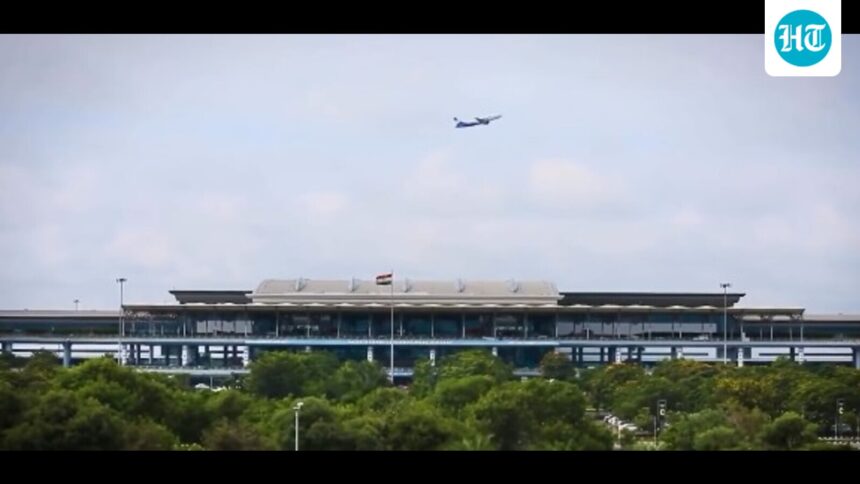
GMR Airports on Wednesday unveiled a multi-phase expansion plan for the Dr Babasaheb Ambedkar International Airport in Nagpur, with an initial investment of Rs. $300 crore for airport modernization and a long-term roadmap for expansion of passenger, cargo and commercial infrastructure.

The announcement comes after the completion of the airport privatization process and handover of around 1,000 hectares of land by Maharashtra Airport Infrastructure Ltd (MIL) on June 25, enabling GMR Nagpur International Airport Ltd (GNIAL) to commence operations and begin long-term development of the airport.
GBS Raju, Chairman, GMR Airports, said the company views airports as engines of regional development and said the Nagpur project reflects its long-term plans to enhance connectivity and aviation infrastructure.
“Our vision for Nagpur Airport is to make it a future-ready, sustainable aviation hub that enhances connectivity… As India continues to grow, we remain committed to developing world-class airports that support progress and sustainability,” said SG K Kishore, CEO and Chief Innovation Officer, GMR Group.
GMR said the development roadmap is divided into three phases over the next eight years.
As part of the first phase, GMR Airports will invest approx $300 crore over the next 12 to 18 months to modernize the existing airport.
Read also:IndiGo offers ‘Lite’ fares for economy passengers traveling with cabin baggage only
Works include refurbishment of the building and associated air and ground facilities, additional check-in counters and self-check-in kiosks, expanded security screening, upgraded restrooms, dedicated lounges, more bus boarding gates and passenger access improvements.
In the second phase (planned over three years) the company said it will build a new integrated passenger terminal with an initial annual capacity of four million passengers, additional aircraft parking, a cargo terminal with an annual handling capacity of 20,000 metric tons, an on-board kitchen, a fuel farm, ground handling infrastructure, expanded parking, and city-side commercial development.
The third phase (five to eight years) will see the construction of a second runway, a new air traffic control tower, and dedicated energy and water infrastructure and other facilities to support future growth.
According to the company, the long-term plan is to increase the airport’s capacity to handle passengers from the current three million passengers annually to 30 million during the 30-year concession period, with the possibility of expanding it further to 50 million within the available lands.
GMR said it also plans to develop Nagpur as a freight and logistics hub with a handling capacity of 150,000 metric tons per annum and allocate nearly 100 hectares for development of Aerocity to support commercial activity and non-aeronautical businesses.
Srikanth Bhandarkar, CEO of Nagpur Airport, said that the project aims to enhance operational efficiency and passenger comfort.