The political crisis in Pakistan-occupied Jammu and Kashmir has intensified weeks before the region’s Legislative Assembly elections on July 27, with the Joint Awami Action Committee (JAAC) expanding its campaign from economic demands to a broader movement seeking political rights, autonomy and institutional reforms.

The latest phase of the unrest comes after Pakistani authorities banned the JAAC, launched a security crackdown and imposed restrictions, including internet shutdowns and blocking orders, while the group called for a boycott of upcoming elections.
From economic grievances to political activism
JAAC emerged in 2023 as a popular platform to protest rising electricity tariffs, wheat prices and other economic hardships. But over time, the movement has broadened its agenda, framing its campaign around what it describes as “the right to property and self-government.”
Eventually, its demands were consolidated into a 38-point charter, in which one of its central demands was the abolition of 12 seats reserved for refugees in the Jewish Labor Legislative Assembly – an issue that became the focal point of the current standoff.
Negotiations between JAAC and the local and federal governments culminated in an agreement on October 4, 2025. However, the organization claimed that the agreement was never fully implemented.
In April this year, the JAAC warned that failure to meet commitments would lead to indefinite service closures, a transport blockade, a long march from Bhimber to Muzaffarabad, and a long sit-in outside the Legislative Assembly.
Repression before the Long March
As preparations for the Long March gathered pace in June, authorities shifted from negotiations to implementation, according to the group.
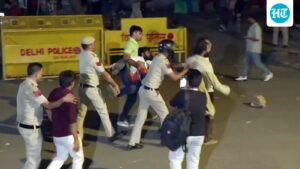
Tensions escalated on the night of June 6-7 after security personnel targeted JAAC leader Omar Nazir Kashmiri. A Kashmiri survived the attack, while one of his companions, Shahzeb Habib, was killed, according to the organization.
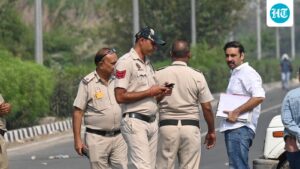
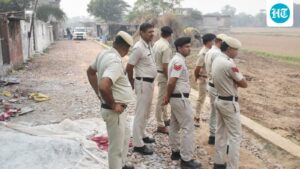
The administration then imposed Section 144, suspended internet and mobile phone services, and deployed about 14,000 additional paramilitary personnel, including members of the Sindh Rangers and Punjab Police, to contain the protests.
Days earlier, on June 5, the PoJK Home Ministry officially declared JAAC a banned organization by placing it on Schedule I of the 2014 Anti-Terrorism Law.
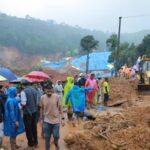
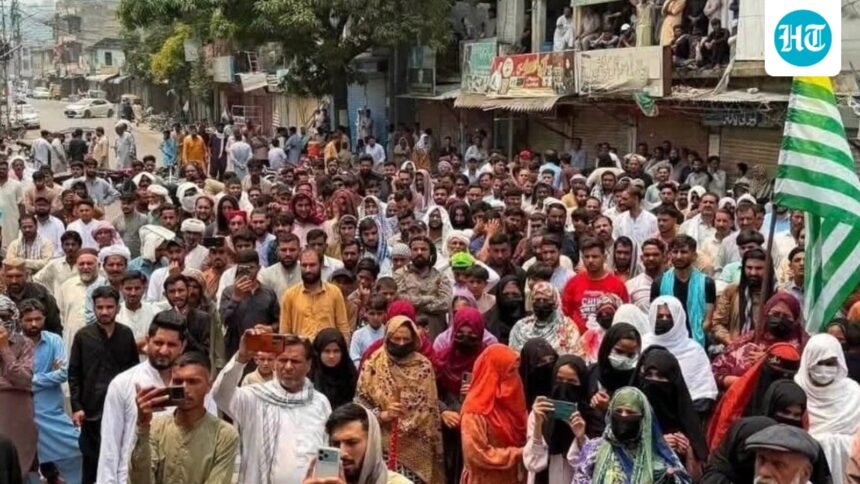
Despite the ban, protesters from Bhimber, Mirpur, Kotli and several other districts continued their long march towards Muzaffarabad on June 8 and 9.
Pakistan’s federal government has maintained that the 12 refugee seats cannot be abolished, with Federal Counsel Rana Sanaullah telling the Senate on June 10 that the seats enjoy constitutional protection following the Supreme Court’s recent ruling on the PKK.
What highlights the situation
- Pakistani security forces’ crackdown on innocent Kashmiris has exposed long-standing Pakistani propaganda that the interests of Kashmiri Muslims are best served through Pakistan.
- These incidents belie Pakistan’s claims that it is defending the cause of Indian Kashmiri Muslims while mistreating Kashmiris in its own backyard.
- The Kashmiri diaspora, which is often used by the Pakistani establishment to besiege India The state of Jammu and Kashmir has denounced Pakistan’s hoax and is at the forefront of calling Pakistan an oppressor and human rights violator in the Jammu and Kashmir party.
- The fragile security situation in Balochistan, Khyber Pakhtunkhwa and PKK-GB suggest that Pakistan is a weak and failed state and therefore not conducive to attracting international investors.
- The PoJK local government, which is a tool of the Federal Government of Pakistan, has completely failed to address the fundamental issues raised by the JAAC.
- The current protests in the AKP and Pakistan’s high-handedness in handling the situation in the AKP highlight the mindset of the Pakistani security establishment based on the sovereignty of Punjab, while showing little concern for other ethnicities, including the Baloch, Pashtuns and now Kashmiris.
The sit-ins continue despite the restrictions
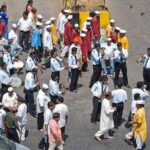
Nearly a month after the ban, protests continued across Jammu and Kashmir, with protesters maintaining six permanent sit-in camps in Rawalakot district.
The protest sites witnessed participation from women, the elderly and children, reflecting the growing social support for the movement despite continued pressure from the authorities.
The demonstrators alleged food and medicine shortages, arbitrary arrests, frequent police raids, and restrictions on media and Internet services.
According to the JAAC, 56 protesters have been killed or reported missing since June 9, after alleged shootings by Pakistani security forces. Independent verification of these claims remains difficult due to communications restrictions in the region.
Multiple mediation efforts involving opposition leaders, lawyers, journalists and political representatives have so far failed to break the impasse.
A call to boycott the elections
The JAAC has announced a boycott of the Legislative Assembly elections scheduled for July 27, arguing that a credible election cannot be held under the prevailing circumstances.
Core Committee member Omar Nazir Kashmiri said on June 29 that activists associated with the Public Rights Movement would stay away from the elections until the group’s demands were met.
Another JAAC leader, Sardar Aman, warned that if restrictions and supply blockades continue, protesters may consider opening alternative supply and communication routes through Jammu and Kashmir in India to support protest camps.
Diaspora protests are gaining momentum
The developments also sparked demonstrations among the Kashmiri diaspora community in several countries, including the United Kingdom, Canada, Germany, Australia, Denmark and the United States.
Protests were held outside Pakistani diplomatic missions in London, Manchester, Bradford and Birmingham, while more than 60 British MPs, led by Labor MP Imran Hussain, reportedly wrote to the British Foreign Secretary on June 7 seeking an explanation from Islamabad and urging a de-escalation.
On July 5, thousands of demonstrators participated in the “Long London March” from Parliament Square to the Pakistan High Commission, where participants included members of the Kashmiri diaspora as well as representatives of Baloch, Pashtun, and Sindhi groups critical of the Pakistani security establishment.