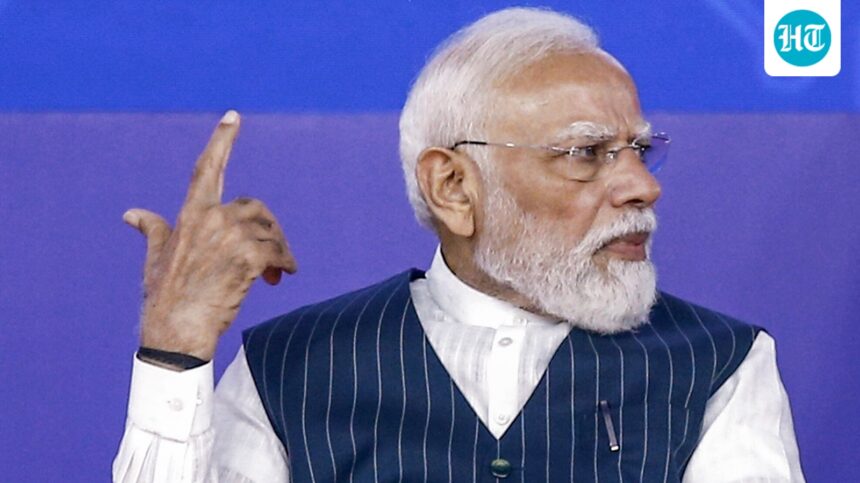
Prime Minister Narendra Modi’s government enters the monsoon session of Parliament, scheduled to begin on July 20, with stronger numbers than just three months ago, and an agenda that may once again include constitutional amendments.

The recent defections from opposition parties have improved the calculations of the BJP-led National Democratic Alliance in Parliament, emboldening the government to pursue an agenda that includes the 130th Amendment Bill on the removal of the Prime Minister, chief ministers and ministers if they are jailed for 30 days even on mere allegations.
Then there is Amendment Bill No. 131 regarding determining and activating the 33% quota allocated for women in legislative bodies, which has already been passed; This was defeated at the last session in April as the government lacked the required two-thirds majority.
In the background lies the larger One Nation, One Election (ONOE) project, which remains under parliamentary scrutiny.
The main opposition Congress party has sought to portray this, once again, as a grave danger to the Constitution as a whole, and even to reservations for backward classes such as the Scheduled Castes.
Communications chief Congress general secretary Jairam Ramesh on Saturday noted that the BJP is seeking to improve its constitutional calculations through defections.
He added: “Despite many efforts, they did not obtain a two-thirds majority… They are divided between parties. But they will not obtain a two-thirds majority.”
“Their real motive is to change the Constitution of India…The purpose of crossing 400 seats was to be in a position to change the Constitution,” he said, recalling the BJP’s slogan of “Ab ki Baar, 400 Paar” in the 2024 Lok Sabha polls, in which the BJP failed to achieve a majority of 272 seats on its own.
Why don’t adjustments go through easily?
However, in contrast to ordinary legislation, constitutional amendments are governed by Article 368, where the success rate sets a higher threshold than a mere majority.
With the actual strength of the House of Representatives standing at 540 members at present, the amendment requires not only the support of at least 271 members – a simple majority – but also “yes” votes from two-thirds of the members present and voting. If all 540 members vote, that would be 360 votes. Even if attendance drops, the threshold is still enormous. Suppose that by a vote of 500 members; Then 334 votes are needed; With 480, the mark is 320.
The NDA’s strength has crossed the 300-point mark in the wake of recent defections and allied support from MPs who left the TMC in Bengal and the Shiv Sena in Maharashtra. But this is still short of the confirmed two-thirds majority. The Rajya Sabha presents a similar challenge, making regional parties and potential abstentions among opposition MPs crucial to the government’s prospects.
These calculations are what turned every defection into a constitutional story.
First test: Amendment 130
Supposedly on the agenda is the 130th Amendment Bill, which proposes that the Prime Minister, Union Ministers, Chief Ministers and State Ministers will automatically lose their posts if they remain in judicial custody for more than 30 consecutive days in cases punishable by at least five years’ imprisonment. This was brought up last year but was sent to committee.
The joint parliamentary committee is expected to adopt its report around July 17, paving the way for the bill to be presented during the monsoon session, news agency PTI reported on Saturday, citing sources.
Union Home Minister Amit Shah has already framed it as a matter of accountability. “No minister, chief minister or chief minister of the country can run the government while in prison,” Shah said last year, also citing Arvind Kejriwal as an example at the time.
Regarding fears of mere allegations becoming a political weapon, he said: “If there is a fake case, the country’s courts are there to grant bail. If bail is not granted, the person will have to resign.”
Shah also stressed that “Prime Minister Modi himself has brought the office of Prime Minister within the purview of this constitutional amendment.”
Opposition parties say the proposal effectively punishes mere accusations rather than actual convictions.
Border demarcation and women’s quota
The 131st Amendment Bill is the most politically ambitious item on the government’s agenda – and also the newest.
The proposal, which was rejected in April, seeks to increase the maximum power of the Lok Sabha; Allow electoral district boundaries to be drawn or redrawn using the 2011 Census; Thus activating the women’s reservation law before the general elections in 2029.
While the government presents it as a mechanism to implement the women’s quote – which has already been enacted in 2023 but is linked to the next population census and the determination of boundaries – the opposition says the real intention is to redistribute parliamentary seats.
Congress and southern state parties like the DMK claimed that demarcation would favor the more populous states in the north, such as UP and Bihar; Therefore, it needs a broader discussion.
Some in the opposition even wondered why the 33% quota in the current House of Representatives’ strength was not activated. The government said that the presence of a large council is necessary to protect everyone’s interests.
One nation, one election awaits us
The government’s broader constitutional roadmap extends beyond the monsoon period. The Constitution (129th Amendment) Bill on One Nation, One Election is still before a 39-member joint parliamentary committee headed by BJP MP BP Chaudhary, whose term has been extended by Parliament to continue consultations.
Prime Minister Modi has repeatedly emphasized that “frequent elections create obstacles to the progress of the country.” Chaudhary described the proposal as a “historic reform” and said holding the Assembly and Lok Sabha elections together was “in the interest of the country”.
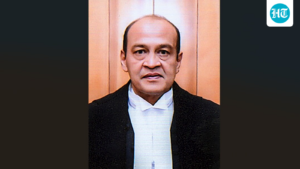
However, constitutional experts remain divided. Former Chief Justice D Y Chandrachud, in his report to the Joint Election Commission, reportedly said that the Constitution does not provide for separate elections, but warned against giving the Election Commission “unfettered” powers to extend or reduce Assembly terms to achieve election monitoring process.
Senior Advocate Raju Ramachandran, writes Indian ExpressHe claimed that the main constitutional challenge to OFAC’s plan is that it challenges the idea of federalism. Political scientist Milan Vaishnav also warned that “the fundamentals of democratic institutional design should not be reimagined without first arriving at broad consensus.”
Returns reservation policy
The renewed constitutional agenda has also revived one of the defining political narratives of the last few decades – concerns about reservation.
The issue first came to prominence during the 2015 Bihar Assembly elections, when Rashtriya Swayamsevak Sangh chief Mohan Bhagwat’s call to reconsider the reservation policy became a major issue in the election campaign. The BJP spent most of that election distancing itself from these statements, while the grand alliance of Congress, JDU and RJD successfully framed the contest around “quota protection.”
A decade later, the Congress-led India Bloc revived a similar argument during the 2024 Lok Sabha elections, claiming that the BJP’s “post-400” campaign was aimed at securing the numbers needed to amend the Constitution and weaken reservations for Scheduled Castes, Scheduled Tribes and Other Backward Classes.
Ray refused Minister Modi repeatedly denies this charge, declaring that “as long as Modi is alive, no one will be able to end reservations.”
However, Congress continued to frame the government’s constitutional initiatives through this lens.
Jairam Ramesh claimed that the BJP’s “real and ultimate goal” was to amend the Constitution and “end reservation”, arguing that delimitation was just an immediate goal in a longer-term political strategy.
There is currently no constitutional amendment proposal before Parliament to change reservations for SCs, STs or OBCs.