Industry experts and leading automakers on Saturday sought to allay concerns over the use of ethanol-blended petrol, asserting that E20 fuel, which contains 20% ethanol, has undergone extensive scientific testing and is safe even for cars manufactured before the E20 mandate, “while also helping India reduce crude oil imports and carbon emissions.”

The clarification came amid growing public debate over E20, with some motorists, social media users and political leaders claiming that higher ethanol blends have led to lower fuel efficiency and, in some cases, engine-related problems in older vehicles.
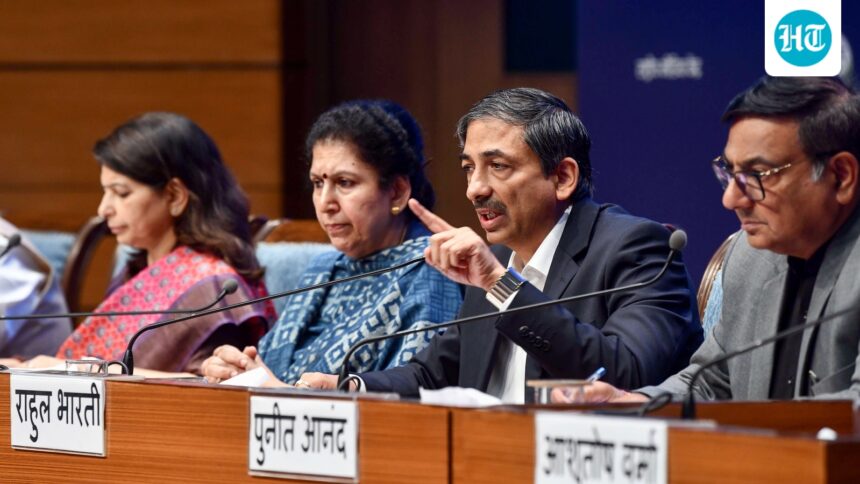
At a press conference, former Engineers India Limited Chairman and Managing Director Vartika Shukla said that India’s ethanol blending program was the result of years of scientific evaluation and consultation.
“This did not happen overnight. It is a calculated, scientifically driven, step-by-step process,” she added.
Highlighting the progress made by the programme, Shukla said blending of ethanol with gasoline has increased from about 1.5% in 2013-14 to 20% by December 2025, allowing India to achieve its target five years ahead of schedule. “The program is backed by scientific evidence and extensive testing” by car manufacturers, the Automotive Research Association of India (ARAI) and the Society of Indian Automobile Manufacturers (SIAM), it said.
Adding that India has adopted practices already followed by countries such as the US, Brazil, Canada and Germany, Shukla said that increased ethanol blending has reduced dependence on imported crude oil, which has helped improve the country’s energy security during periods of geopolitical uncertainty.
Automakers say tests found no abnormal wear or damage
Representatives of major automakers said laboratory tests, certification exercises and real-world vehicle data do not support claims that E20 gasoline causes engine damage or excessive wear in vehicles designed for lower ethanol blends.
Vikram Gulati, regional president and executive vice president, corporate affairs and governance, Toyota Kirloskar Motor Corporation, said cars sold in India undergo stringent testing. “The vehicles available to consumers are very well engineered, well engineered and have a very formidable element of oversight through technically sound testing agencies,” he said.
Describing ethanol as a “very good fuel”, Gulati said it performed well while also helping to reduce emissions. “In an era when we are facing the issue of climate change… this is a carbon-neutral fuel because it is derived from plants,” he said.
He added that blending ethanol helped protect consumers and the economy from fluctuations in global crude oil markets.
Rahul Bharti, chief corporate officer, Maruti Suzuki India, addressed concerns regarding vehicles originally designed for E10 petrol. “As a manufacturer, we have tested E10 cars… on E20 fuel for all parameters and found nothing of concern,” Bharti said.
He added that the company has incorporated sufficient engineering safety margins to ensure that there are no issues with wear, corrosion or component life even when pre-2023 vehicles use E20 fuel.
The company’s service data from millions of two-wheelers also supports the safety of E20 petrol, said Ashutosh Verma, Chief Business Officer, Hero MotoCorp.
“We analyze millions of service data that we have, and there is absolutely no damage to vehicles running on E20 compared to vehicles that were fueled before E20,” Verma said.
E20 debate: What Gadkari said
The industry statements come days after concerns about E20 gasoline gained traction on social media and in political circles. Among those who raised the issue was YouTuber and Jan Suraj Party activist Manish Kashyap from Pohar, who claimed in a widely shared video that his car developed engine-related problems after running on E20 petrol, alleging that a high ethanol mixture had caused the damage. Toyota denied this claim, without mentioning its name, and said the problem was due to contaminated fuel in general, not E20.
Similar claims by some motorists have focused on reduced mileage, increased maintenance costs and compatibility with older vehicles. No official investigation has proven a causal relationship between E20 fuel and the reported mechanical problems, which the government has confirmed in the past as well.
Earlier this week, Union Road Transport Minister Nitin Gadkari dismissed claims that E20 petrol is damaging engines, terming such reports “false”.
“Show me one of the vehicles damaged by E20 gasoline,” Gadkari said. He also stressed that scientific studies have found no evidence that E20 causes engine damage.
The center expects ethanol blending to be a key pillar of its clean energy strategy, saying it reduces dependence on imported crude oil, reduces vehicle emissions and creates additional income opportunities for farmers by increasing demand for ethanol raw materials. India achieved its goal of blending 20% ethanol into gasoline by the end of 2025, five years ahead of the original deadline.