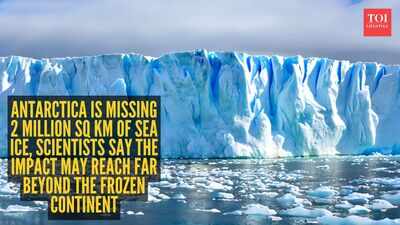
Antarctica may seem a far cry from everyday life, but new research suggests the icy continent could have a bigger impact on global warming than scientists previously thought. A recent study by the European Geosciences Union (EGU) suggests a stronger-than-expected relationship between Antarctic sea ice, cloud cover, and the way Earth stores heat, raising new concerns about how quickly the planet will warm in the coming years.
Antarctica is changing rapidly
Antarctica has always been one of the most difficult places on Earth to study. Its weather is extreme, its landscapes are remote, and many of its natural processes are difficult to observe directly. This is part of the reason the continent seemed mysterious to scientists for so long. But the latest signs coming out of the region are hard to ignore. In September 2025, Antarctic sea ice reached its third lowest level on record, lagging only levels seen in 2024 and 2023.
Meanwhile, temperatures in the region have remained more than 25 degrees Celsius above normal for nearly a month. These are not small differences. It’s the kind of change that signals a major shift in the climate system. The amount of sea ice is now much lower than would normally be expected at this time of year. In practice, Antarctica is currently missing nearly 2 million square kilometers of sea ice compared to the recent historical average for this time of year, according to a report by Future Science.
For a region that plays such an important role in regulating the Earth’s climate, this is a serious warning sign.
Why is sea ice so important?
Sea ice is not just frozen water drifting around the edge of a continent. It controls how much sunlight is reflected from the Earth, how water moves through the ocean, and how heat is exchanged between the atmosphere and the sea. When sea ice shrinks, the oceans absorb more energy, which may make warming faster.
The ocean is already the largest source of heat on Earth, absorbing more than 90% of the additional heat trapped by greenhouse gases.
Without this insulating effect, atmospheric temperatures would rise faster than they already are. But this comes with consequences. Warmer oceans expand, contributing to sea level rise. They can also fuel stronger storms, disrupt marine ecosystems, and create more frequent marine heatwaves.
Therefore, when Antarctic ice loss accelerates, it does not remain local. It has an impact all over the world.
Cloud link
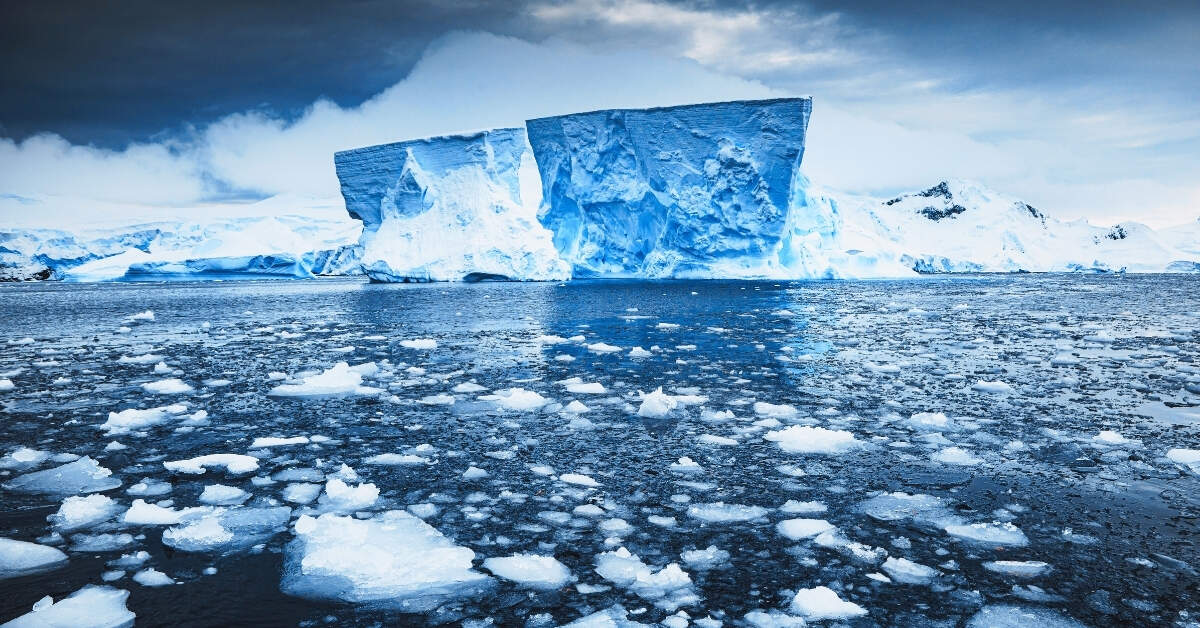
What makes this latest study so important is that it reveals a link that scientists previously underestimated: the link between Antarctic sea ice and cloud cover. Researchers working under the auspices of the EGU found that cloud patterns and ocean heat uptake are more closely linked to Antarctic conditions than many climate models had assumed.
This is important because clouds can either trap heat or reflect sunlight, depending on their type, height and location.
If Antarctic conditions help shape cloud cover farther away from the continent, changes there could affect global warming on a much larger scale. In other words, Antarctica may help set the climate tone for the rest of the world. The study notes that many climate models may use data windows that are too short, which could cause them to miss long-term natural fluctuations.
This means that some models may underestimate how much heat the ocean absorbs and how strongly clouds respond to changes in sea ice.
What the numbers indicate
The results are alarming. According to the study, ocean heat uptake and the ensuing sea level rise could be higher by 2100 than typically expected. The research also suggests that cloud feedbacks may be stronger and that climate sensitivity may be greater than previously estimated.This phrase, climate sensitivity, refers to how strongly the Earth will respond when levels of greenhouse gases rise. If sensitivity is higher than expected, warming may occur faster and have a stronger effect than many forecasts have assumed. The study suggests that if the Southern Ocean was colder and had more sea ice in the pre-industrial period than models typically assume, the deep ocean would have been colder, too. This could have affected the formation of clouds and the way heat is distributed throughout the climate system.
Over time, these differences can amplify the effects of greenhouse gas emissions.In simpler terms, the planet may be more sensitive to human-induced global warming than we thought.
What does this mean for the future?
The most compelling finding from the research is that Antarctica should not be viewed as a remote, isolated corner of the world. It is part of the mechanism that controls global climate. When sea ice shrinks, impacts can spread across ocean systems, atmospheric patterns, and even sea levels.
If the study’s conclusions are correct, future warming may arrive faster and more strongly than many climate projections suggest.
This could mean greater risks of heat waves, floods, ecosystem damage, and other climate impacts that are already becoming more common.
How concerned are you about the impact of Antarctic sea ice loss on global warming?
More than 3 thousand users shared their opinion today
More than 5 thousand users voted today
Share your opinion
Researchers say this is a reason for urgency, not delay. Reducing greenhouse gas emissions remains the clearest way to slow the changes now unfolding.
The faster we reduce emissions, the greater the chances of reducing the worst outcomes.
Warning of the frozen south
Antarctica often seems like a world apart, but it may actually be one of the most important drivers of Earth’s future climate. New findings show that continental sea ice, ocean heat uptake, and cloud feedback are part of a delicate system that may be more unstable than scientists previously thought.This makes the latest research more than just an Antarctic story. It’s a reminder that what happens in the coldest place on Earth can still shape life elsewhere.