

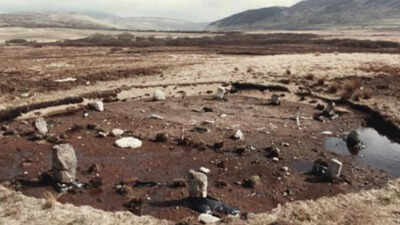
Archaeologists have been excavating the area in search of ancient secrets since the 1980s
Archaeologists have discovered what could be a 5,000-year-old ritual circle hidden under peat on a Scottish island, all without digging into the ground.Using advanced geophysical surveying equipment, researchers from Historic Environment Scotland (HES) have discovered a ring of buried craters beneath Machrie Moor on the Isle of Arran.
The circular arrangement, which may date back to the Neolithic or Bronze Age, has remained completely hidden beneath the surface.The discovery was unexpected. The researchers set out to test how well modern archaeological survey technology works in peat-covered landscapes. Instead, they found evidence of what could be a previously unknown ceremonial monument in one of Scotland’s richest prehistoric landscapes.“We are very excited about this new discovery.Dr Nick Hannon, Senior Director of Heritage Registration at Historic Environment Scotland, said: “We know there are many monuments yet to be discovered at Machrie Moor, but the discovery of a new circle has completely exceeded our expectations.”
A circle hidden under the peat
The newly discovered feature consists of 12 circular, crater-like anomalies, arranged in a ring about 28 meters wide, or about 92 feet.
The researchers identified the circuit using geophysical surveying equipment, which is driven through the ground and detects subtle magnetic changes beneath the surface. This method allows archaeologists to map buried archaeological features without disturbing the soil or damaging ancient remains.The pits are about 6.5 meters apart from each other. Two unusually wide gaps in the circle may indicate that two additional pits once existed but have since disappeared, raising the possibility that the monument originally contained 14 columns or standing stones.Survey data showed no evidence that the pits currently contain stone.“There is no indication that any of these anomalies contain stone” at this time, the researchers noted in the survey report. This suggests that the monument may have been built with wooden columns, or that any standing stones may have been removed long ago.
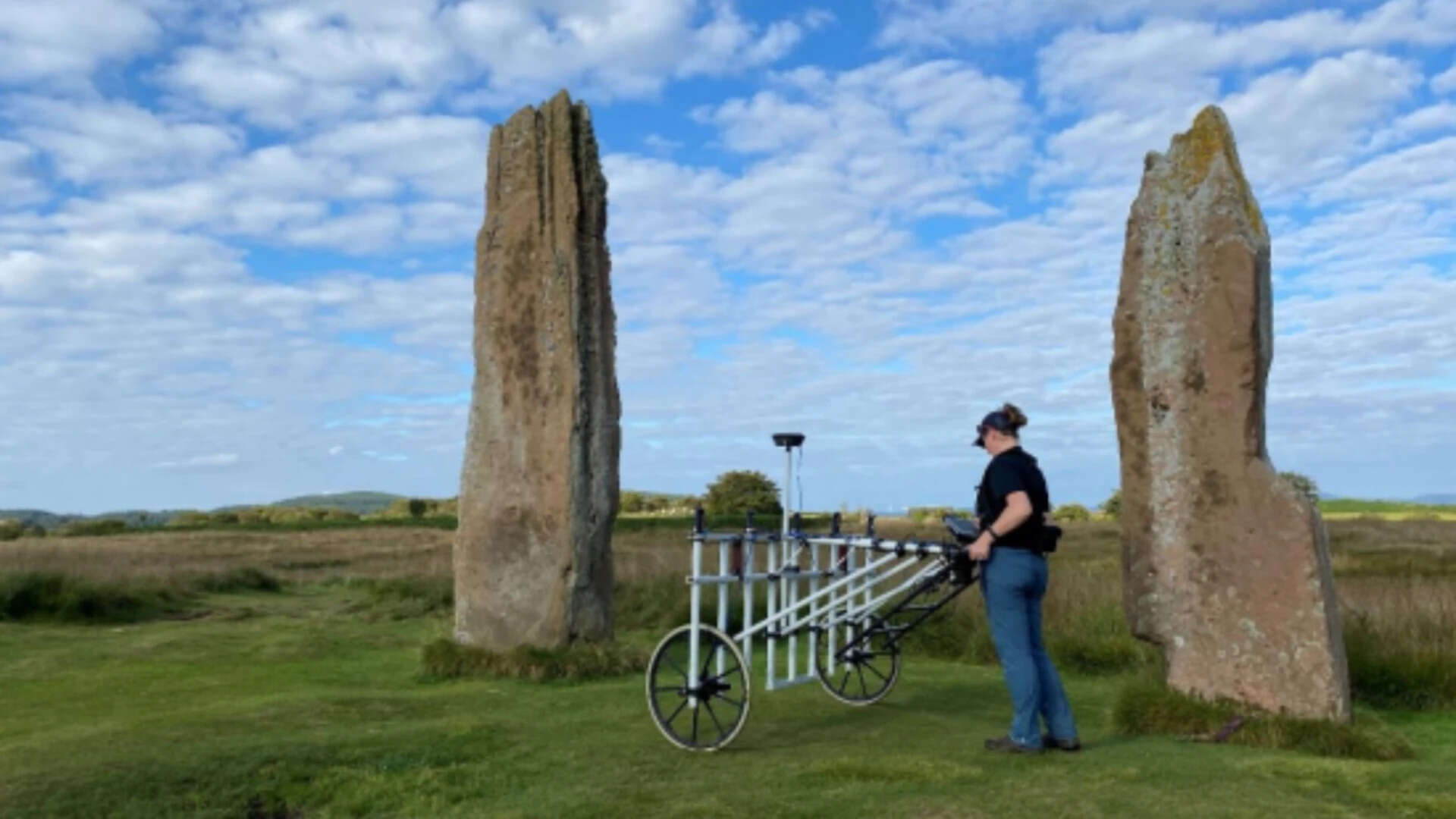
Archaeologists have scoured the land for hidden historical clues
Ceremonial landscapes of prehistoric Scotland
Machrie Moor, on the west coast of Arran, is already one of Scotland’s most famous prehistoric sites. The peat-covered landscape is home to standing stones, burial cairns and ceremonial monuments dating from around 3500 BC to 1500 BC.Archaeologists have identified six stone circles at the site since the 1980s. They are believed to have been built by Neolithic and Bronze Age agricultural communities, and used for ritual activities and ceremonies before some later became cremation and burial places.The newly discovered circle is believed to date back to the same broad period, although researchers say more research is needed before its age and purpose can be confirmed.Historic Environment Scotland said: “It is likely that the newly discovered circle dates back to a similar period to other circles still standing.”
Clues point to wood rather than stone
The discovery also added to what researchers already knew about the visible monuments at Machrie Mor.At one site known as Circle 2, the survey revealed a ring of underground anomalies indicating that the monument may have originally contained 14 standing stones rather than the seven or eight that were rebuilt today.Previous excavations at Machrie Moor found that many of the existing stone circles initially began as wooden circles. Around 2000 BC, many of those wooden pillars were replaced with standing stones.Since no buried stones were discovered in the newly discovered monument, archaeologists believe that it may represent another wooden circle or a circle whose stones were removed over time.
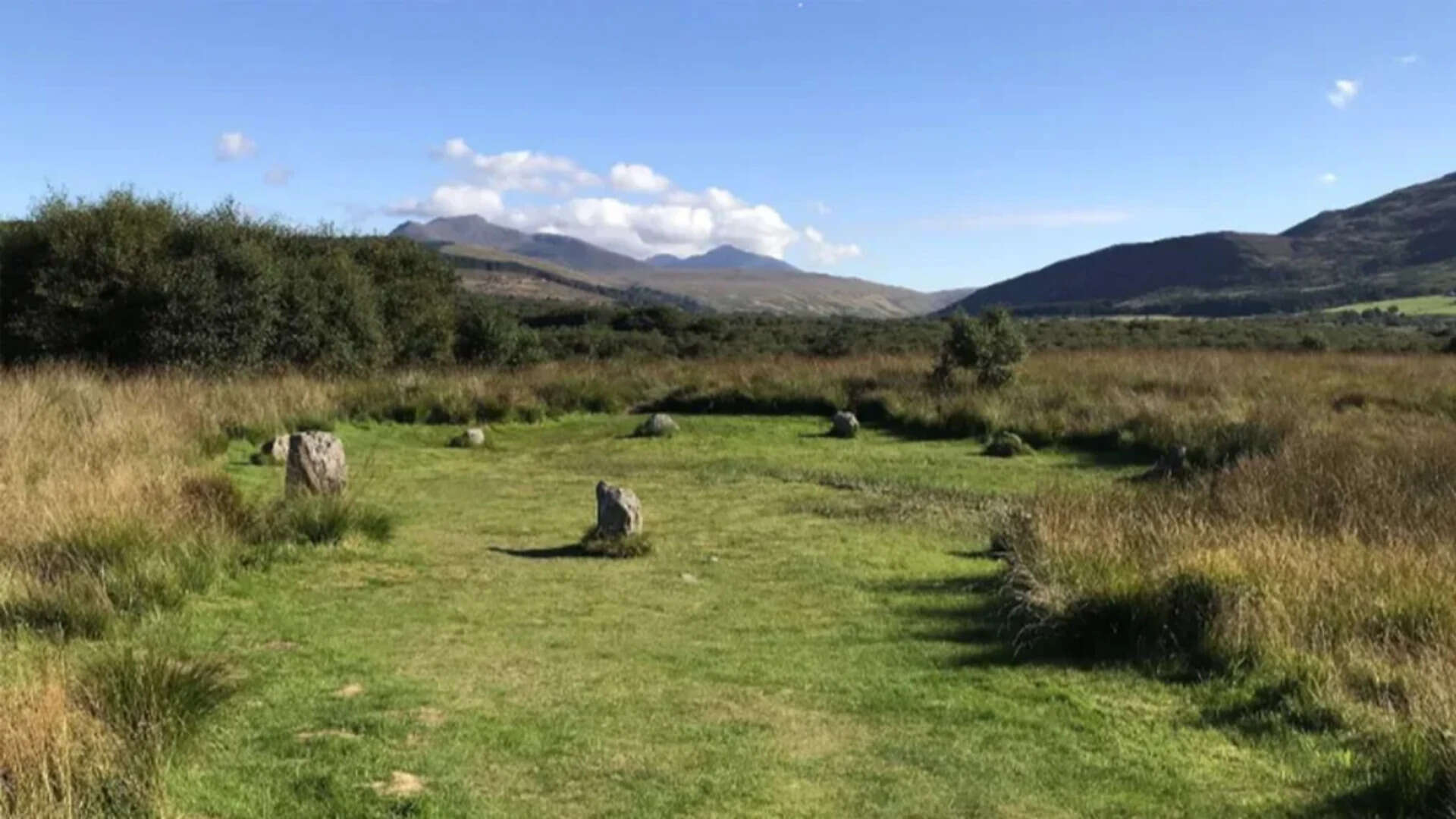
An ancient circle believed to be from the Bronze Age at Machrie Moor in Scotland, looking north.
It aligns with the sunrise in midsummer
One feature links the newly discovered monument to other already known ceremonial circles at Machrie Mor.The existing circles are aligned with a notch at the head of nearby Machrie Glen, where the midsummer sun would have risen. Archaeologists believe that this trend indicates that astronomical observations may have formed part of the ceremonies held there thousands of years ago.It remains uncertain whether the newly discovered circle shares the same role, but its location within the ceremonial scene makes this a strong possibility.
Find the past without digging
This discovery highlights how archaeological technology is changing the way researchers explore historical sites.Instead of excavating large areas, scientists can now use non-invasive techniques to uncover structures buried through subtle changes in the soil caused by ancient pits, potholes, stone monuments, or other human activities.Dr Hannon said these developments were helping archaeologists uncover new chapters of Scotland’s past while leaving fragile sites undisturbed.“The tools we use to learn about what’s underground are constantly evolving, and we can learn more and more about our buried history without disturbing the ground and potentially damaging archaeological remains.“Discoveries like this remind us why we do this work – to care for Scotland’s heritage and reveal more of our past in the process.”The newly discovered circle has not yet been excavated, which means there are still many questions about exactly how it was built and used. For now, the buried monument has added another piece to the Machrie Moor puzzle, a landscape that still reveals traces of the communities that gathered there more than five thousand years ago.