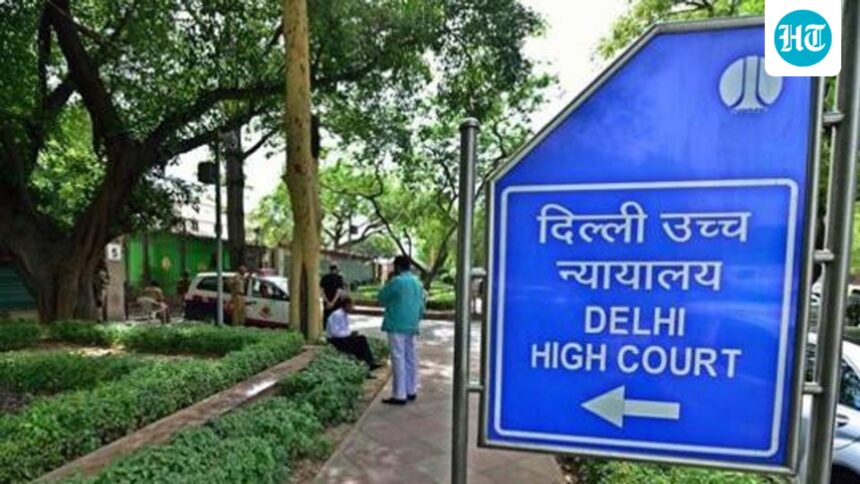
The state cannot evade liability for a death in custodial death, even if it is a suicide, by pleading direct liability or relying on legal schemes, the Delhi High Court has ruled, while granting $18.44 lakh as compensation to the father of a 19-year-old man who died by suicide in police custody in 2018.

Justice Sachin Datta, in his July 1 judgment, observed that custodial death is not just an individual tragedy but a “systemic concern” that strikes at the foundation of the rule of law.
In its ruling, the court held that once someone is deprived of their liberty and placed in state custody, the authorities have an “aggravated duty of care” to protect their life and dignity.
The judge stressed that any death in custody, whether resulting from violence, neglect, unexplained circumstances or even suicide, warrants judicial scrutiny, as it raises serious concerns about the protection of individual dignity and the credibility of the judicial system.
Read also | After WhatsApp, the Center sent notifications to Telegram, and Signal today regarding the username feature
“It is well established that when a person is in custody, he does not lose his fundamental rights guaranteed by Article 21 of the Constitution, and the State has an absolute and inalienable duty to protect his life and dignity. An unnatural death in custody, even if it is a suicide, is not a private act separate from the responsibility of the State, but reflects a neglect of duty on the part of those charged with custody. The State cannot escape responsibility by invoking legal schemes or by claiming the absence of direct responsibility.” The court said in its ruling.
She added: “A death in custody is not just an individual tragedy, but a matter of systemic concern, striking at the foundation of the rule of law. When a person is deprived of his liberty and placed in state custody, the authorities bear a greater duty of care. Any error that leads to a death in custody, whether due to violence, negligence, unexplained circumstances or even suicide, requires judicial scrutiny, as it affects the dignity of the individual and the credibility of the justice system.”
Read also | ‘Shows BJP’s double standards’: Congress questions PM Modi’s ‘silence’ over Ayodhya Ram temple donation row
The ruling was based on a petition filed by the victim’s father seeking compensation for the death of his 19-year-old son while in custody at Karwal Nagar police station. He alleged that his son was arrested on January 15, 2018, from the Karkardooma court headquarters in connection with the 2017 FIR, and was subjected to physical assault, threats and blackmail by the investigating sub-inspector, who allegedly demanded $20,000-30,000 for his release. He said that he was informed the next morning that his son had died by suicide in police custody.
The petitioner had maintained that his son’s death was due to the negligence of officials.
Opposing the plea, Delhi Police lawyer Premtosh Kumar Mishra said compensation is not an automatic consequence of every custodial death. He argued that the autopsy report attributed the death to “suffocation due to pre-mortem hanging” and did not record any external injuries, considering that the case does not justify granting constitutional compensation.
The court ruled that the plaintiff was entitled to financial compensation, “and obliged the defendants to pay compensation to the petitioner amounting to $18,44,400 within a period of eight weeks from today.”