

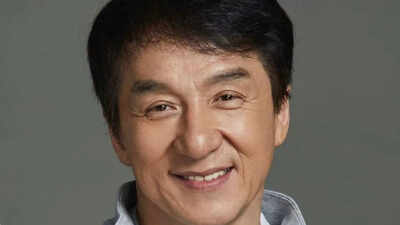
The martial arts legend believes that talent and success mean little without genuine kindness and compassion toward others. Image credit (Jackie Chan Instagram)
Jackie Chan is having a year that few actors of any age can endure, let alone a 72-year-old man. In February 2026, he carried the Olympic torch through the ancient ruins of Pompeii during the 2026 Milan Cortina Winter Olympic Torch Relay, and later appeared in the stands at the Milan Figure Skating Gala, cheering on Mikhail Shaydorov with two panda plush toys in his arms.
His film “Unexpected Family” premiered at the Berlin International Film Festival and has been shown in several territories, as reported by Variety. And in July 2026, he begins filming “Armour of God IV: Ultimatum” in Kazakhstan, continuing the series he launched forty years ago, also per Variety. In an era where most people have long since retreated, Jackie Chan is still running forward.
The philosophy that carried him through it all was precisely expressed in the lines he wrote in his autobiography.Today’s quote reads, “At work and in life, no matter how smart, talented, and beautiful you are, you also have to be a good person. We have to treat each other well and really mean it. Everyone can tell if you’re doing it out of genuine concern for them, or if you’re just pretending.”
Meaning of Jackie Chan’s quote of the day
Jackie Chan wrote these words in his autobiography Never Grow Up, published in 2018, a book that reads less like a polished celebrity memoir and more like a frank and sometimes uncomfortable account of a man looking back at everything he did right and everything he did wrong.
The entire passage included in this quote also contains instructions to “work hard, know how you want things done, be disciplined, and be generous,” and even extends to small daily habits like not leaving lights on and not wasting water, according to Goodreads.
It is not a great philosophical treatise. It’s a list of things he thinks are actually important, written by someone who has enough time and experience to know the difference What seems important and what actually is.
The reason it is insufficient is the second part of the quote. Everyone can tell if you’re doing it out of genuine concern for them, or if you’re just pretending.
This is the part that carries the most weight. Because it puts the test of good character not in grand gestures or public statements but in the everyday, personal, and often invisible quality of how you actually deal with people. Not how you treat people when it benefits you.
Not how you treat people when they’re watching. But how do you treat them when there’s no point to it other than the simple fact of being decent to another human being.Chan has spoken extensively throughout his career about the gap between his public image and his private behavior in his younger years. He admitted to being an absent father, an unfaithful husband, and a man who prioritized his career over the people who needed him most. “Never Grow Up” was a reckoning with this gap in many ways. The quote that emerged from this account is not the wisdom of someone who was always right.
It’s the hard-won understanding of someone who’s been wrong often enough to know what actually matters.
More about Jackie Chan
Chan Chan Kung Sang was born on April 7, 1954 in Hong Kong to parents who worked at the French Embassy. At the age of seven, he entered the Chinese Drama Academy, an opera school in Beijing run by master Yu Jim Yuen, where he trained for ten years in acrobatics, martial arts, singing and acting under conditions he described as grueling, according to the BBC.
The foundation of physical discipline and instinct for performance became the bedrock of everything that followed.He broke into Hong Kong cinema in the 1970s, initially struggling to establish his own identity in the shadow of Bruce Lee, before finding his voice with a mix of stunts and physical comedy that no one else in the world did. Films including “Drunken Master” and “Police Story” made him one of the biggest stars in Asia. His success in Hollywood came with the film “Rumble in the Bronx” and was enhanced by the “Rush Hour” franchise alongside Chris Tucker, which introduced him to a global audience that had never seen anything quite like it before.
In 2016, he received an Honorary Academy Award in recognition of his exceptional achievements in cinema, becoming the second person in history to receive this honor for an entire body of work rather than a single film. He is, by all accounts, one of the most universally beloved artists of all time. The autobiography he wrote, which was honest, direct, and completely devoid of the usual celebrity self-protection, is perhaps the clearest evidence of the philosophy the quote describes.
Personality is not what you say about yourself. This is what you do when no one is watching, and how honest you are about it when they are.