In early June, Bengaluru is bracing for the monsoon, which in our unfortunate city means roads clogged with water and floods to the point where luxury cars in posh communities float into underground parking garages.

I thought of this while researching a question: Can Bangalore legitimately be called the horticulture capital of India? In my opinion, yes. Certainly other states have specialty crops – Maharashtra has grapes and mangoes, Uttar Pradesh has potatoes, Kerala has coconuts, Andhra Pradesh has chili peppers, Gujarat has cotton, and so on. However, in Bengaluru, all these different currents converge. There is a reason why the Indian Institute of Horticultural Research and the Indian Council of Agricultural Research are headquartered here.
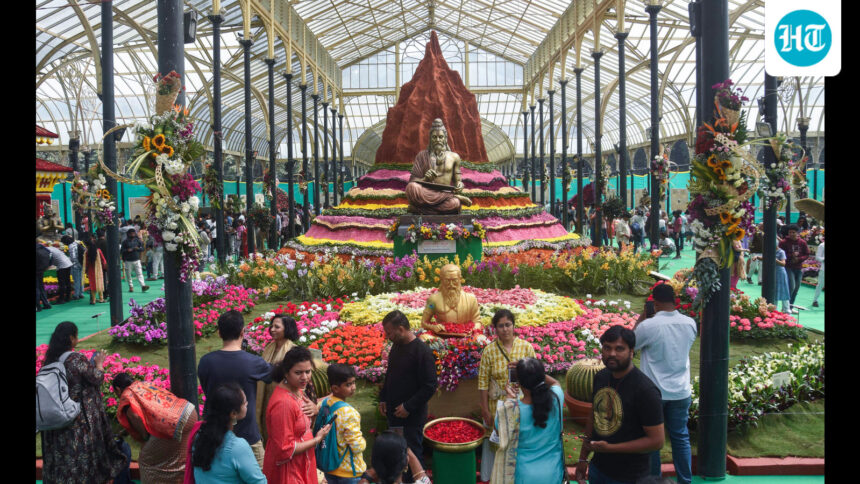
The Bengalurean obsession with plant cultivation is nothing new. In 1760, Hyder Ali, the brilliant military leader who ruled the Kingdom of Mysore and stood up to the British, set aside 240 acres that he envisioned as a royal garden modeled on the Mughal and Persian gardens he admired. Legend has it that Hyder Ali took his young son Tipu to the area. When the child saw an abundance of red roses growing, he spontaneously shouted, “Lal Bagh, Lal Bagh,” and thus gave it the name “Lal Bagh.”
Due to Hyder Ali and Tipu Sultan’s fascination with plants and trees collected from all over the world, Lalbagh soon became a thriving botanical laboratory. Mavali, where it is located, has witnessed the proliferation of commercial plant nurseries. Multi-generational farming families, often belonging to Tigala Sect – Upalabasthe Female archersthe DevabasThey all established seed and plant nurseries, some of which operate to this day.
When Tipu Sultan imported pomegranates from Persia, or when supervisors such as John Cameron, and later Gustav Crombiegel, H. C. Javaraya, and M. H. Marie Goda, introduced exotic French plants and “New World” tubers such as potatoes, they did not act alone. Sure, they were visionaries, but the actual planting and grafting work was done by… Tigala Mashtal worship water and continue their traditions to this day. Thus, as Suresh Jayaram says in his book on Lalbagh, Bangalore became a “global vegetarian centre”.
These families, with intrinsic knowledge of the land, soil and plants, patiently managed to convince foreign plants to handle the soil of Bangalore. They were the original seed banks, acclimatizing diverse species to their new habitat and providing ingredients that are now staples of South Indian cuisine. There is a perception in every culture and cuisine that their food consists of specific ingredients and is based on taste and taste terroir From the ground. This is the case with South Indian food. But what is not talked about is how we use tomatoes in our Mysore rasam, and potatoes in our masalas doseThe carrots in our Kosambaris have been adapted and grown with extreme care by gardeners in Bengaluru.
This horticultural magic happens because Mavali and Bangalore are located on a high plateau, about 900 meters above sea level, and rest on a deep bedrock of nutrient-rich red laterite soil.
What is special about this soil? First, it drains well. Secondly, it is placed on a granite rock base which gives it a certain size and character. For people in the wine business, soil drainage and climate that create a high Brix level (a measure of solids dissolved in a liquid) are important. The higher the Brix, the more flavorful the crop. The specific soil chemistry of Bengaluru provides great natural drainage and a moderate climate that creates a great agricultural environment. Plants do not grow at a frantic speed here. Mild nights and warm, filtered sunlight allow for a slow, focused ripening process. It produces a higher level of Brix which results in more flavorful crops: a denser sugar content in fruits and a more pronounced concentration of volatile oils in herbs and vegetables.
This is why people believe that the city is a horticultural hotspot. People say: Throw a coin here and it will sprout leaves. This botanical abundance comes from its soil and climate: a unique micro-area created by geographical elements, certainly, but also cultivated by clever gardeners over two centuries. Then what happened? If the soil is well-drained, how can our streets become clogged with the first rains?
The problem is that we have covered the soil of Bengaluru with solid concrete. It’s like putting a plastic sheet on the ground. When rain falls on our land, water collects with nowhere to go. What’s worse is that the Rajakaluv, the traditional series of drainage pipes that connect Bangalore’s many lakes, has been silted up, built, and thus tampered with and spoiled.
The result is a city collecting water with nowhere to go. Since Bengaluru’s location means it attracts the southwest and northeast monsoons, our rainy season is longer than most other places. It is only because of our weak civil infrastructure that this huge advantage has now become a severe disadvantage. Residents of Bangalore now find themselves literally drowning in rainwater.
(Shoba Narayan is an award-winning author based in Bengaluru. She is also a freelance contributor who writes about art, food, fashion and travel for a number of publications)