In the early days of 1776, Thomas Paine, V.I common senseHe issued a call to action to the colonies, “We have the power to start the world over.” Now, 250 years later, as we commemorate our nation’s founding, that sense of immediacy still rings true. Reinvention and innovation have never been more important – and yet, I believe, our need for history and context to guide us forward has never been more important.
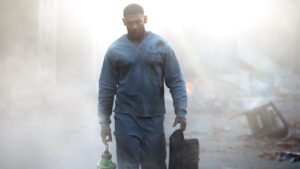
This summer, history is all around us. Through documentaries, feature films, exhibitions, books, podcasts, short videos and historical reenactments, we can find history everywhere. The stories we tell about the past have never been more vivid or more accessible. As media forms shifted, the possibilities for historical storytelling also changed. The acceleration of technology has been a boon to the world of history, creating new ways to reach audiences hungry to learn more about the past. These formats have also expanded the range of stories being told, giving a new generation of history fans the opportunity to discover and share stories about people and events that have long been excluded from traditional narratives.
This connects us to something bigger than ourselves, a broader, shared experience that connects us across time. When done well, history doesn’t just tell us where we’ve been. It highlights the questions we still grapple with today and calmly points us toward the answers, if we’re willing to look. It places the present in the context of the past, and above all, it is a powerful reminder that the resilience of the human spirit has always found a way to propel us forward, to places we never dreamed possible.
People gravitate toward personal windows into the past that help us recognize our shared humanity and reveal a quieter truth: history is made not just on large stages by well-known figures, but in the small, often unseen moments when individuals choose to step forward and meet the moment.
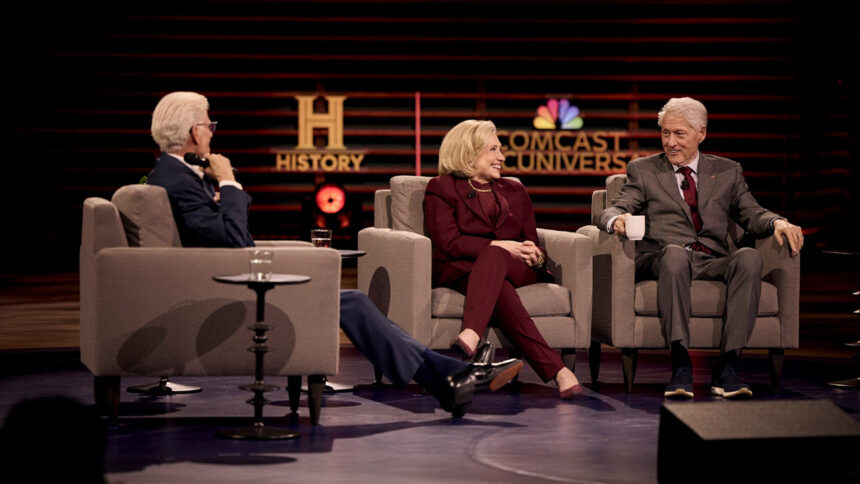
George Olson met the moment. When he was barely 18, he joined the US Navy and found himself in the middle of one of the most harrowing campaigns of World War II, surviving a suicide attack during the Battle of Okinawa, believed to be the last person to make it off his ship alive. Now, at 99, he traveled to Philadelphia to attend our History Talks event celebrating America’s 250th anniversary, and watched more than 1,500 people of all ages and backgrounds rise to their feet to honor him. As tears streamed from his eyes, he thought about something that had stayed with him for decades: the question of why he was still alive when so many of his friends never returned home. It was one of those rare special moments when personal storytelling merges with history, when we remember that it is people who make history, and when we feel the full emotional force of the past through our human connections to it.
Many people today feel like we are living in a uniquely uncertain moment, and it’s hard to argue otherwise. Rapid technological change, global disruption, political division, and the rise of artificial intelligence are all reshaping how we work, communicate, and understand our place in the world. But history offers us an important correction: every generation has faced unprecedented moments. Every era has grappled with uncertainty. The feeling of overwhelming change is not new, what changes is how we choose to face it. Looking back is not an exercise in nostalgia. It is a way to gain perspective. It reminds us that progress is rarely linear, but that resilience and creativity have continually helped move societies forward, often toward a future that seemed unimaginable at the time.
My time in Philadelphia also made me think about the evolution of historical storytelling, from the mass publications crafted by early American leaders like Ben Franklin to today’s innovative platforms made possible by new technologies.
This development has always been driven by the same instinct, to reach people where they are. Thomas Paine understood this when he wrote common sensea pamphlet cheap enough to reproduce, simple enough to circulate, and powerful enough to change the course of a nation. It was read aloud in taverns, military camps, churches, and gathering places throughout colonial America, and was an early form of mass media.
More than a century later, the medium has changed, but the mission has not. Franklin Roosevelt turned to radio through his fireside chats during the Great Depression and World War II, speaking directly into Americans’ homes to inform, reassure and unite a nation in crisis. Then came television, which added a powerful visual dimension, bringing patriotic moments into living rooms across the country in an immediacy that print and radio could not achieve. Walter Cronkite’s reporting on Vietnam, and the moon landing broadcast live to millions of homes, these were moments when history was not just transmitted, but felt.
The invention of personal computers and smartphones changed the entire equation, putting the power of media in the hands of almost everyone. Today, YouTube channels, podcasts, audiobooks, short videos, and a new generation of digital platforms have democratized not only the consumption of history, but also the telling of it. The stories emerging now, long ignored, long marginalized, are redefining what history looks like and who should be a part of it.
History has always had an audience. What she always needed was the right storytellers at the right moment. That moment is now. The story is still being written.
Paul Buccieri is president and CEO of A+E Global Media, which includes the History Channel.