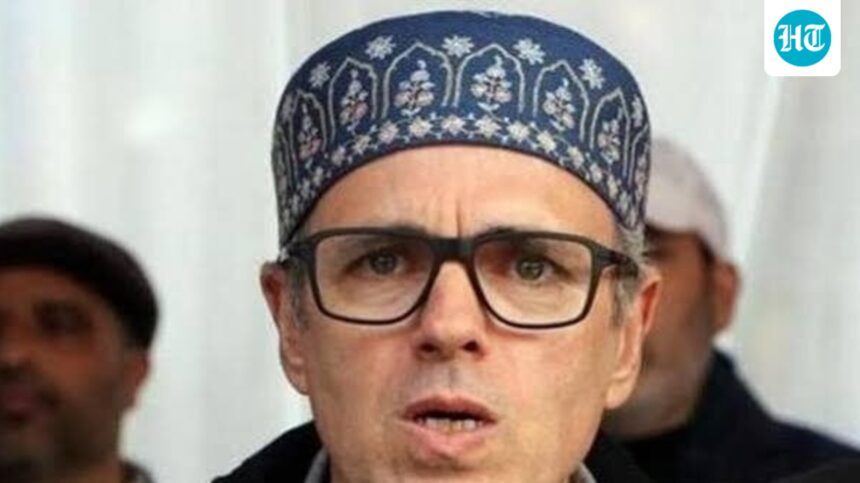
Jammu and Kashmir Chief Minister Omar Abdullah on Thursday said that no one should object to the dialogue between India and Pakistan aimed at improving bilateral relations.

Speaking to reporters on the sidelines of an event here, Abdullah said that the conflict between the two countries is not new and has continued over the past three or four decades.
“This conflict is 30-40 years old, and last year, it intensified after the Pahalgam attack. Now, the Prime Minister, through a letter, is being asked to improve relations between the two countries. No one should have any objection to that,” Abdullah said.
A letter coordinated by OP Shah, head of the Center for Peace and Progress, and signed by 61 Indians and 55 Pakistanis, urged the two countries to engage in bilateral talks.
Responding to a question about those criticizing the initiative, Abdullah said that senior leaders of the Rashtriya Swayamsevak Sangh also called for improving relations between India and Pakistan.
“Recently, a senior RSS leader said that India and Pakistan should talk to each other and become friends. When RSS says this, no one objects, but when leaders in JK say the same, it becomes a problem.
“We are just saying what (former Prime Minister Atal Bihari) Vajpayee used to say, which is that friends can be changed, but we cannot change neighbors. We want relations between neighbors to improve,” Abdullah said.
More than 100 prominent citizens, including former Jammu and Kashmir chief ministers Farooq Abdullah and Mehbooba Mufti, from India and Pakistan urged Indian Prime Minister Narendra Modi and his Pakistani counterpart Shehbaz Sharif to revive bilateral dialogue and restore normal relations.
The signatories include former RAW Chairman AS Dulat, Rajya Sabha MP Manoj Jha, former diplomat Ashraf Jehangir Qazi, former Union Minister Mani Shankar Aiyar, former Pakistan Foreign Minister Khurshid Mehmood Kasuri, in addition to several retired diplomats and civil society members.
The letter urged the two governments to take “meaningful and sustainable steps towards restoring peace, normalcy, dialogue and cooperation in South Asia.”