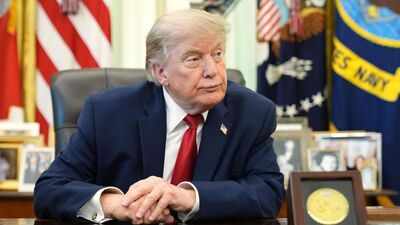
Analysts indicate that the ceasefire between the United States and Iran may be temporary in lieu of the upcoming midterm elections
The ceasefire between the United States and Iran has allayed fears of a broader conflict and led to the reopening of the Strait of Hormuz, pushing oil prices lower. However, the truce may be tactical and not permanent, according to an analyst quoted by Reuters.
Fundamental disagreements over Iran’s nuclear program, its regional influence, and its sanctions remain unresolved.The two sides agreed to hold talks for 60 days, but there is little sign of common ground. For now, the markets are feeling good, but this may also be temporary.
Why did the ceasefire hold?
The analysis found that the biggest reason for the truce’s endurance is American policy. With the midterm elections in November, the Trump administration cannot afford higher gasoline prices.
Voters were already dissatisfied with inflation, and the war made this worse. Pump prices reached nearly $4.50 per gallon during the conflict. It has since fallen to around $3.90, but any new disruption could reverse that.So Washington has a strong incentive to keep the Strait open and avoid another energy shock. This means engaging with Iran, even if the terms are not ideal.Iran knows this and can benefit from it. By simply threatening the strait, without even closing it, it could lead to higher oil prices.
This gives Tehran influence it did not have before the war.
What will happen after the US elections?
If Democrats retake the House, as they are currently expected to do, Trump could face a more hostile Congress. Internal stagnation may push him to seek victories in foreign policy, where he has more room to move.Trump has already faced criticism over the agreement, which many see as favoring Iran. If negotiations stall by the fall, he may decide that military pressure is more attractive than diplomacy.Iran may have the upper hand at the moment, but analysts fear how that could change once the elections are over.
Political divisions at home
The Iran war also revealed deep divisions within both American political parties, according to an analysis by The New York Times. Among Democrats, two incumbent New York House members lost primary challenges to candidates they described as not being sufficiently critical of Israel. The rise of anti-war progressives is forcing the party to consider how far left it can go without alienating moderate and Jewish voters.Among Republicans, the cracks are different but no less real. Isolationists who supported Trump’s promise to avoid foreign wars feel betrayed by his intervention in Iran. Meanwhile, hawks in the party are angry that the administration is now negotiating with Tehran without achieving its goal of crippling Iran’s military or ending its regime.A New York Times poll found that 53% of Republican voters under 45 disapprove of Trump’s handling of the Iran war, compared to 75% of older Republicans who approve.
Prominent conservatives such as Tucker Carlson and Megyn Kelly have publicly broken with the party over the war, and former Congresswoman Marjorie Taylor Greene recently left the Republican Party over her opposition to the conflict.
Iran’s real weapon
Iran does not need to close the Strait to harm the global economy. It just needs to make traders believe that it might be so. This risk premium can lead to higher oil prices, shipping costs, and even fertilizer prices.
In an election year, that is real power, according to the analysis.But if an agreement is not reached by the fall, Iran’s influence could weaken. It is possible that after the elections, after being freed from some political restrictions, Trump will decide to strike again.The war with Iran may be on pause, but it is not over yet. The next few months will determine whether this ceasefire becomes a permanent settlement or just a reprieve before the next round.The biggest danger is not another war next week. It is a cycle of recurring crises – diplomacy, then escalation, then diplomacy again – that keeps markets volatile and the global economy on edge.