Fifty per cent of employees in government and private offices in Delhi will work from home from November 1 every year under a new permanent anti-pollution policy, notified by the Delhi government on Wednesday.

The measure, which will remain in effect until January 31, is part of a comprehensive winter pollution master plan aimed at reducing vehicle emissions and tackling Delhi’s annual toxic smog, according to the news agency. that I.
Private establishments have also been directed to introduce staggered working hours, ensure compliance with work-from-home arrangements, and encourage the use of cars, ride-sharing, public buses and other modes of public transport to reduce the number of vehicles used for commuting.
Read also | Delhi is introducing anti-pollution restrictions in the run-up to winter
Strict winter pollution measures taken by Delhi government
According to a press release from the Ministry of Environment and Forestry, the new framework establishes standing rules that will automatically come into force every year from November 1 to February 28, eliminating the need for separate annual orders.
These measures aim to control vehicle emissions, dust pollution and open burning of waste.
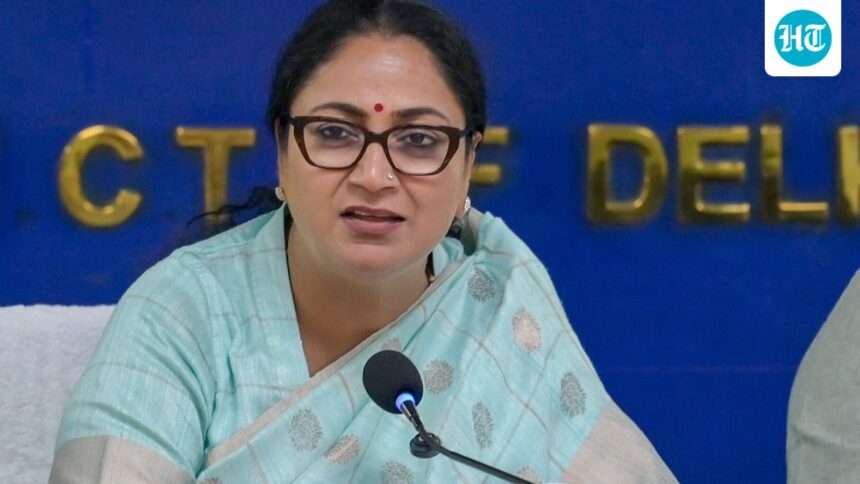
The report added that Prime Minister Rekha Gupta said that the new framework integrates various existing orders into one clear and stringent system, making compliance easier for all departments, institutions and citizens concerned while ensuring more effective enforcement.
The Prime Minister said that the air quality in Delhi deteriorates significantly every winter. Data from the past few years shows that pollution levels continually rise between November and February.
Read also | Government to reform PUC system before winter; Start geotagging and encrypting data
Several Delhi government orders have been merged into one
Keeping this challenge in mind, the Delhi government has now put in place a standing mechanism so that there will be no need to issue separate orders every year and all agencies can take timely action under a pre-defined set of rules.
It said the notification was based on a detailed study of experience and air quality data.
During the years 2023-24, 2024-25 and 2025-26, the average AQI in Delhi between November 1 and February 15 ranged from 312 to 342, while the maximum AQI reached between 461 and 494.
Based on these results, special winter pollution control measures have now been given permanent status. The notification also includes the revised General Action Plan issued by the Commission for Air Quality Management (CAQM) and directions issued by the Supreme Court.
Read also | Delhi government is pushing for real-time pollution sources data
Vehicles equipped with PUC will be refueled
To enhance vehicular pollution control, vehicles carrying a valid Pollution Control Certificate (PUC) will be refueled at all petrol, diesel, CNG and LPG stations across Delhi throughout the year, Chief Minister Gupta said. Action will be taken against vehicles found refueling without a valid PUC certificate.
PUC compliance verification will not be limited to physical certificates but will also be conducted through NPR, vehicle database and other electronic systems.
Oil companies, Indraprastha Gas Limited, Food and Supplies Department, Transport Department, Delhi Municipal Corporation and Delhi Traffic Police will be responsible for implementing this system.
From November 1 to January 31, all vehicles registered outside Delhi that are below BS-VI emission norms will be banned from entering or operating in the city, the Prime Minister said.
However, vehicles powered by compressed natural gas, electric vehicles, ambulances, fire vehicles, police vehicles and categories of vehicles specifically exempted by the Department of the Environment will not be covered by this restriction.
The Transport Department, Delhi Municipal Corporation and Delhi Traffic Police will ensure strict implementation.
Parking fees have doubled, and trips have varied
Chief Minister Rekha Gupta said parking fees at authorized parking facilities will double from November 1 to February 28 to encourage increased use of public transport instead of private vehicles.
However, parking facilities operated by the Delhi Metro Rail Corporation (DMRC), which supports public transport and park and ride services, will remain exempt.
To ease traffic congestion during peak hours, Delhi Municipal Corporation offices will operate from 8:30 AM to 5:00 PM, while Delhi Government offices will operate from 10:00 AM to 6:30 PM during the same period so that employees do not commute at the same time and traffic pressure is reduced.
Construction activities were also controlled
Chief Minister Gupta said that dust generated from construction activities is one of the major contributors to winter air pollution in Delhi.
With this in mind, the government has introduced clear and binding provisions governing construction activities, transportation of building materials and dust control in large buildings.
She said that the government does not support stopping development, but maintaining the balance between development and environmental protection is equally important. With this approach, the rules are designed to ensure that essential projects continue while pollution remains under effective control.
The Prime Minister said that every year from November 1 to January 31, demolition work and open civil construction activities that generate dust will be banned. However, projects related to essential public infrastructure will be exempt. Finishing, plumbing, electrical installation and similar activities will continue to be permitted within construction sites, provided that all provisions of the Construction and Demolition Waste Management Rules and dust control standards are strictly adhered to.
Dumping or storing construction and demolition materials in open spaces outside project sites will be strictly prohibited, and violations will result in criminal action against the responsible agency or individual.
Prime Minister Gupta also said that stricter restrictions will be implemented during the most sensitive period for pollution from December 10 to January 20.
During this period, only government projects that are indispensable to the public benefit or related to emergency situations will be allowed to continue. Vehicles carrying construction materials such as sand, gravel, stone, bricks, cement, ready mix concrete, debris or any other construction materials will not be allowed to enter Delhi during this period.
The Prime Minister said that for the first time, the Delhi government has introduced mandatory anti-dust measures in large commercial buildings. All commercial buildings with a built-up area of more than 3,000 square meters, including shopping malls, hotels, office buildings and other institutional buildings with a height of G 5 or higher, will be required to install anti-smog cannons or fog systems inside their buildings.
These installations must be completed by August 15. The systems will remain operational throughout the year, although their operation will not be mandatory between May 1 and September 15, when the city experiences monsoons and the summer peak season.
Prime Minister Gupta said the new provisions apply not only to completed buildings but also to projects under construction. Construction sites larger than 1,000 square meters will be required to install fog systems to control dust during construction.
The Delhi Pollution Control Committee (DPCC), the Municipal Corporation of Delhi (MCD), the New Delhi Municipal Council (NDMC) and the Delhi Municipal Corporation (NDMC) will be Delhi DDA is responsible for monitoring compliance and ensuring enforcement of these provisions.
The Prime Minister said that every Resident Welfare Association (RWA), housing society, government, private institutions, contractor, agency and all organizations employing personnel in the fields of security, sanitation, horticulture, housekeeping, maintenance or similar services will be responsible for ensuring that no open burning takes place within their premises or in areas under their ownership, possession, management or control.
They will be required to establish an effective monitoring mechanism and, where necessary, provide adequate heating arrangements for workers through electricity or other approved clean fuels.
If an open burning incident occurs due to negligence or inadequate supervision by any establishment, action will be taken against both the establishment and the individuals responsible under the Environment (Protection) Act, 1986, Pollution (Prevention and Control) Act, 1981 and other applicable laws. Environmental compensation will also be recovered.
The Department of Revenue, DPCC and local bodies will be responsible for the effective implementation and monitoring of these rules. Drone surveillance will also be used, especially during night hours, to detect such incidents. This entire framework will come into force every year from November 1 and will remain in force until February 28.