The Ministry of Rural Development on Tuesday notified the revised pay rates under the Viksit Bharat-Guarantee Rozgar and Ajeevika Mission (Gramin) Act 2025, with effect from July 1, coinciding with the start of the nationwide VB-G RAM G, the successor scheme to the Centre’s MGNREGS. Notice is given a $300 temporary basic wage rate, ensuring that the reported daily wage does not fall below this threshold – a first for the National Rural Employment Guarantee Scheme. The ministry described the review as a step towards increasing wages, reducing disparities between regions and enhancing the dignity of work.

Wage rates were increased in all 34 states, union territories and pay areas, with 21 states and administrative units raising the new rate $300 floors. The national average reported wage rose from $298.8 per day under MGNREGA to $327.4 per day under VB-G RAM G, an increase of $28.6 per day, or more than 10% on average.
Read also | VB-G RAM G Act risks financial burden on states and farmers: Mallikarjun Kharge
The steepest increases — in the range of 15% to 25% — were directed at historically low-wage states, including Uttar Pradesh, Bihar, Jharkhand, West Bengal, Assam, Arunachal Pradesh and Himachal Pradesh. Arunachal Pradesh and Nagaland recorded the highest percentage increase, at nearly 24.5%, with significant increases also reported in the states of Uttarakhand, Tripura, Chhattisgarh, Madhya Pradesh and Odisha. Before the review, it was the lowest wage $241 per day.
States that already had wages above the new rule also saw upward revisions based on the established methodology. Wage rates in Kerala, Haryana, Punjab and Karnataka now range between more than $360 up $409. Within this group, Haryana recorded the highest wages reported in $409, followed by Sikkim’s high-altitude gram panchayats $450, flown in $406 and Kerala in $401 – compared to only one wage area exceeding $400 in the previous structure.
Read also | VB-G Ram G introduces a new daily wage system for people with disabilities, women and the elderly
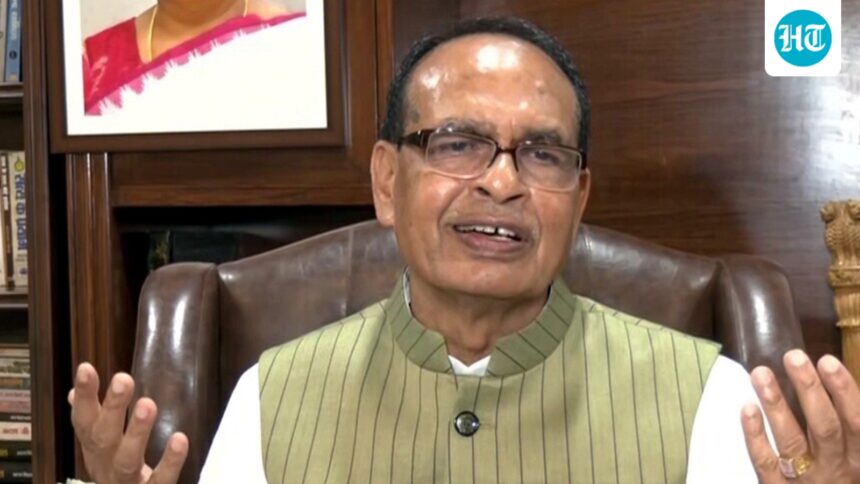
Union Rural Development and Agriculture Minister Shivraj Singh Chouhan said the wage revision, along with expanding guaranteed employment to 125 days under the new law, aims to ensure that the “biggest increase” reaches states where wages have been historically lowest, boosting rural livelihoods and accelerating development.
The revised wages combine the annual index with the newly introduced temporary basic rate under a transparent and scientific methodology aimed at reducing historical rural wage disparities, the ministry said. Officials linked the move to the government’s broader goals such as Garib Kalyan, Antyodaya and Viksit Bharat@2047.