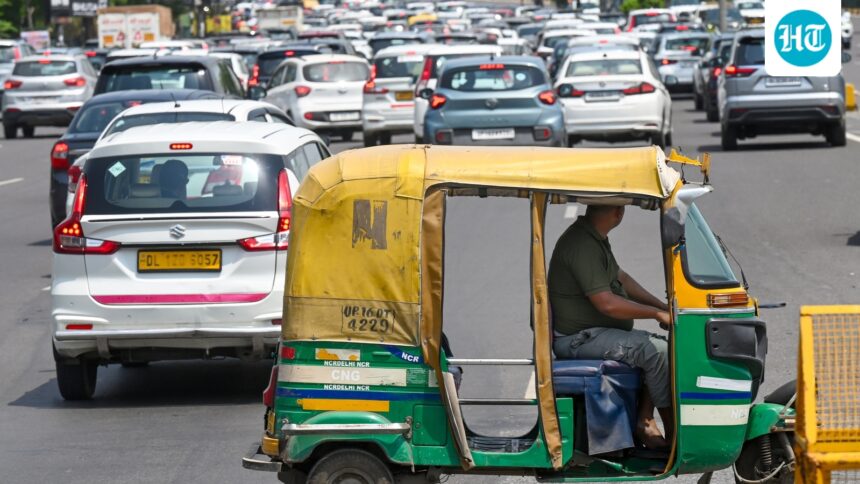
Exemptions from registration fees for electric vehicles, zero use of petrol-powered bicycles from 2028, and electric three-wheelers from next year are among the key measures approved under Delhi’s new electric vehicle policy, which aims to reduce vehicular pollution to zero.

The policy, which will come into effect on July 1, 2026, will remain in effect until March 2030 and ensure a pollution-free Delhi by March 2030.
investment $Rs 15,000 crore will be made available under the policy, which also includes 30,000 EV charging points and separate gates.
Read also: Government to reform PUC system before winter; Start geotagging and encrypting data
Key Provisions of Delhi EV Policy
- Exemption from registration fees: Under the policy, the government will provide a 100% duty exemption on road tax and registration fees until 2030. The exemption will apply to vehicles under $30 lakh (ex-showroom). The incentives will be transferred directly to the beneficiaries’ bank accounts through direct benefit transfer.
- $Investment of 15,000 Crores: Delhi Chief Minister Rekha Gupta said the benefits are worth around that $Rs 15,000 crore, including government investment, tax exemptions and development of EV infrastructure, will be implemented in the next four years. Delhi Transco Limited will lead the expansion of public charging stations and battery swapping.
- Boost to EV: Apart from incentivizing electric vehicles, the policy includes provision for two-wheelers and three-wheelers. The government has ordered registration of only electric three-wheelers in the national capital from January 1, 2027. However, the incentives will not apply to hybrid vehicles.
Also read: Petrol and diesel sales restrictions end on July 1 as India eases wartime restrictions
- No petrol bikes: Registration of petrol-powered bicycles will not continue from April 2028, as the government will only allow registration of electric two-wheelers.
- Changes for trucks and buses too: The policy also stipulates that 30 percent of school buses will be electric by 2030. The policy also stipulates that only electric vans or N1 freight carriers will be registered from January 1, 2027.
- Incentives for electric car buyers: To encourage the adoption of electric vehicles, the government has announced incentives for the purchase of two- and three-wheelers. Those who purchase electric two-wheelers will receive a subsidy $30,000 in the first year $20,000 in the second year and $10,000 in the third year. Buyers of electric three-wheelers will be eligible for incentives $50,000, $40,000 and $30,000 in the first, second and third years respectively.
Read also: 3-year-old Pune rape case: Why judge refused to consider 65-year-old convict’s age before death sentence
- Incentives for scrapping vehicles: The government also announced the cancellation of incentives $1 lakh for owners of BS-IV or older SUVs who scrap their cars and switch to electric vehicles.
A total of 4,70,104 electric vehicles have been registered in Delhi till March 2026, the government said. The policy seeks to transform Delhi into a pollution-free city through zero-emission modes of transport and will remain in effect till March 31, 2030.