The President of India has a beautiful residence in Shimla called ‘The Haven’. Most presidents visit during the summer. In the early 1990s, so did President R. Venkatraman. Whenever his convoy passed through the city, traffic and pedestrians stopped during the peak tourist season. As his press secretary, I considered it my duty to inform him that his convoy was causing a great inconvenience. Since then, he had not ventured out of the resort until he was gone.

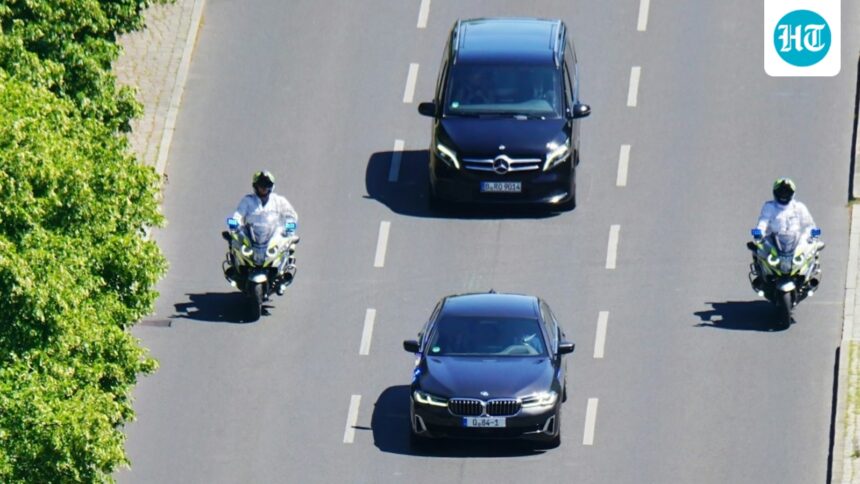
The leaders at that time were more sensitive to the disturbance caused by their processions. But today, among the many small indignities that ordinary Indian citizens endure on a daily basis, there are few that symbolize the distance between rulers and ruled like the familiar proclamation: “Road laga hai.” This phrase has now entered the general disability lexicon. This means that a VIP moves somewhere and thus the lives of thousands of citizens have to be put on hold.
Traffic comes to a standstill. Cars are endlessly idle. Schoolchildren are late. Office goers miss appointments. I missed flights. Fuel is wasted. Wrestling mood. However, citizens are expected to accept the inconvenience of resignation, as if it were a law of nature rather than an administrative choice.
The issue is not security. No reasonable person can deny the need to protect constitutional authorities and those who face real threats. The issue here is whether the way security is implemented reflects a democratic sensibility or a feudal privilege.
India has inherited many colonial customs, but perhaps none have been more enduring than the belief that the movement of the powerful must take precedence over the comfort of the common people. But in democracies, the elected representative is supposed to be a servant of the people, not their temporary master. However, our roads often tell a different story.
The consequences are not only annoying; It can be tragic. There have been repeated reports over the years of ambulances being trapped behind security barriers. In many cases, critically ill patients suffered severely as traffic came to a halt for VIP movement. Many such incidents were reported from Delhi, Bengaluru, Mumbai, Hyderabad and other places.
The economic cost is also significant. Thousands of vehicles that sit idle for 15 or 20 minutes consume fuel to no purpose. Multiply that across India’s major urban centers and we get a staggering waste of energy resources, increased pollution, and lost productivity. In a country that constantly urges its citizens to conserve fuel and reduce emissions, the contradiction becomes stark.
What makes the situation particularly frustrating is the attitude of the authorities. Police stationed at roadblocks are often unable or unwilling to provide information. Their instructions are simple: stop traffic until the convoy passes. The citizen becomes a source of nuisance within the very system that aims to serve him.
The contrast with many mature democracies is instructive. In many European countries, road closures for heads of government are kept to a necessary minimum. Convoys of cars are often smaller, routes are planned to minimize disruption, and stopping times are measured in minutes rather than extended periods. In Scandinavia, senior political leaders often travel with remarkably modest security arrangements. Even in the UK, where security concerns are real, efforts are being made to ensure normal traffic continues with minimal disruption.
To be sure, alternatives exist. Today’s technology allows traffic to be managed in real time. Security routes can be planned with greater sophistication. Helicopter transportation can be used frequently for certain movements. The size of convoys can be reduced. Movement schedules can be organized during periods of low traffic density. Most importantly, emergency vehicles such as ambulances must not be prevented from moving, regardless of security protocols. A system that cannot distinguish between a regular car and an ambulance carrying a patient struggling for life has lost sight of its goal.
Last week I was in Guwahati. On my way to the airport for my departure, traffic suddenly stopped. Thousands of cars were crowded bumper to bumper on the only road leading to the airport. My driver said it would take about three hours to reach our destination. Not only will I miss my flight, I will also miss the next one. My wife and I then decided to leave our car, cross the divider to the other side of the road, and take two motorbikes that, via alternative routes, got us to the airport in time for our flight. It was an adventurous trip, and at our age, a bit dangerous and unfamiliar, especially since I was holding on to our trolley bag. But, at least, there was no disturbance to the VIPs!
Unfortunately, the phrase ‘route laga hai’ has become a permanent feature of our lives, and no one seems to care about it. However, the true test of governance is not how efficiently it moves the powerful. This is the extent of her respect for the ordinary citizen. Until this principle guides our ruling class, the road ahead will remain blocked – not just by motorcades, but by an outdated concept of power itself.
(Pavan K Varma is an author, diplomat and former Member of Parliament (Rajya Sabha). Views expressed are personal)