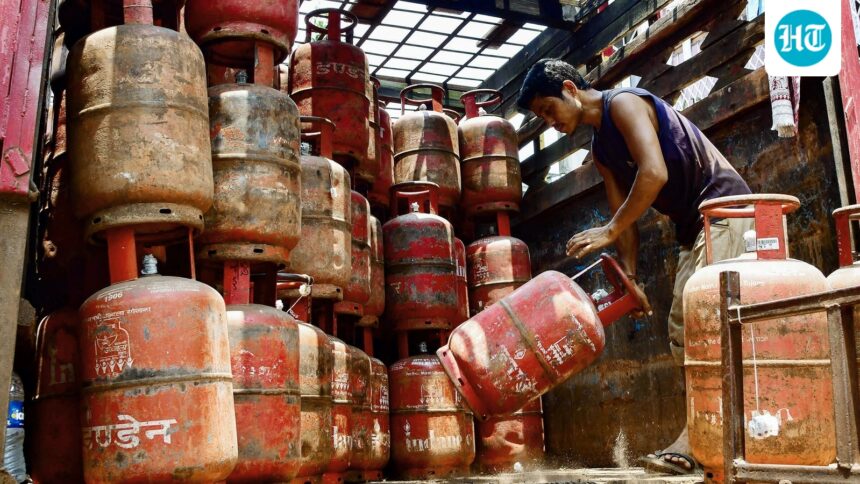
The Center restored non-domestic bottled LPG supplies to pre-crisis levels and withdrew all sectoral restrictions. The decision brings huge relief to commercial and industrial consumers across the country.

The Ministry of Petroleum and Natural Gas said in a statement on Thursday that it took this step after the improvement of the LPG supply situation following the unrest resulting from the US-Israeli war on Iran, which is now suspended under the memorandum of understanding.
Oil Marketing Companies (OMCs) will now supply non-domestic bottled LPG at normal levels as seen before the war.
Read also | $29, cost now $942 in Delhi”>LPG prices rise again: Cooking gas prices rose by $29, cost now $942 in Delhi
Bulk LPG supplies have been partially restored
The government also eased restrictions on LPG supplies in large quantities. It allowed the provision of up to 50% of pre-crisis consumption levels for commercial and industrial users. Officials said this will help industries resume operations more smoothly.
During the crisis caused by Iran’s closure of the Strait of Hormuz in response to US-Israeli strikes, the Center imposed restrictions under the Essential Commodities Law. It also ensured that only certain gases (C3 and C4) were used to produce LPG so that there was no shortage.
Now that LPG supplies have improved, the government is allowing these gases to be used again in other industries as well. But it ensured that LPG production for homes and essential uses would not decrease and would remain at a constant level.
Read also | ‘LPG supply halted’: Bengaluru, Chennai hotels may close; Gurugram restaurants are worried
A government technical body will decide how much of these gases will go to various industries and will continue to submit reports to the ministry.
The center will also create a single database for all industrial and commercial LPG users so that supply can be better planned and managed more smoothly.
Click for PNG
The center still wants more people and businesses to use piped natural gas (PNG), a cleaner fuel. Those who have already switched to PNG will continue to use it. Others who can reach Papua New Guinea will be moved there slowly with the help of gas distribution companies.
The ministry has also asked all states and union territories to help implement these changes smoothly.
Officials said the move aims to make energy supply safer, keep fuel available for industries, and increase the use of clean energy across the country.
What happened during the LPG crisis?
The LPG shortage began after tensions rose in West Asia following US and Israeli strikes on Iran. In response, Iran temporarily closed the Strait of Hormuz, a major global shipping route through which a large share of the world’s oil and liquefied petroleum gas supplies passes.
The disruption has raised concerns over LPG imports into India, prompting the government to prioritize domestic cooking gas supplies. To manage available stocks, it restricts commercial and industrial LPG supplies and diverts some hydrocarbon streams (C3 and C4) exclusively to LPG production.
The restrictions have affected restaurants, hotels and industries across the country, with many companies reporting difficulties in securing regular LPG supplies and warning of operational disruptions if shortages persist.