NCERT, for the first time, introduced a reference to the 1975 Emergency in India in its Class IX textbook, more than five decades after it was imposed by then Prime Minister Indira Gandhi.

In the reference, the Emergency has been labeled as “one of the major challenges” faced by Indian democracy, with the majority of fundamental rights suspended. This topic has been included in the newly developed social science textbook by NCERT, titled ‘Understanding Society: India and Beyond’.
In this, the Emergency has been added to a chapter examining the strengths and challenges of Indian democracy.
Read also | Devina, daughter of BJP leader Kailash Gahlot, topper on CUET, has three-point advice for preparation
What does the class say in case of emergency?
An NCERT official confirmed that this is the first time that the Emergency has been included under the section titled “Challenges to Democratic Practices in India” in the class IX textbook. The text in the section highlights “dissatisfaction” with the Indira Gandhi government, issues including unemployment, inflation and others.
“One of the major challenges to democracy in India was recorded when the Emergency was imposed in 1975-77. In the early 1970s, public dissatisfaction with the government led by Indira Gandhi was growing. Rising unemployment, inflation and allegations of mismanagement led to widespread protests,” it said.
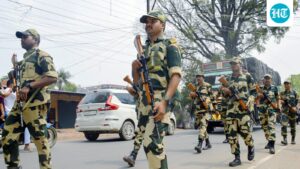
It also says that “the majority of basic rights have been suspended”, citing internal unrest and highlighting the arrest of several leaders. “In June 1975, the government imposed a state of national emergency on the basis of internal unrest. During this period, the majority of fundamental rights were suspended, press censorship was imposed, and many political leaders and activists were arrested,” it reads. He adds that democratic institutions have been “under pressure” and that the freedom of Indian citizens has been “restricted”.
Read also | ‘Outdated Victorian view’: NCERT outfit ‘Dancing Girl’ of Mohenjo-Daro in Class 9 textbook, sparks controversy
Highlighting Jayaprakash Narayan’s role in leading mass movements, the department says the leader, popularly known as Lok Narayan, mobilized students and citizens, especially in Bihar and Gujarat. An excerpt from the textbook read: “The state of emergency was lifted in 1977, and general elections were held, allowing the people to express their will through ballots. The defeat of the ruling government demonstrated the strength of Indian democracy and highlighted the importance of democracy.”
Congress leader Sachin Pilot criticized the BJP over its inclusion, claiming that the party is trying to “present books, history and literature in its own way”. Shiv Sena (UBT) leader Sanjay Raut defended Indira Gandhi, saying she did not violate any political party or abrogate the Constitution. “The state of emergency is not just a subject of study, but it is also enshrined in the Constitution. The Constitution gives the Prime Minister the right to impose a state of emergency if chaos spreads in the country. This does not mean that you should not respect the Constitution,” Raut said.
What other topics are included in the NCERT book?
In light of the challenges facing democracy, the textbook also points to issues such as fake news, disinformation, damage to public property, violation of public rules, poverty, regionalism, social discrimination and gender inequality.
The book includes a section titled “Democracy and You” to help students learn their roles as citizens through classroom learning, the Italian news agency reported. The book also traces historical democratic practices in India, and contains a section on the role of media in democracy.
In the chapter titled “Elections,” the social science book praises the Election Commission of India for holding “neutral” elections despite challenges including “disinformation, fake news and intimidation.”
(With inputs from Sanjay Maurya)