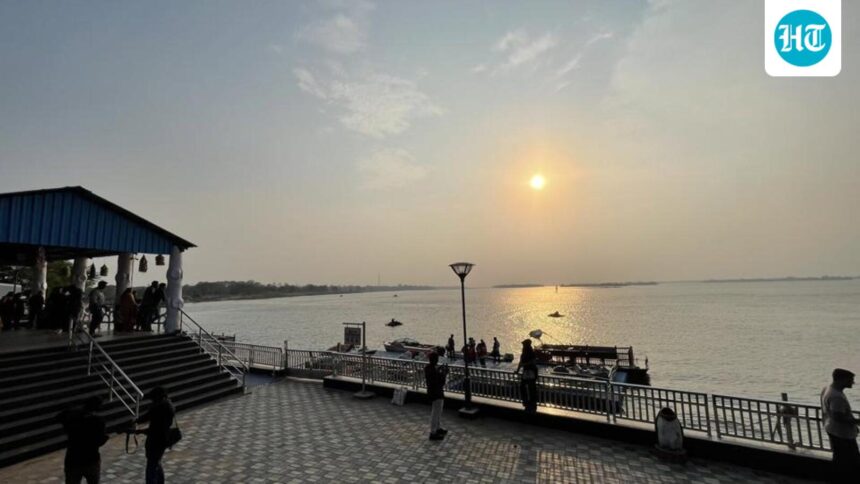
The Odisha government on Tuesday launched a new waterfront development scheme with an outlay of Rs $Rs 500 crore over five years to transform riverfronts and urban water bodies around several cities, including Kataka (formerly Cuttack), Sambalpur, Bhubaneswar and Raurkela (formerly Rourkela).

In a notification, the state Housing and Urban Development Department said the scheme will cover Mahanadi riverfront in Kataka town and Sambalpur, Daya-Janjua corridor and Kuakhai floodplain in Bhubaneswar, Budapalanga riverfront in Baripada town, Baitarani riverfront in Chandpally and Ved Vyasa stretch of Brahmani river in Raurkela.
Other urban water bodies rejuvenated under programs like AMRUT could also be included under the scheme at a later stage.
The initiative aims to transform neglected and underutilized waterfront areas into environmentally sustainable, socially inclusive and economically vibrant urban assets. The government said the program will focus on restoring river and waterbodies ecosystems while creating accessible public spaces, promoting cultural heritage and tourism, and generating livelihood opportunities for local communities.
In Kataka, the focus will be on structured waterfront spaces that support commercial heritage and major events, while riverfront development in Sambalpur will be linked to the promotion of Sambalpuri heritage and cultural tourism. In Bhubaneswar, the Daya-Gangwa corridor and Kuakhai floodplain will be developed as a green-blue urban backbone. The Baripada project will focus on eco-tourism and promotion of tribal culture, while Chandbali and Raurkela will see tourism-oriented waterfront development focusing on liveability.
According to the plan, a range of environmental infrastructure and interventions will be built, including biodiversity parks, green infrastructure, flood buffer zones, cultural squares, heritage spaces, recreational facilities, eco-educational centres, comprehensive living areas and smart public facilities such as lighting and sound systems for cultural events.
The program will be funded by the state government, although additional resources may be mobilized through public-private partnerships, CSR contributions and institutional partnerships.
A state-level committee headed by the Chief Secretary will oversee its implementation, review progress and facilitate inter-departmental coordination.
The government said the project will include environmental and social safeguards, including wastewater treatment systems, renewable energy integration, biodiversity conservation measures, flood-resistant infrastructure, women-focused livelihood opportunities, child-friendly public spaces, and universal accessibility.