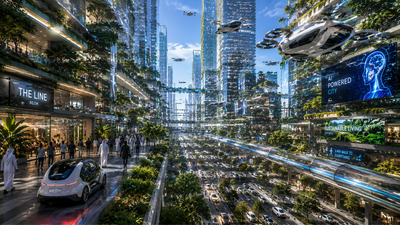
When Saudi Arabia unveiled NEOM in 2017, it promised nothing less than a city of the future. Crown Prince Mohammed bin Salman presented the mega project as a cornerstone of the Kingdom’s Vision 2030 strategy to reduce dependence on oil.
Plans included flying taxis, robotic assistants, a 170-kilometre-tall mirrored skyscraper known as The Line, a desert ski resort, and a floating industrial city.
Initially, this vision was supported by a $500 billion commitment, but subsequent internal estimates indicate that the cost of fully realizing the vision is about $8.8 trillion. But nearly a decade later, rising costs, falling oil revenues and changing priorities have forced Saudi Arabia to slow down and rethink parts of its future dream.
Inside Saudi Arabia’s $9 trillion city of NEOM and its 170-kilometre-tall skyscraper
NEOM is a large area located in the northwest of the Kingdom of Saudi Arabia overlooking the Red Sea. According to official figures from NEOM, it extends over about 26,500 square kilometers, and includes more than 460 kilometers of coastline. Announced in October 2017, the project aims to diversify the Saudi economy away from oil through tourism, technology and advanced manufacturing.The project consists of several major projects, including The Line, Oxagon, Trojena and Sindalah.
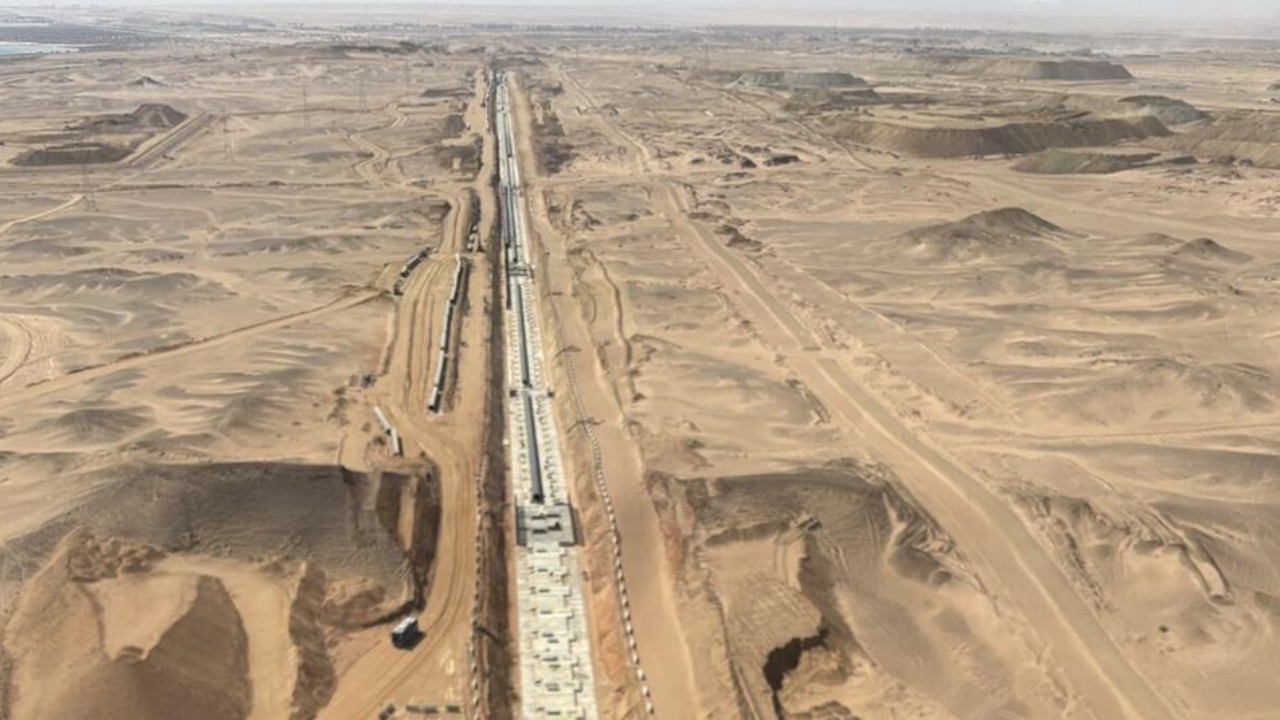
Saudi leaders envision NEOM as a global innovation hub powered by renewable energy and artificial intelligence.NEOM’s most ambitious element was The Line, a pair of parallel skyscrapers stretching 170 kilometers across the desert and rising 500 metres. According to NEOM, the city is designed to accommodate up to nine million people, with access to all basic services within a five-minute walk.Officials promised no roads, no cars and no carbon emissions. High-speed transportation will allow residents to travel from one end of the city to the other in just 20 minutes. Images released by Saudi authorities depicted a futuristic urban landscape unlike anything previously attempted.
How costs ballooned from $500 billion to nearly $9 trillion
When the NEOM project was first announced, Saudi Arabia said the project would have $500 billion in support from the government, the Public Investment Fund and international investors.
However, subsequent internal estimates cited by international media indicated that fully building NEOM and associated projects could cost around $8.8 trillion, more than twice Saudi Arabia’s annual GDP.Experts have long wondered whether such a massive project could have been implemented within the original time frame. Building an entirely new infrastructure in a remote desert area would require massive amounts of steel, concrete, water and energy, making the project one of the most expensive construction plans ever conceived.
The decline in oil prices led to pressure on the government’s public finances
Despite years of economic diversification, Saudi Arabia remains heavily dependent on oil revenues. Volatile oil prices and production cuts reduced government income, while public spending continued to rise.According to Reuters, Saudi Arabia recorded a first-quarter budget deficit of about 125.7 billion riyals, equivalent to about 33.5 billion dollars, in 2026. Economists say that these pressures forced the government to prioritize projects that could generate faster returns and postpone some of the Kingdom’s most ambitious plans.
The Saudi sovereign wealth fund changes priorities
A large portion of NEOM’s financing comes from the Saudi Public Investment Fund, which manages assets worth about $925 billion. According to Reuters, the fund’s new strategy for 2026-2030 will focus 80% of investments within Saudi Arabia, while shifting attention towards industries capable of producing faster economic benefits.Public Investment Fund Governor Yasser Al-Rumayyan said that no projects had been cancelled, but acknowledged that priorities had changed.
Instead of focusing on massive real estate development, the fund is increasingly focusing on sectors such as logistics, clean energy, technology and manufacturing.
Preparations for the 2034 FIFA World Cup have become a major priority
Saudi Arabia’s success in hosting the 2034 FIFA World Cup has created other major spending requirements. The Kingdom will need to build or modernize stadiums, airports, transportation networks, and tourism facilities to accommodate millions of visitors.Analysts believe that preparations for the tournament affect spending priorities. Reports indicate that resources are increasingly being directed towards projects with clear economic benefits and strict deadlines, leaving less room for costly long-term developments.
Regional instability and concerns about the oil market added to the pressure
The Middle East has faced increasing tensions in recent years, while disruption to trade routes and uncertainty about future energy demand have created additional risks.Reuters reported that some Gulf companies have explored using NEOM port as an alternative trade route amid the unrest around the Strait of Hormuz. Although the port has gained strategic importance, economists say regional instability has made governments more cautious about allocating unlimited funds to projects that could take decades to produce returns.
Even NEOM’s premier luxury destination suffered
Sindalah Island, a luxury island within NEOM, was supposed to highlight the success of the project.
A glamorous launch party was held in 2024, attended by celebrities and wealthy guests.However, according to reports, the resort was never fully opened to the public and will now be taken over by Red Sea Global for redevelopment. Sources familiar with the project said unrealistic deadlines and construction problems contributed to the setback. The island marina also faced problems caused by strong winds and wave conditions that were not properly taken into account during planning.The problems in Sindalah have highlighted the practical challenges involved in implementing highly ambitious Saudi projects.
Saudi Arabia insists that NEOM is a long-term vision
Despite reports of delays and spending cuts, Saudi officials insist that NEOM remains central to Vision 2030.Finance Minister Mohammed Al-Jadaan described the country’s spending strategy as… “Disability by design”Under the pretext that transformation projects require patience. Meanwhile, NEOM itself now describes developments like The Line as multi-generational projects that will be built in phases rather than completed all at once.Officials stress that the vision has not been abandoned, but merely recalibrated.
Which parts of NEOM are still moving forward?
While The Line project has lost momentum, many components of NEOM are still receiving support.Oxagon, an industrial and logistics center on the Red Sea, is becoming increasingly important due to its ports and industrial facilities. The mountain resort of Trogena, which has been selected to host the 2029 Asian Winter Games, is also under development, although some contracts are reportedly being reviewed.The authorities continue to seek Also friendly is investment in infrastructure, data centers and transport networks that support the broader Vision 2030 programme.
Was NEOM simply too ambitious?
NEOM has captured the world’s imagination with its promises of flying taxis, robot butlers, AI-powered services, and a city spanning longer than many countries. But turning science fiction into reality requires enormous financial resources and decades of investment.Rising costs, declining oil revenues, regional tensions, and competing priorities such as the 2034 FIFA World Cup have forced Saudi Arabia to slow down and rethink parts of its grand vision. The project is not dead yet, but it appears that the once promised future wonderland is now evolving into something far more practical and far less extravagant than originally envisioned.