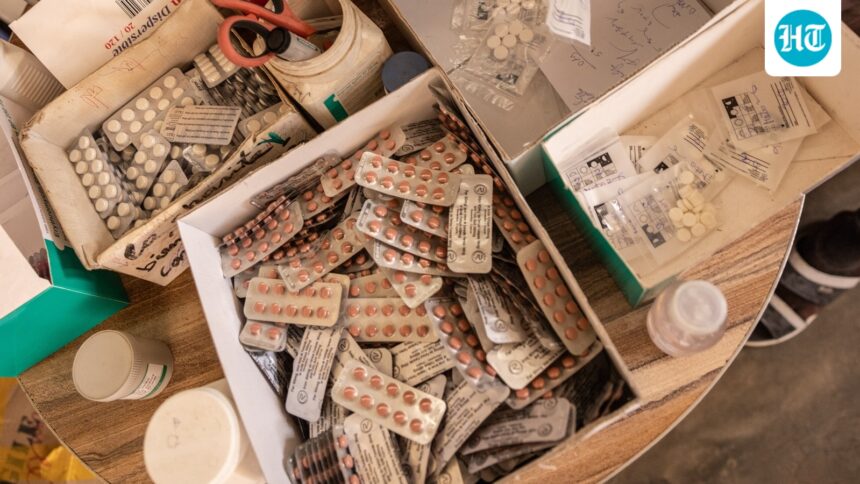
The Union Ministry of Health and Family Welfare has banned 16 other fixed dose combinations (FDC), including skin medicines, painkillers and muscle relaxants, which it felt have limited therapeutic use, according to people familiar with the matter.

“The Ministry of Health has issued notifications under Section 26A of the Drugs and Cosmetics Act, 1940, prohibiting the manufacture, sale and distribution of 16 concentrates of food products for sale, sale and distribution for human use. The notifications have come into force with immediate effect,” the Ministry of Health statement said.
FDC medicines are those that contain a combination of two or more active pharmaceutical ingredients in a fixed ratio and are also referred to as ‘cocktail’ medicines.
According to the Ministry of Health, the decision followed the directives of the Supreme Court, which ordered a comprehensive review of the food distribution centers available in the country. In compliance with these directives, the Drugs Technical Advisory Board (DTAB) has formed an expert committee to examine various drug distribution centers and identify those considered “irrational, lack therapeutic justification or may pose risks to human health.”
The Ministry of Health statement said: “Based on the scientific evaluation and recommendations of the expert committee, the government took action against 16 food distribution committees that were found to lack therapeutic justification and whose continued use is not considered beneficial with regard to the potential risks involved.”
Prohibited FDC preparations belong to different therapeutic classes, including certain dermatological preparations, analgesic and antispasmodic drugs, and antibiotic-based formulations.
Among the FDC banned formulations are formulations of aloe vera extract, allantoin, alpha-tocopherol acetate, D-penthenol, and vitamin A; Aloe vera extract, vitamin E, dimethicone and glycerin; Aloe vera, jojoba oil, wheat germ oil, and tea tree oil; Dicyclomine, paracetamol and clidinium bromide; Dicyclomine, paracetamol and clidinium bromide; Paracetamol and lignocaine. Amoxicillin, Serratiopeptidase and Lactobacillus Sporogenes; Amoxicillin, Cloxacillin, Lactic acid bacillus and Serropeptidase. Cefadroxil and probenecid. Cefuroxime and serrapeptidase.
“The Ministry noted that this action is in line with the government’s ongoing efforts to ensure that only safe, effective and scientifically proven medicines are made available to the public. Also in previous cases, several irrational FDCs were banned after a detailed scientific review, which reinforces the government’s commitment towards patient safety and evidence-based healthcare,” the Ministry of Health statement said.
“Accordingly, the manufacture, sale, distribution and supply to the distribution centers of the 16 food products identified for human use will be prohibited with immediate effect throughout the country,” the statement read.
All state drug controllers, regulatory authorities and law enforcement agencies have been directed to ensure strict implementation and compliance of the notifications. Manufacturers, importers, distributors and other stakeholders have also been advised to take necessary corrective measures to comply with the provisions of the law.
In 2016, the government announced a ban on 344 fund distribution committees after the recommendations of the expert committee.
Between 2023 and 2025, a total of 205 PDCs will be banned as part of the phase-out of unapproved fixed-dose combination drugs from the Indian market. Many of the FDCs banned over the years were also from the 344 drug group.