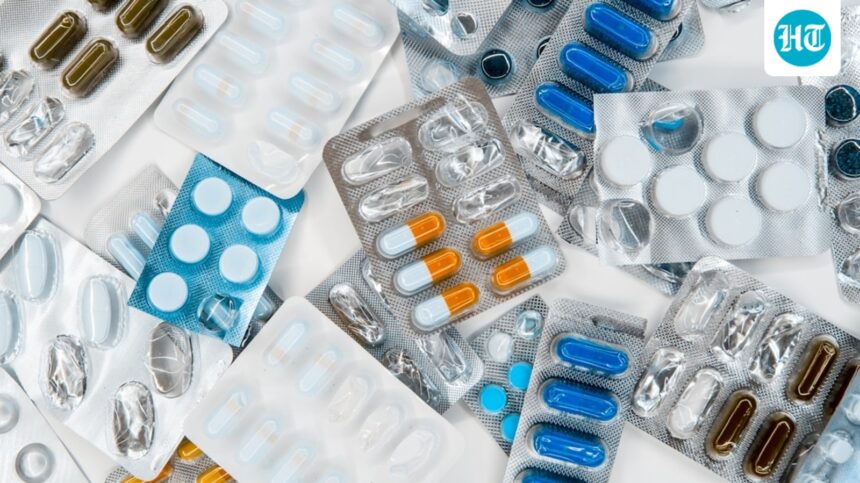
The Center banned the manufacture, sale and distribution of 16 fixed-dose combination drugs, saying they lacked “therapeutic justification” and that their continued use was not considered beneficial in relation to the potential risks involved.

The Federal Ministry of Health said that this step aims to protect public health and promote the rational use of medicines while ensuring that only effective and scientifically proven medicines are available to the public.
Read also| SPL anti-drug campaign will be launched across 441 panchayat in Shimla: Kashyap
FDC medicines are those that contain a combination of two or more active pharmaceutical ingredients (APIs) in a fixed ratio.
The decision comes after a FDC review conducted as directed by the Supreme Court. The Drugs Technical Advisory Board (DTAB) has established an expert committee to examine different groups of drugs and identify those that are considered irrational, therapeutically unjustified or potentially harmful.
“The 16 centers’ manufacture, sale, distribution and supply of food products designated for human use will be prohibited with immediate effect throughout the country,” the ministry said.
She added that it was found that these combination drugs “lack therapeutic justification” and “are not considered useful” in relation to the risks they entail.
It also said that the prohibited formulations include a range of therapeutic classes, including certain skin preparations, analgesic drugs (painkillers), antispasmodic drugs (muscle relaxants), and antibiotic-based combinations.
Among the prohibited combinations are combinations such as acetylsalicylic acid with ethoheptazine; Dicyclomine, paracetamol and clidinium bromide; Dicyclomine, paracetamol, clidinium bromide and chlordiazepoxide; Gliclazide with chromium picolinate. Paracetamol with lignocaine.
Several antibiotic-based combinations have also been banned, including amoxicillin with serratiopeptidase, amoxicillin with serratiopeptidase and Lactobacillus sporogenes, amoxicillin with cloxacillin, lactic acid bacillus and serratiopeptidase, cefadroxil with probenecid, and cefuroxime with serratiopeptidase.
The prohibited list additionally includes many dermatological and skin care formulations that contain a combination of aloe vera or aloe extract with ingredients such as vitamin E, jojoba oil, orange oil, wheat germ oil, tea tree oil, allantoin and D-panthenol.
The Department has banned FDC in notifications issued under Section 26A of the Drugs and Cosmetics Act, 1940.
The Ministry indicated that this measure comes within the framework of the government’s efforts to promote the rational use of medicines and enhance patient safety. He noted that several irrational PDCs had been banned in previous years after detailed scientific reviews.
Read more| Do Indians use weight loss drugs correctly? Gurugram surgeon warns that unregulated GLP-1 use can be counterproductive
All state drug controllers, regulatory authorities and law enforcement agencies have been directed to ensure strict implementation of the notifications.
Manufacturers, importers, distributors and other stakeholders have also been advised to take necessary corrective measures to comply with the law.